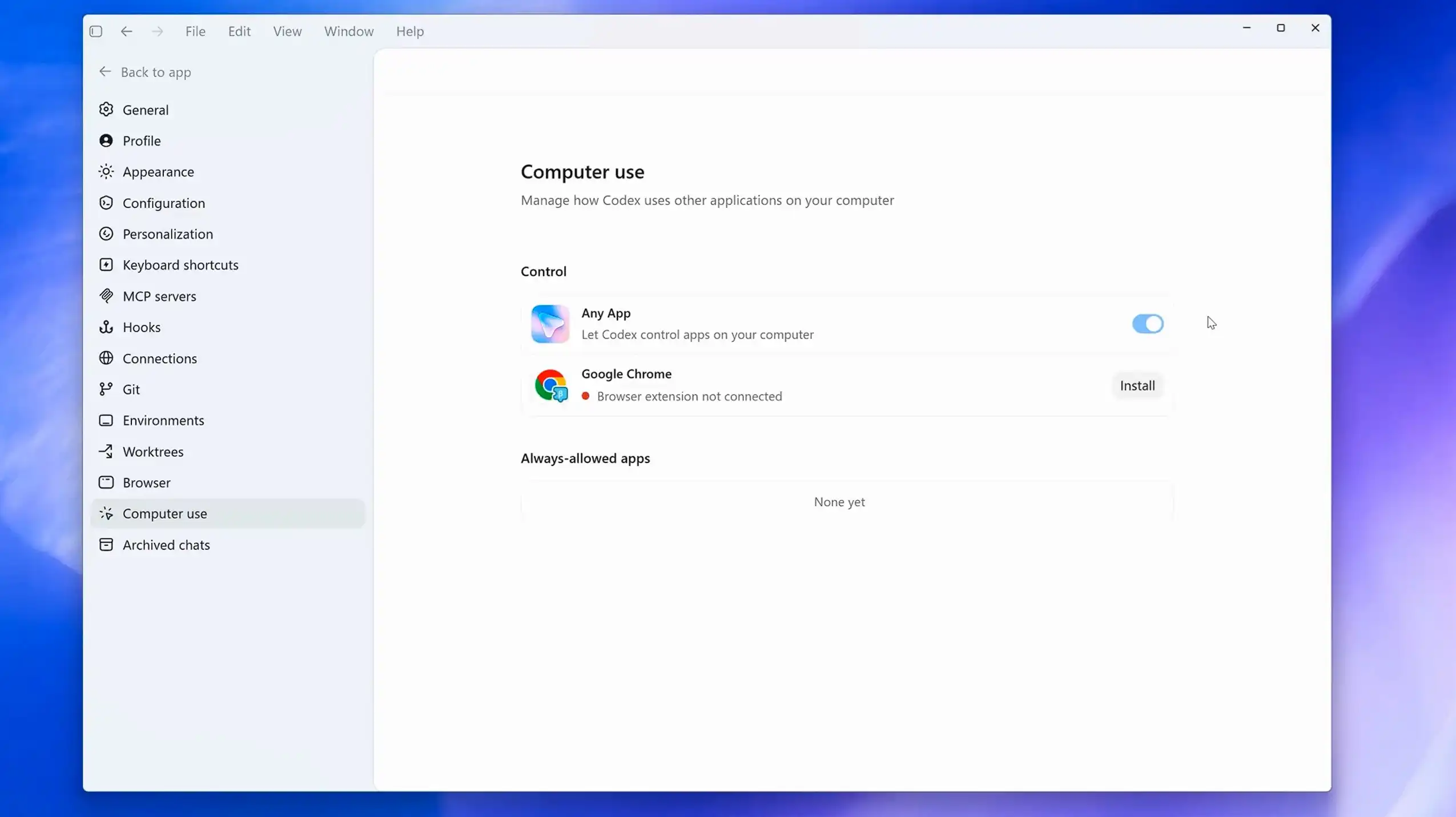
Windows 11 has added a layer of autonomous operation through an integration with OpenAI’s Codex, enabling the system to execute tasks independently based on natural language commands. The feature is designed to accelerate workflows for developers, yet its effectiveness remains uncertain without rigorous testing or public benchmarks.
The technology leverages Codex’s ability to interpret instructions and translate them into executable actions, such as file edits, script execution, or system adjustments. While this could reduce manual intervention in repetitive tasks, the integration currently lacks robust error handling for complex scenarios, leaving its scalability untested.
Key Capabilities
- Autonomous task execution without direct scripting
- Natural language input for system commands
- Limited error recovery in advanced use cases
The trade-off is clear: convenience comes at the cost of reliability. In controlled environments, the feature performs well, but its behavior under stress—such as conflicting inputs or system errors—has not been evaluated. Developers may find it useful for prototyping, but production-grade stability will depend on future updates.
Broader Implications
This is not Windows 11’s first foray into AI integration, but previous implementations were confined to assistive tools rather than full system control. OpenAI’s approach differs by emphasizing independence, which could redefine expectations if proven reliable. However, competitors like GitHub Copilot have already demonstrated similar capabilities in code generation, raising questions about whether this feature offers distinct advantages.
Future Outlook
The integration remains experimental with no set timeline for widespread adoption. Its success will hinge on balancing speed with stability—a challenge Windows has historically faced. Until then, developers should regard it as a promising but unproven tool.