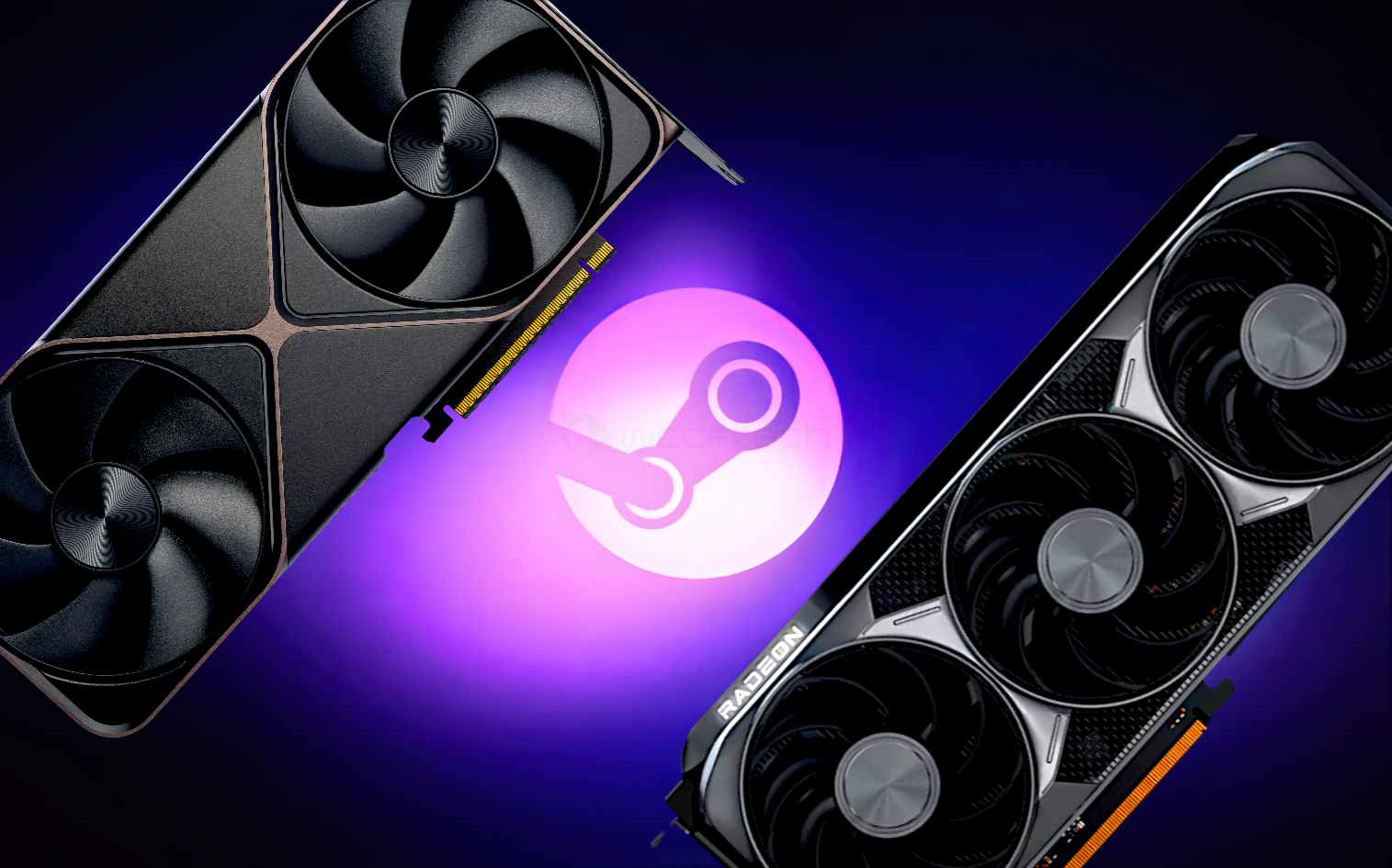
Steam's hardware survey now includes NVIDIA's RTX 5050, marking the company's latest entry into the mid-range GPU market. This development arrives at a time when AMD has already established a strong presence with its RDNA 4 architecture, leaving NVIDIA to play catch-up in both performance and value.
NVIDIA's RTX 5050 is designed to cater to users seeking a balance between cost and capability. It introduces several features that aim to enhance productivity and visual fidelity without pushing the price point too high. However, its late arrival means it faces an uphill battle against AMD's RDNA 4, which has already set the benchmark for mid-range GPUs in terms of performance per dollar.
The RTX 5050 is built on NVIDIA's Ada Lovelace architecture, a platform known for its efficiency and advanced ray tracing capabilities. It comes with 12 GiB of GDDR6 memory, running at a clock speed of 2.3 GHz. While these specs are impressive on paper, the real question is how this GPU will perform in practical scenarios, especially when compared to AMD's offerings.
- Architecture: Ada Lovelace
- Memory: 12 GiB GDDR6
- Clock Speed: 2.3 GHz
- Ray Tracing Cores: Yes
- CUDA Cores: 4,096
The RTX 5050 is not just about raw performance; it also brings features that could appeal to developers. For instance, its support for NVIDIA's DLSS 3 technology promises to enhance frame rates in demanding applications without sacrificing visual quality. Additionally, the GPU is designed to be power-efficient, which could be a significant advantage for users looking to build or upgrade systems without incurring high costs on cooling and power consumption.
However, the RTX 5050's late entry means it may not have the same level of software optimization as NVIDIA's more established GPUs. Developers will need to wait and see how well this GPU is supported in both game engines and productivity tools. Its pricing is expected to be competitive, but whether it can match AMD's RDNA 4 in terms of value remains an open question.
For now, the RTX 5050 is a curious development, one that could either solidify NVIDIA's position in the mid-range market or leave it trailing behind. Its success will depend on how well it balances performance, cost, and software support—a challenge that has defined the GPU landscape for years.