For touring musicians and studio producers, the difference between a wired and wireless setup used to be stark: one offered instant feedback, the other introduced noticeable delay. That gap has just closed.
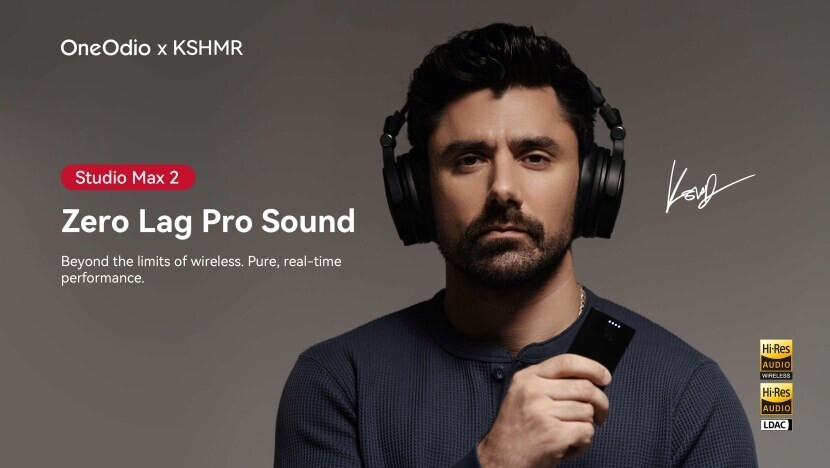
The Studio Max 2, a new flagship from OneOdio, achieves 9 milliseconds of ultra-low latency—so short it’s nearly imperceptible—by leveraging a dedicated 2.4 GHz transmitter and proprietary RapidWill+ 3.0 technology. The result is a wireless headphone that can rival wired setups in critical listening scenarios, whether mixing tracks or performing live.
Designed for the Workflow
The collaboration with KSHMR (Niles Hollowell-Dhar) wasn’t just about aesthetics; it was about rethinking how professionals interact with their audio. The 45 mm driver delivers a transparent, balanced sound signature that maintains clarity across frequencies—a priority for producers who rely on accurate representation of their work. Battery life, another common weak point in wireless gear, is addressed with 120 hours of playtime, built to survive global tours and long studio sessions.
What’s Confirmed
- Latency: 9 ms ultra-low latency via 2.4 GHz transmitter.
- Audio: Dual Hi-Res certification in both wired and wireless modes, LDAC support for near-lossless transmission.
- Build: Premium EVA protective case included; rugged construction for travel.
A Limited Signed Edition, restricted to 1,000 units worldwide, includes a collector’s signature card from KSHMR and is priced at $199.99 USD. The standard version is available for $189.99 USD globally.
What Remains Unclear
While the technical specs are clear, long-term durability in extreme environments (e.g., high-decibel venues) hasn’t been independently verified. Whether the 100 W power efficiency of the transmitter will translate to consistent performance over multiple charge cycles also requires real-world testing.
Refining the Standard
The Studio Max 2 doesn’t just meet professional expectations—it redefines them. By eliminating the latency trade-off, it removes a long-standing barrier for wireless adoption in high-stakes audio work. For power users, this means more freedom without compromise: no need to switch between wired and wireless setups mid-session. Whether it will hold that edge over time remains to be seen, but the immediate impact is undeniable.