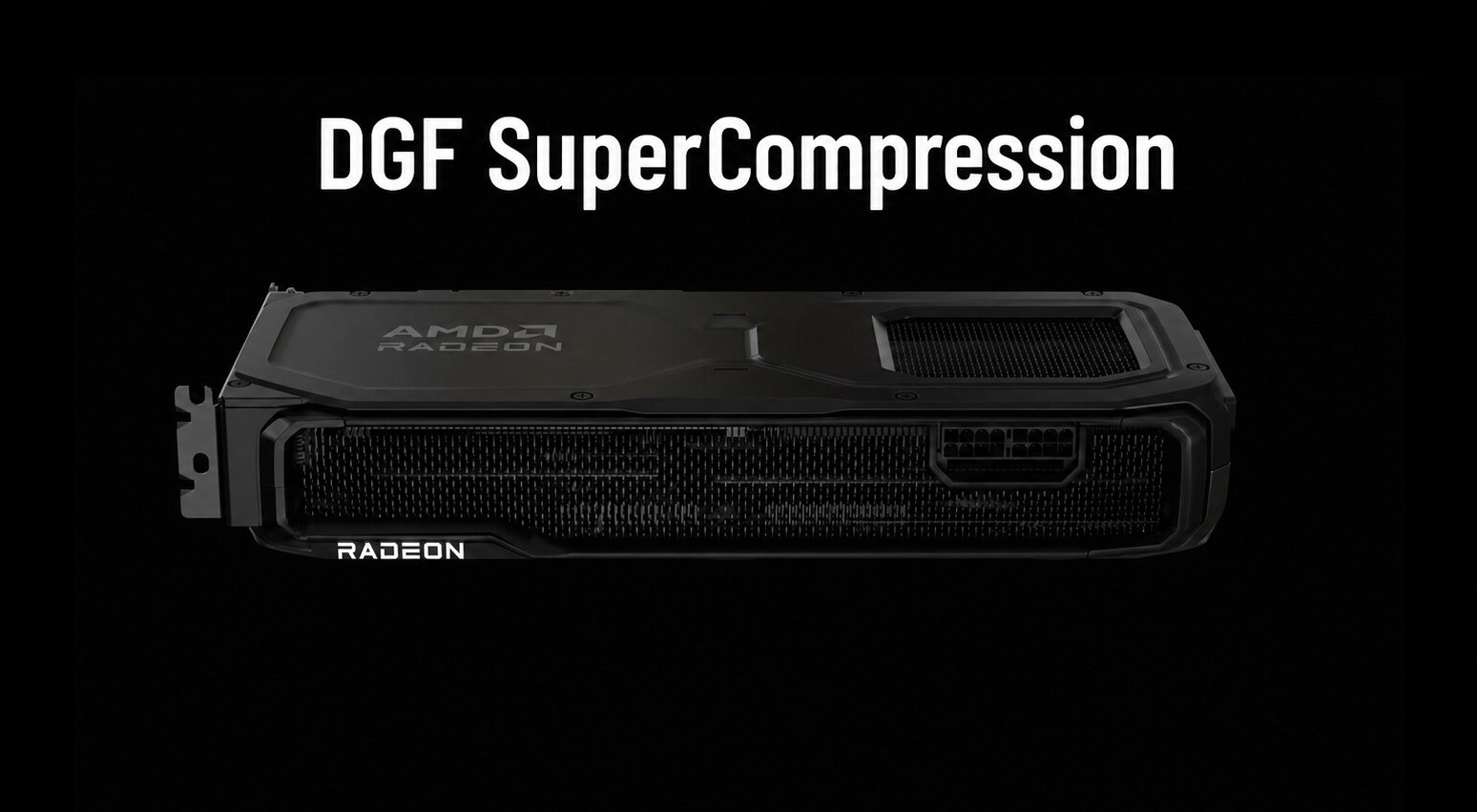
AMD has added a second layer of compression to its Dense Geometry Format (DGF), cutting the on-disk size of game assets by as much as 22%. The improvement is real, but the trade-off is that the compressed data must be decoded before it can be used—meaning the benefit lands mostly in storage efficiency rather than raw performance. That shift could re-shape how developers and players think about asset streaming without changing the underlying GPU workload.
The new technique, called DGF SuperCompression (DGFS), works on top of DGF’s existing block-based geometry packing. It takes 128-byte mesh blocks—already optimized for GPU processing—and further compresses them so they take up less room on SSDs or HDDs. In AMD’s tests, the average reduction was 22%, which translates to hundreds of megabytes saved per title when GDeflate is applied. For games that already push several hundred gigabytes onto a drive, even a modest cut can extend shelf life without needing larger storage upgrades.
- Compression: Up to 22% smaller on-disk geometry files (DGFS + GDeflate).
- Decoding: CPU-based, real-time during asset streaming; future GPU decode possible.
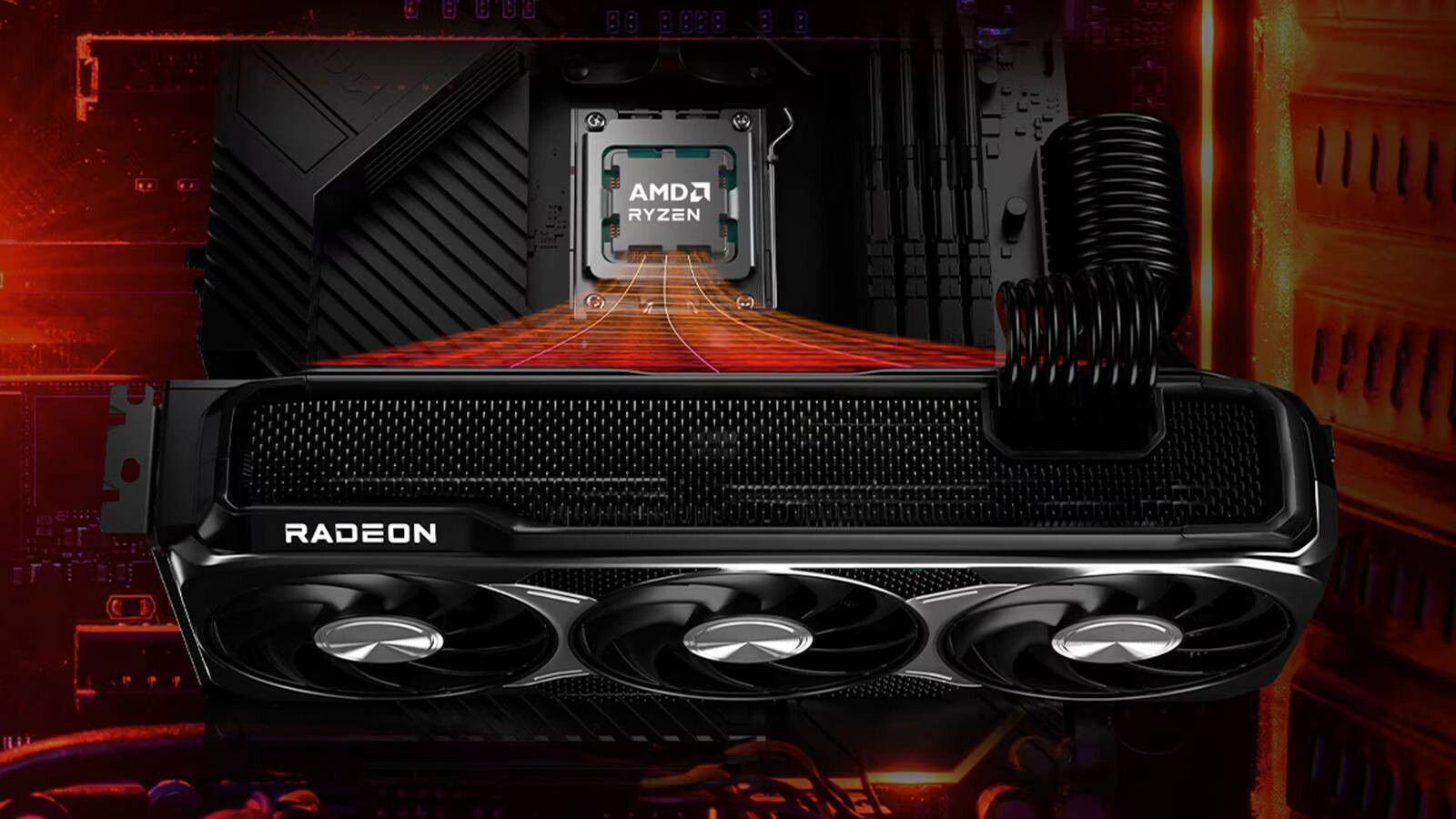
- Hardware tie-in: Tested on Ryzen 9 7950X + RX 9070 XT (RDNA 4). No RDNA 5/UDNA required.
The upside is clear: smaller install footprints, faster asset streaming from storage, and more room for future content. The catch is that DGFS data remains on disk; it isn’t processed directly by the GPU. Instead, a CPU-based decoder unpacks the compressed blocks in real time as the game loads them. AMD claims this process should be fast enough to avoid noticeable delays, but it’s not the same as having the geometry already optimized for the GPU’s pipeline.
That distinction matters when you compare DGFS to NVIDIA’s RTX Mega Geometry, which also compresses assets but does so in a way that allows the GPU to unpack and process them without extra CPU overhead. If AMD can eventually move decoding into the GPU—likely through future SDKs or RDNA 5 hardware—it could close that gap. Until then, DGFS is best seen as a storage optimization rather than a performance multiplier.
For developers, it’s another tool to keep install sizes manageable without sacrificing visual fidelity. For players, the immediate benefit is more space on their drives, but they won’t see a direct speed boost in game load times or frame rates. The real question now is whether AMD can push GPU-side decoding fast enough to turn this into a double-edged win.
What to watch: CPU decode performance in real-world streaming; potential RDNA 5 support for hardware decode; timeline for SDK integration.