The semiconductor industry has long been shaped by TSMC’s dominance, but the balance of power may be shifting. With AI chip demand surging ahead of supply, companies are increasingly seeking alternatives that can deliver performance without the delays that have become routine. Samsung’s introduction of a 2nm process could fill this gap, providing a more immediate solution when TSMC’s production lines are fully booked.
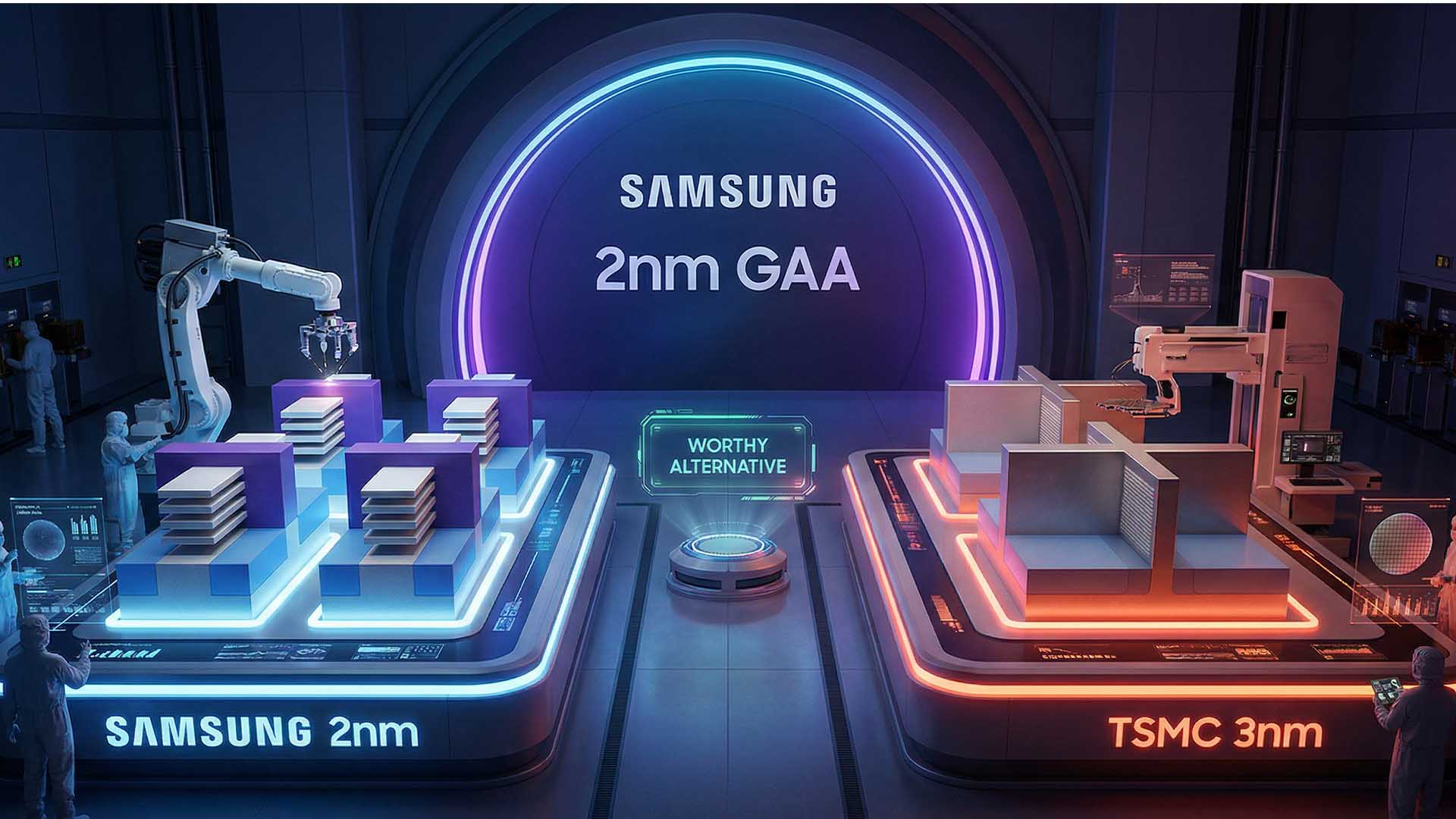
TSMC has been the default choice for enterprises looking for high-performance chips, but its lead times—often stretching to months or even years—have forced buyers to reconsider their options. Samsung’s 2nm process, with its focus on transistor density and power efficiency, could offer a compelling alternative. While it may not yet match TSMC in raw performance, its ability to provide faster availability is a key factor for businesses prioritizing speed over waiting.
Key Specifications
- Process node: 2nm
- Transistor density: Higher than competing 3nm nodes
- Performance per watt: Optimized for AI inference and training
- Availability: Targeted for mid-2024, with early access programs open
The 2nm process is designed to pack more transistors into the same space while maintaining efficiency—a critical advantage for AI workloads that require both speed and power savings. Unlike TSMC’s offerings, which are in high demand but often require long-term commitments, Samsung’s approach could provide a more flexible solution for enterprises looking to deploy AI solutions quickly.
Who Stands to Gain?
For mid-sized businesses and startups, Samsung’s process could be transformative. These companies, often constrained by budget or time, may find that the trade-off in peak performance is justified by the ability to secure chips faster. However, larger enterprises with strict performance requirements might still lean toward TSMC for now.
That said, the market is evolving rapidly. Samsung’s entry signals a shift away from TSMC’s near-monopoly, potentially giving buyers more options without significant sacrifices in performance. But reliability remains an open question—early adopters will need to closely monitor yield and long-term stability as Samsung ramps up production.
A Market in Transition
The semiconductor industry is no longer the exclusive domain of TSMC. Samsung’s move reflects a broader trend toward competition, where multiple players can meet demand without leaving enterprises stranded for months or years. If Samsung delivers on its promises, it could redefine how companies approach AI chip procurement—balancing cost, speed, and performance in ways that were previously impossible.
The next few months will be decisive in determining whether this is a sustainable alternative or just a temporary solution. For now, the choice isn’t about picking one over the other but about navigating a market where flexibility may become as valuable as raw performance.