The ASUS ROG Equalizer 16-pin cable has emerged as a game-changer for enthusiasts pushing the limits of NVIDIA’s RTX 5090. Unlike traditional cables that introduce voltage drop and thermal inefficiencies, this specialized connector delivers measurable improvements in both power delivery and cooling performance.
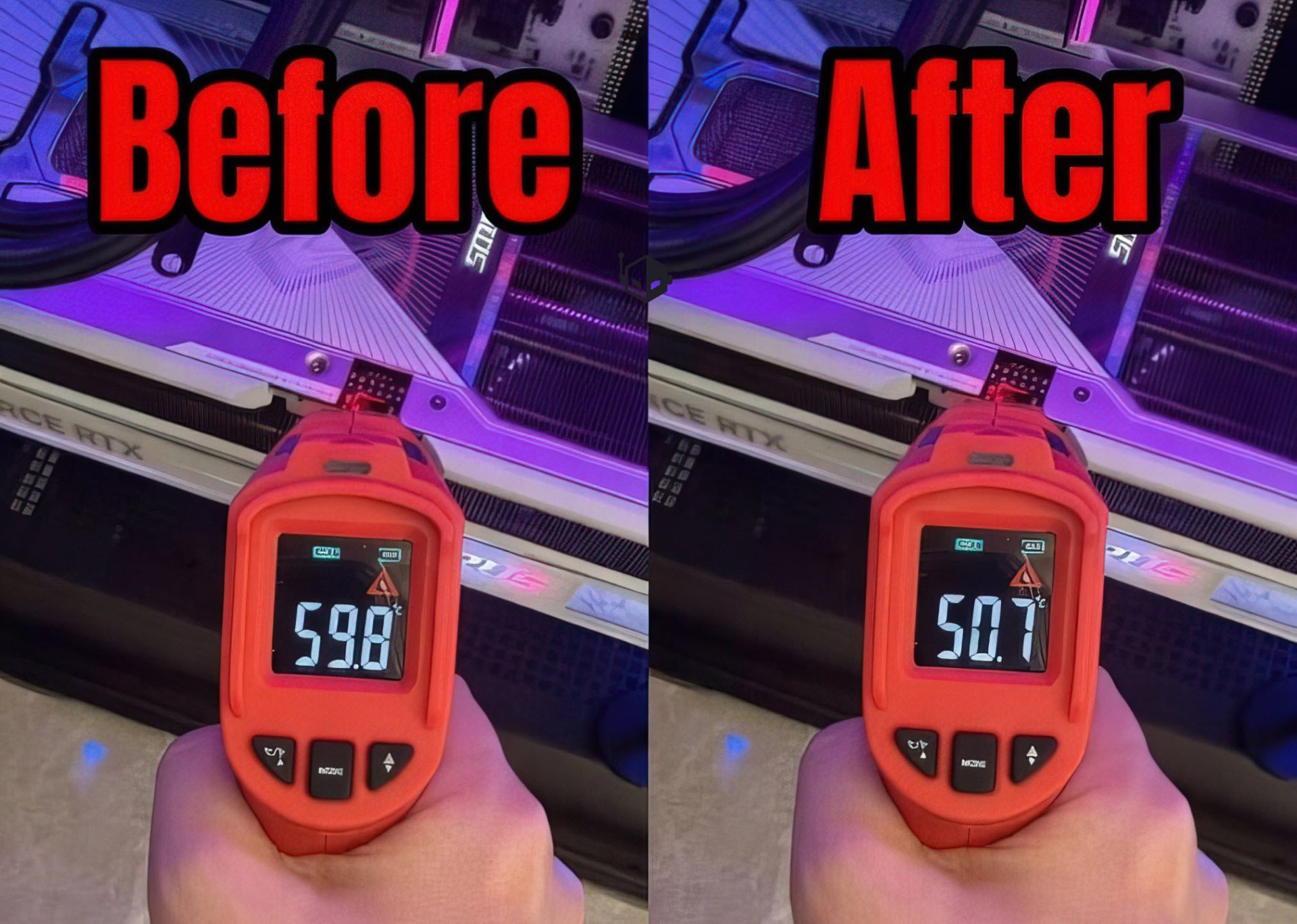
In controlled benchmarks, the ROG Equalizer cable demonstrated a 10 °C reduction in GPU temperatures compared to standard cables while also lowering voltage drop. This translates to more stable overclocks and improved longevity for high-end GPUs that demand precise power delivery—especially critical for builds running at stock or beyond official specifications.
Engineering the Difference
The ROG Equalizer cable addresses a fundamental challenge in high-power GPU designs: voltage stability. Standard 16-pin connectors can suffer from resistance and impedance mismatches, leading to power loss and increased heat. ASUS’s solution integrates thicker, higher-gauge conductors and optimized routing to minimize these losses, ensuring that the full power output reaches the GPU without degradation.
Key Specifications
- Temperature Reduction: Up to 10 °C lower GPU temperatures under load compared to standard cables.
- Voltage Drop: Reduced voltage loss, improving power delivery stability for overclocked setups.
- Compatibility: Designed specifically for NVIDIA’s RTX 5090 and other high-power GPUs with 16-pin power connectors.
This isn’t just about raw performance metrics—it’s about the real-world impact on system stability. Users running high-end GPUs at stock or pushed beyond official limits will see more consistent frame times, reduced thermal throttling, and longer component lifespans. For PC builders prioritizing longevity over short-term gains, this cable represents a worthwhile upgrade.
Availability remains limited to specialized retail channels, but ASUS is expected to expand distribution as demand for high-power GPU setups grows. Pricing has not been confirmed, but given the premium nature of the RTX 5090 ecosystem, it will likely sit at a higher tier than standard cables.
What’s next? As NVIDIA continues to push power requirements in future GPUs, cables like the ROG Equalizer may become an even more critical component for maintaining stability. For now, enthusiasts looking to squeeze every degree of performance from their RTX 5090 should consider this upgrade seriously.