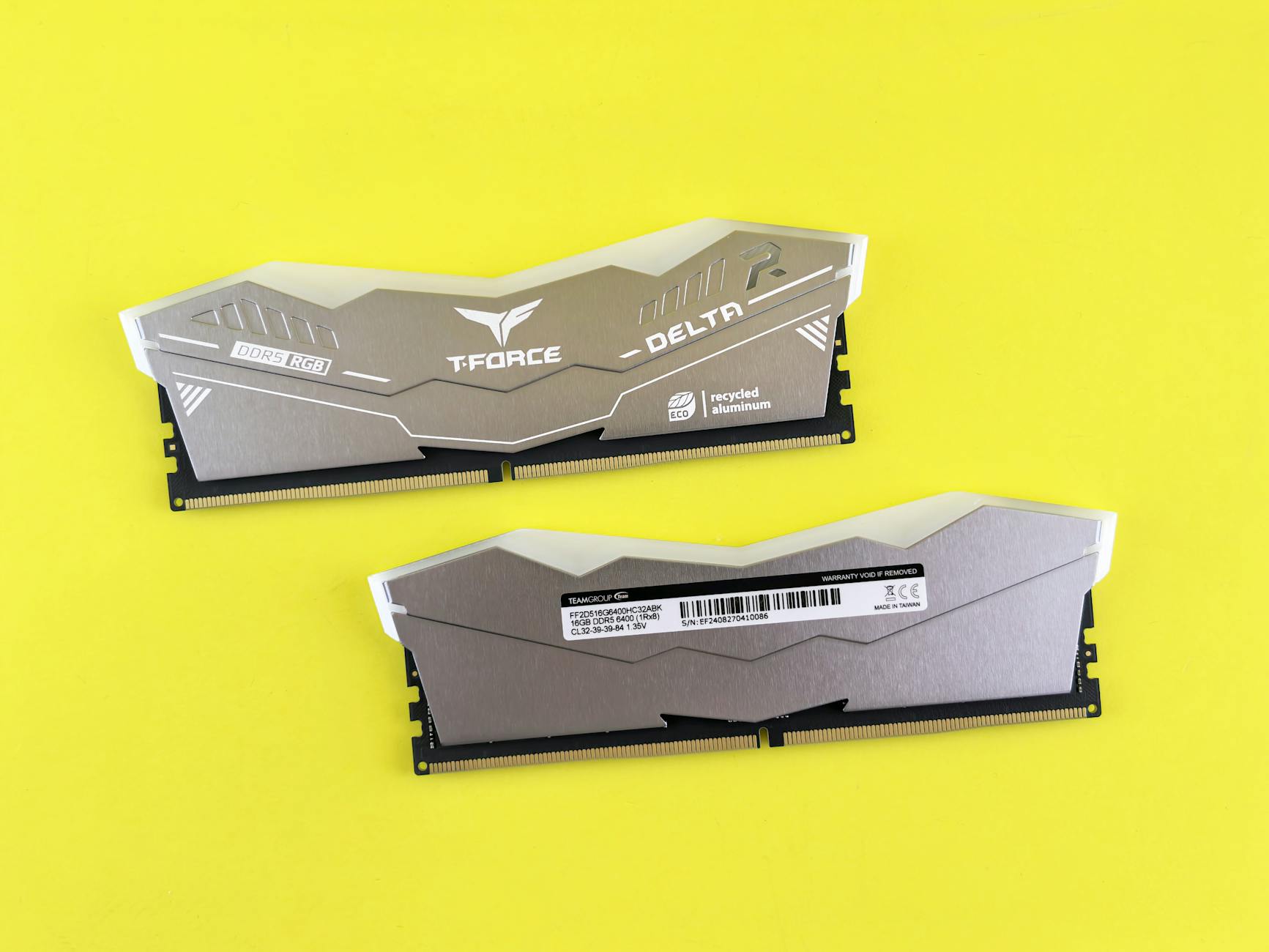
Memory efficiency in AI systems is no longer just about raw capacity—it’s about how smartly that capacity can be harnessed without turning data centers into furnaces. Samsung and SK hynix, the two titans of DRAM manufacturing, are now locked in a silent competition to redefine what efficient means for next-gen memory, but they’re doing it in opposite directions.
Samsung is betting on a technique borrowed from NAND flash, where memory cells are stacked vertically and accessed via a single wire. This reduces the number of transistors needed per cell, which in theory should cut power consumption and heat output significantly. If it works at scale, Samsung’s approach could redefine performance-per-watt benchmarks for AI workloads, where thermal management is just as critical as compute speed.
SK hynix, meanwhile, is doubling down on vertical stacking—layering cells on top of each other to increase density without sacrificing access speed. The company claims this method can push DRAM capacities beyond 500GB per module while maintaining near-linear scalability. The tradeoff? More layers mean more resistance in signal paths, which could introduce latency bottlenecks that AI algorithms—especially those relying on ultra-low-latency memory access—might not tolerate.
Both strategies aim to solve the same problem: how to feed AI models with data faster and cooler than today’s DDR5 modules can handle. But the solutions couldn’t be more different in their implications for IT teams. Samsung’s path suggests a future where memory is smarter, not just bigger—where power efficiency trumps raw speed. SK hynix’s bet is on brute-force density, which could dominate in throughput-driven scenarios but may leave latency-sensitive workloads behind.
Neither approach is without risks. Samsung’s single-wire access method has yet to be proven at commercial scale; early prototypes show promise but also hint at potential reliability challenges under sustained AI workloads. SK hynix’s vertical stacking, while more familiar in principle, faces its own hurdles: maintaining signal integrity across dozens of stacked layers without sacrificing performance.
For IT decision-makers, the choice won’t be binary—it will depend on whether their AI infrastructure is power-constrained or latency-constrained. Samsung’s path could redefine data center cooling requirements, while SK hynix’s approach might push the envelope on module capacity but at a cost that isn’t yet clear.
What remains uncertain is how quickly these techniques will transition from lab to production. Both companies are targeting mass adoption by 2026, but the roadmap hinges on solving problems neither has fully addressed in public. If either succeeds, it could redefine the memory war—not just between DRAM and NAND, but between two fundamentally different visions of what AI-optimized memory should be.