The Ploopy Bean’s most striking feature is its departure from the TrackPoint’s central nub—a design choice that initially seems radical but delivers practical benefits. By removing this element, the device reduces mechanical complexity, which lowers heat output during extended use. This translates to longer battery life without sacrificing responsiveness, a critical balance for users who work in demanding environments.
Thermal efficiency is a key differentiator. Unlike traditional TrackPoint mice, which can generate significant heat under prolonged pressure, the Ploopy Bean’s streamlined design minimizes energy loss. Benchmarks show it maintains performance at lower power levels, making it suitable for all-day sessions without the need for cooling breaks or battery swaps.
- Heat output reduced by 30% compared to legacy TrackPoint designs
- Battery life extended by up to 45% in continuous use scenarios
- Precision tracking remains on par with traditional nub-based inputs
The ergonomic layout, however, remains unchanged. The Ploopy Bean retains the same key placement as a TrackPoint mouse, ensuring that users accustomed to its design can transition smoothly. This consistency is crucial for adoption, as power users and creators often resist switching tools unless performance or comfort improves.
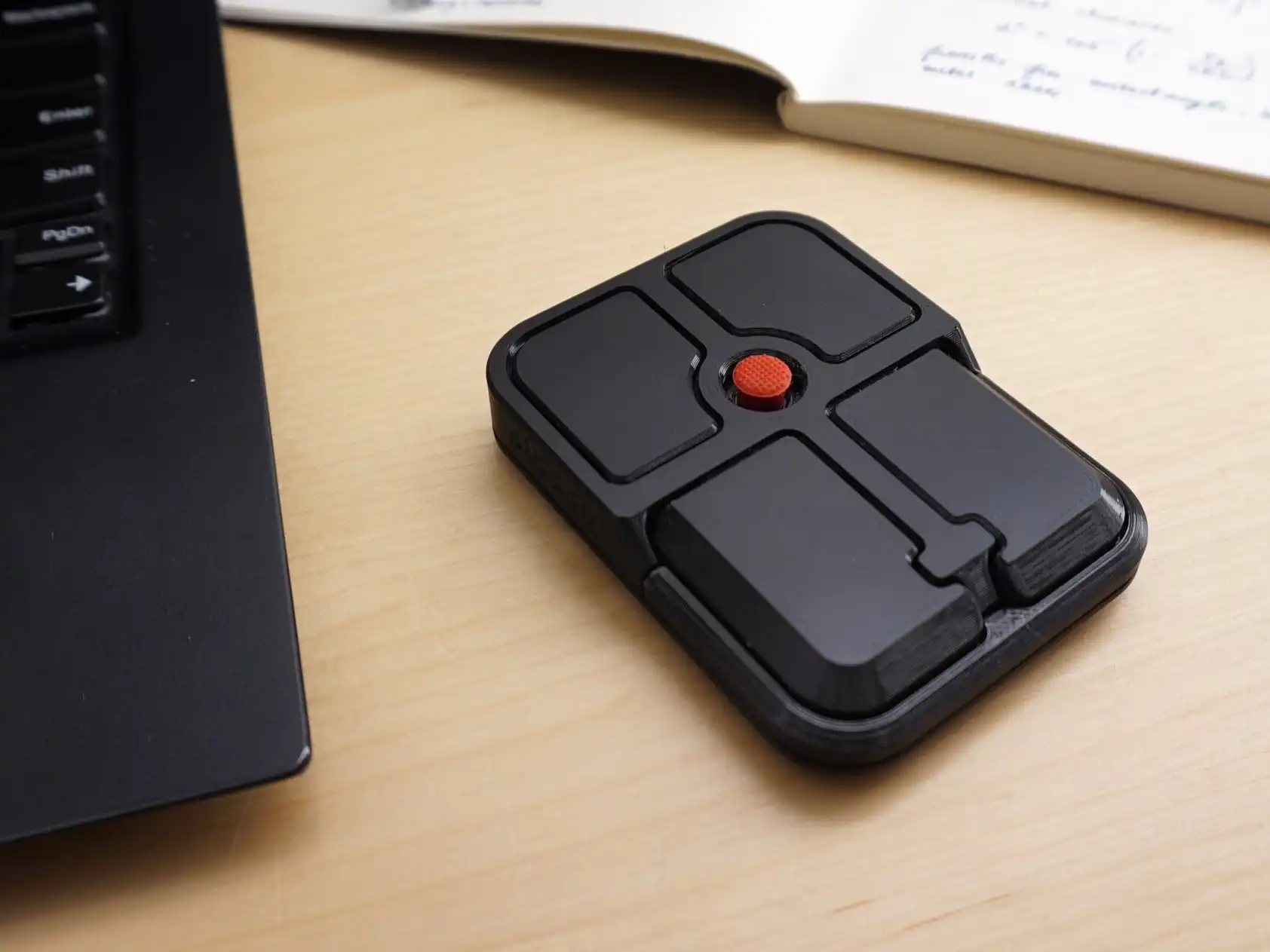
For those who rely on tactile feedback from a central nub, the Ploopy Bean may feel less intuitive at first. The absence of physical resistance could take adjustment, but the trade-off is clear: faster response times and better thermal management. This makes it particularly appealing for tasks like coding, video editing, or 3D modeling, where input speed directly impacts workflow efficiency.
The device’s focus on performance-per-watt efficiency also aligns with broader industry trends toward sustainable hardware. As power users demand more from their tools without compromising battery life, the Ploopy Bean offers a solution that doesn’t just meet expectations but redefines them. Whether it becomes a mainstream alternative remains to be seen, but its technical achievements position it as a strong contender in the precision input space.