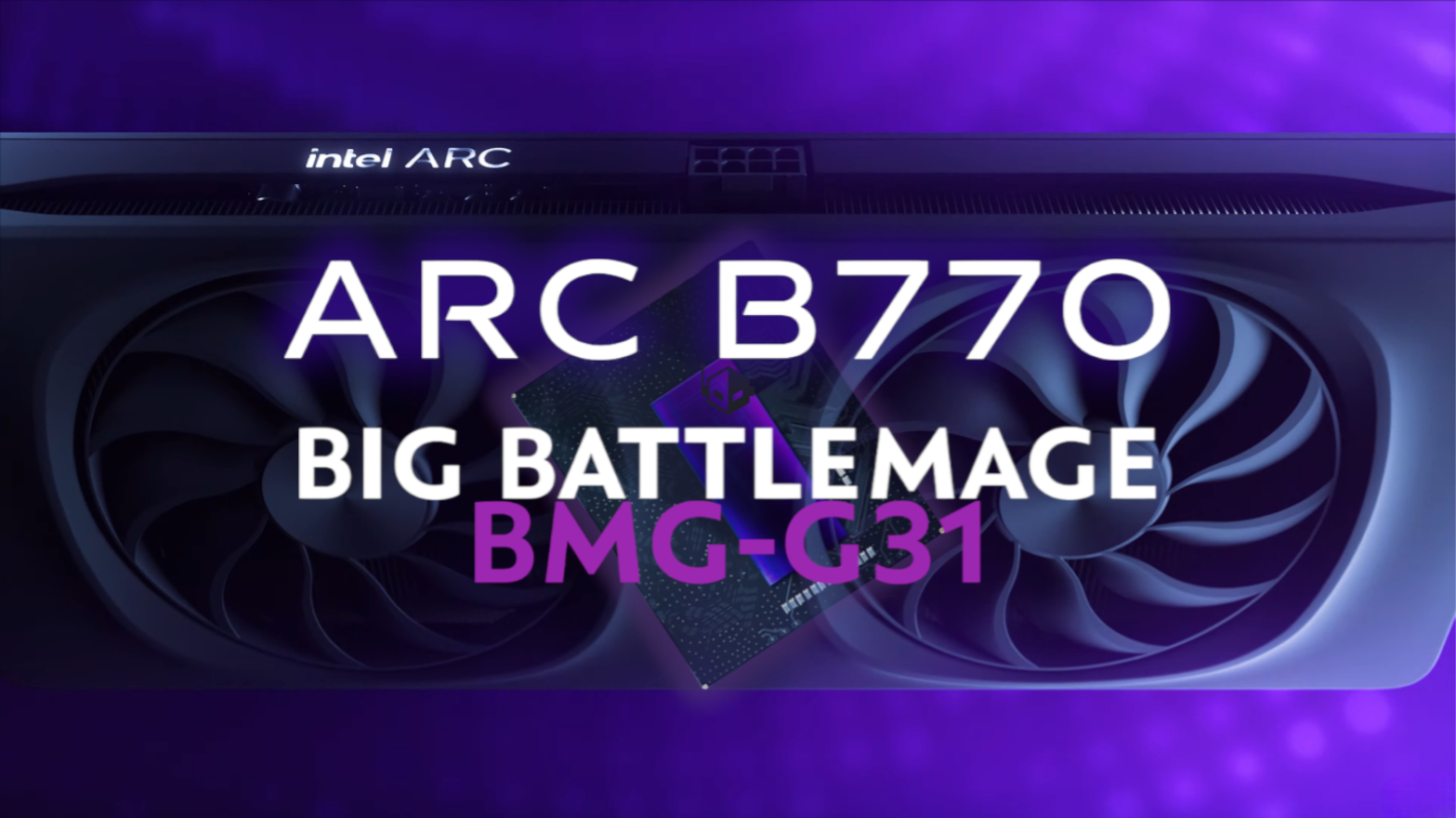
Intel’s **Arc B770** was supposed to be the crown jewel of its Battlemage discrete GPU lineup, a direct competitor to the **RTX 5060 Ti** and **RX 9060 XT**. But according to credible industry sources, the chipmaker may scrap the consumer version entirely, leaving only workstation variants like the **Arc Pro B70** to materialize.
Why the shift? The **Arc B570** and **B580** failed to gain significant traction in the gaming market, despite offering competitive performance. With limited demand and high development costs, the **B770**—built on the **BMG-G31** die—appears to be a casualty of Intel’s strategic realignment. The same silicon, however, will power the **Arc Pro B70**, a workstation GPU featuring **32 Xe2 cores** and **32GB GDDR6 VRAM**, expected to debut alongside Intel’s **Arrow Lake Refresh** announcement.
For gamers, this means Intel’s consumer GPU ambitions remain stalled. The **B770** would have been a long shot against NVIDIA and AMD’s lower mid-range offerings, but its absence now removes even that possibility. Workstation users, however, may soon see the **Pro B70** and other variants enter the market, filling a niche Intel has been expanding.
What’s Changing?
- Arc B770 (consumer): Likely canceled due to poor market uptake of prior Arc GPUs.
- Arc Pro B70 (workstation): Confirmed for Q1 launch, leveraging the same **BMG-G31** die as the canceled B770.
- Key specs (Pro B70):
- Chip: BMG-G31 (32 Xe2 cores)
- Memory: 32GB GDDR6
- Target market: Professional workloads, not gaming
The **Pro B70**’s **32GB GDDR6** is a stark contrast to consumer GPUs, catering to applications like 3D rendering, AI acceleration, and high-resolution video editing. Meanwhile, the **B770**’s potential cancellation underscores Intel’s pivot toward workstation and data center markets—where margins and scalability matter more than gaming dominance.
Who Wins?
Gamers will have no choice but to rely on **NVIDIA** or **AMD** for lower mid-range GPUs, as Intel’s consumer lineup remains frozen. The **Pro B70**, however, could carve out a space in professional segments, particularly if priced competitively against AMD’s **Radeon Pro** or NVIDIA’s **RTX Ada** workstation cards.
If Intel had priced the **B770** aggressively, it might have attracted budget-conscious gamers. But with the **RX 9060 XT** and **RTX 5060 Ti** already dominating the sub-$300 market, the **B770**’s arrival would have been an uphill battle. Now, that battle won’t happen at all.
For workstation users, the **Pro B70**’s arrival could be timely, offering a high-end alternative to NVIDIA’s **RTX 6000 Ada** cards—assuming Intel delivers on performance and driver stability.