Intel is preparing to introduce two new workstation GPUs, the Arc Pro B70 and B65, both equipped with substantial amounts of error-correcting code (ECC) memory. The B70 will feature up to 32 GB of GDDR6 memory, while the B65 will offer a similar configuration but with fewer compute cores. These cards are designed to cater to professionals who require robust performance for tasks such as AI inferencing and large-scale data processing.
The Arc Pro B70 is expected to be the more powerful of the two, with 32 Xe2 cores and a memory bus width of 256 bits. It will also support a total graphics power (TGP) range of 160 to 290 watts, with a reference design TBP of 230 watts. The B65, on the other hand, will have 20 Xe2 cores and a peak TGP of 200 watts, making it a more budget-friendly option compared to its higher-end counterpart.
- Memory: Up to 32 GB GDDR6 ECC
- Compute Cores: B70 - 32 Xe2 cores; B65 - 20 Xe2 cores
- Memory Bus: 256-bit
- TGP Range: B70 - 160-290 W; B65 - 200 W (peak)
The inclusion of ECC memory is a significant feature for these GPUs, as it allows for reliable data processing in environments where data integrity is critical. This makes them particularly suitable for workstations used in scientific research, financial modeling, and AI development. The B70's higher core count and TGP range suggest it will be aimed at the upper end of the market, where performance demands are most stringent.
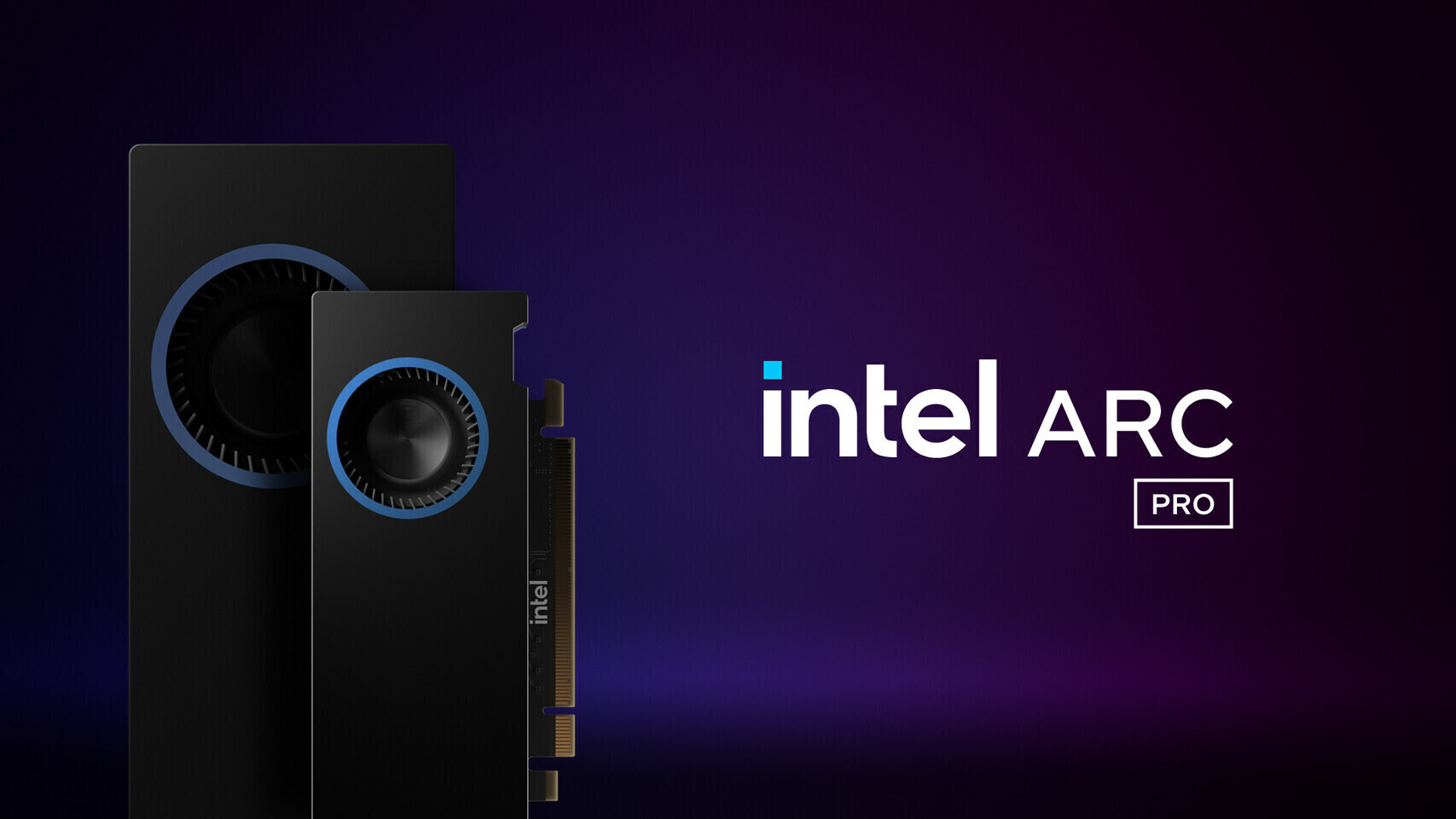
While the exact pricing has not been confirmed, industry analysts suggest that these GPUs could position themselves competitively in the workstation market, potentially challenging established players like AMD's Radeon Pro series. The launch of these cards is expected to coincide with a broader push by Intel to improve its standing in the professional GPU segment, which has seen significant competition from both NVIDIA and AMD in recent years.
The introduction of the Arc Pro B70 and B65 GPUs marks a notable step for Intel in addressing the needs of professionals who require high-performance computing solutions. With their substantial memory configurations and robust compute capabilities, these cards are poised to play a significant role in shaping the future of workstation GPU technology.