The Intel Arc Pro B70 series marks a significant shift in how businesses approach high-performance computing. With up to 32 GB of VRAM and support for multi-GPU configurations under Linux, these cards are designed to handle modern AI inference tasks with precision. Unlike previous generations, the B70 series introduces Honeywell PTM7950 phase-change material to manage thermal performance, ensuring stability even in demanding workloads.
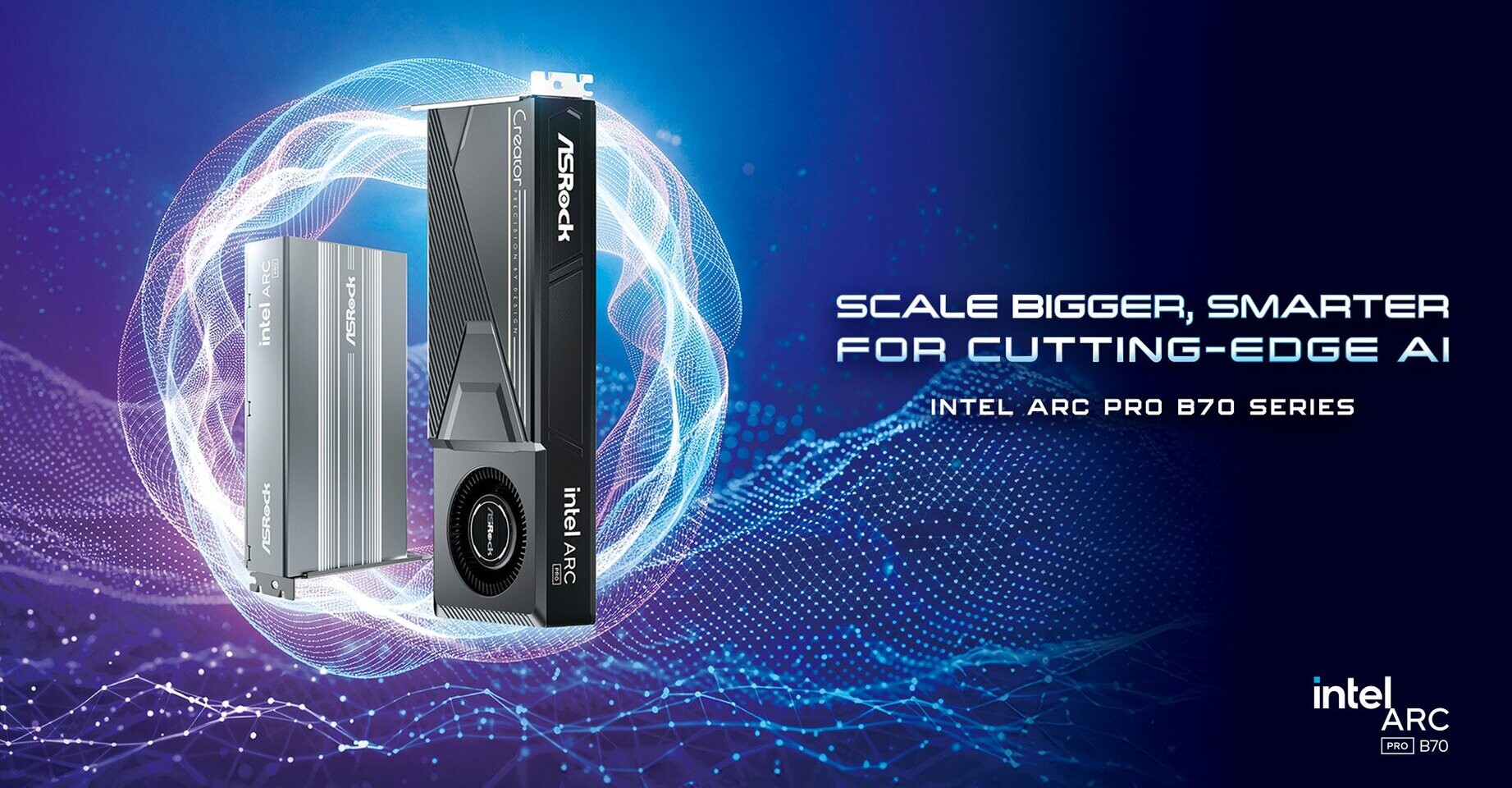
ASRock has tailored two versions of the Arc Pro B70: the Creator 32 GB and the Passive 32 GB. The Creator model features a blower-style cooling system optimized for sustained performance, while the Passive variant eliminates fans entirely, making it ideal for industrial environments where noise and maintenance are concerns. Both cards leverage Intel's latest Xe Matrix Extensions (XMX) AI engines, delivering a significant performance boost across APIs like OpenGL.
Why This Matters for Small Businesses
The Arc Pro B70 series is not just an upgrade—it’s a rethinking of how workstations handle AI workloads. For small businesses, the 32 GB VRAM configuration means smoother processing for large language models (LLMs) and other AI-driven tasks without the need for multiple GPUs. The Passive model, in particular, offers a maintenance-free solution for high-density server environments where traditional cooling systems are impractical.
Key Specifications
- VRAM: 32 GB (ECC-ready)
- AI Engine: Xe Matrix Extensions (XMX)
- Cooling: Blower-style with Honeywell PTM7950 phase-change material (Creator) / Fanless design (Passive)
- Multi-GPU Support: Linux-optimized configurations
- Performance Boost: Significant improvements in OpenGL and other APIs
The Creator 32 GB model’s cooling system is a standout feature, using phase-change material to minimize thermal resistance. This ensures that businesses can run intensive workloads without throttling, which was a common issue with earlier generations of professional GPUs. Meanwhile, the Passive variant’s fanless design addresses a long-standing need in enterprise computing—silent operation with no trade-off in performance.
Looking Ahead: What’s Confirmed and What’s Not
While ASRock has confirmed the launch of both models, details on broader availability remain unclear. The B70 series follows a trend of specialized GPUs for AI inference, but its long-term impact will depend on how well it integrates with existing enterprise workflows. For now, businesses upgrading to this generation can expect a noticeable difference in efficiency, particularly in tasks requiring large-scale data processing.
The Arc Pro B70’s introduction also raises questions about compatibility risks. Unlike consumer GPUs, professional-grade hardware often requires careful planning when integrating into existing systems. Businesses should verify whether their current setups support the 12VHPWR connector, which has been a point of contention in recent GPU launches. For those willing to take that step, however, the B70 series offers a compelling balance between performance and thermal management—making it a strong contender for the next generation of workstation upgrades.