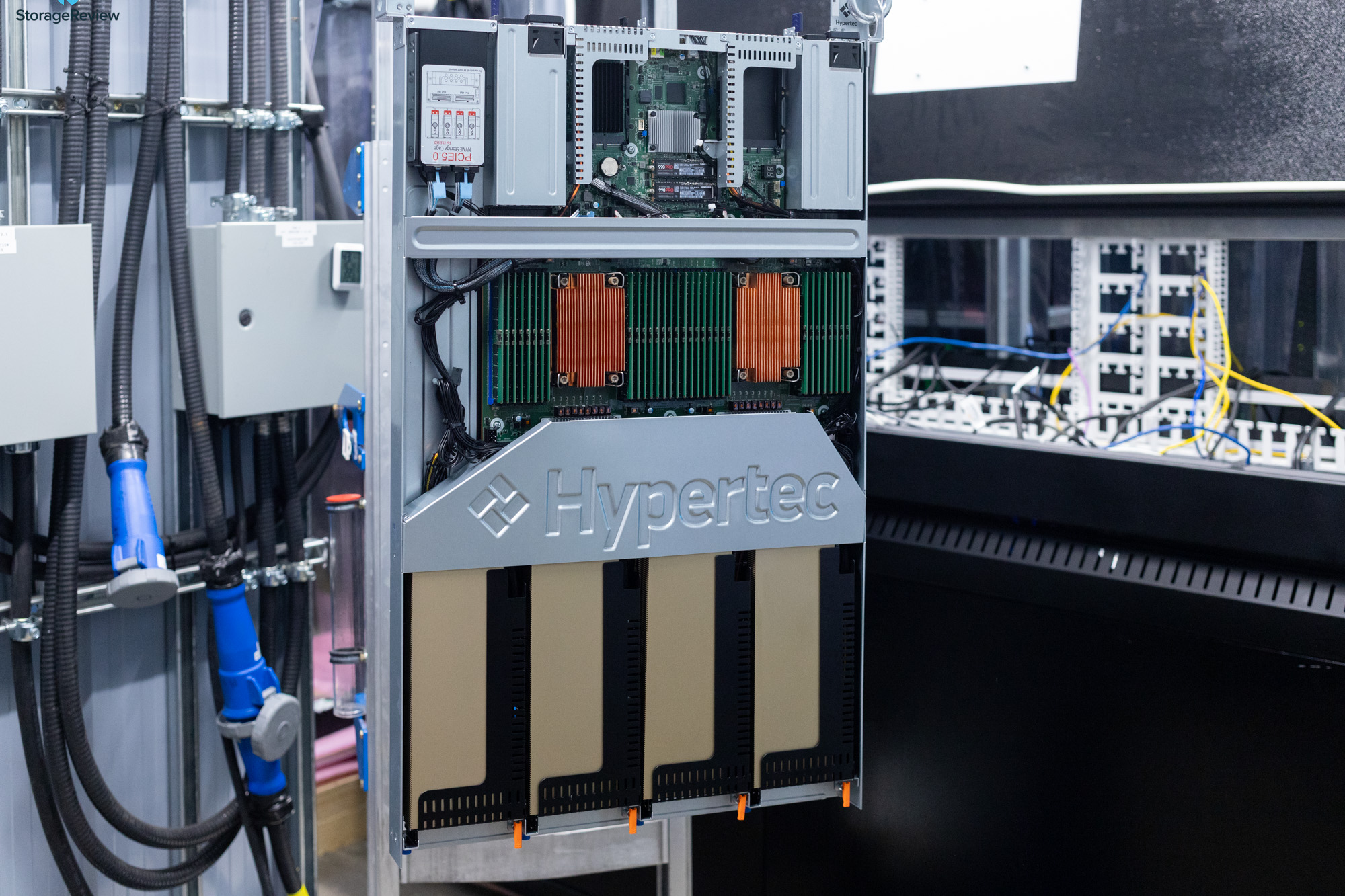
Government storage systems have long faced a critical trade-off: increasing density often comes at the cost of resilience or compatibility with existing workflows. The latest deployment breaks that pattern, delivering 80 petabytes in one 42U cabinet without compromising on error correction, checksum validation, or operational continuity.
Built around Western Digital’s Ultrastar DC HC550 drives—each holding 18 terabytes—the system represents a significant leap forward. Previous generations typically used 14TB drives, meaning the switch to 18TB adds nearly 25 percent more capacity per drive without altering the physical footprint or power requirements of the rack. This efficiency allows agencies to consolidate workloads that previously required two racks into a single unit, reducing operational costs by approximately 20 percent on space alone.

- Single-rack capacity: 80 petabytes
- Drive model: Ultrastar DC HC550 (18TB)
- Error correction and validation remain identical to legacy systems
- No disruption to existing data-migration workflows
Reliability remains a cornerstone of the design. The system retains the same error-correction profile, checksum validation, and temperature monitoring as its predecessors, ensuring that IT teams require no additional training or process adjustments. Operators see only one change: more capacity per drive slot without any degradation in performance.
Looking ahead, industry roadmaps suggest a transition to 20TB drives later this year could further increase density. However, real-world validation at that scale has not yet been published, leaving open the question of whether the same balance between capacity and reliability can be sustained.