For PC gamers, the choice between raw performance and long-term stability is a constant negotiation. Borderlands 4’s latest update delivers a noticeable 20% boost in frame rates, yet the path forward may still favor NVIDIA hardware over AMD’s RX 5000 series—at least for now.
The improvement isn’t uniform across all setups. When tested at native resolution without DLSS, an RTX 2070 paired with a Core i7-9700K saw a 43% FPS jump on low settings at 1080p. High-end rigs, like the RTX 4080 and Core i7-13700K, climbed from 54.96 to 78.43 FPS at 1440p with very high graphics—nearly a 43% gain. Yet even these gains don’t erase the game’s early stumbles.
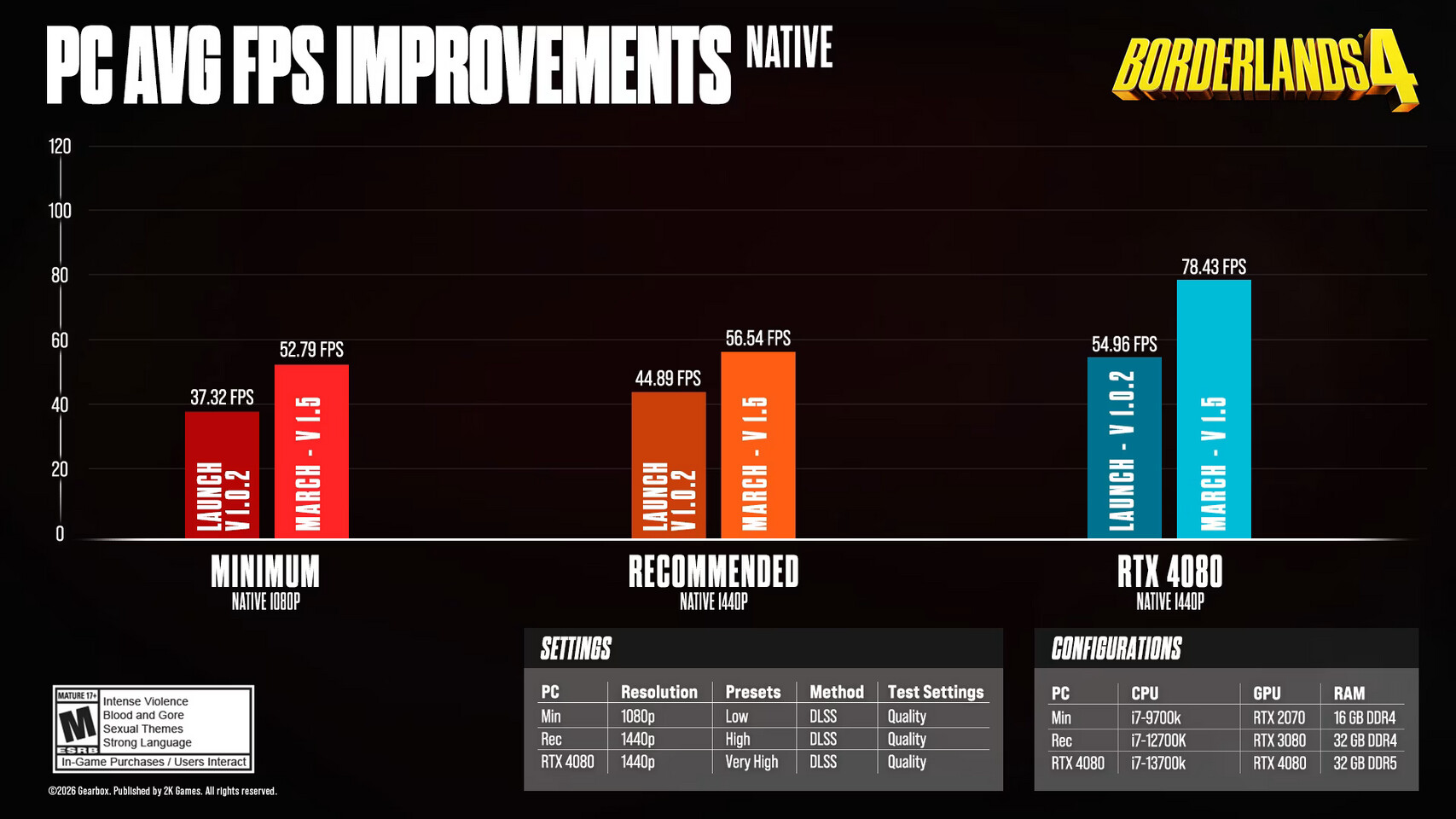
The update’s efficiency tweaks target shader processing, polygon counts, and Unreal Engine 5’s Virtual Shadow Maps, reducing CPU and GPU load. But for power users, the real question is whether these optimizations will outlast the hardware they’re built for. The RX 5000 series, already in maintenance mode, sees no direct mention of future support—leaving its users to wonder if this update marks a turning point or just another step toward obsolescence.
For now, the focus remains on frame rate consistency. 1% and 0.1% lows have improved dramatically, with some tests showing near-100% gains in smoothness. Yet without a clear roadmap for AMD’s aging GPUs, the balance tips further toward NVIDIA—raising the specter of platform lock-in for those chasing peak performance.
Where things stand: Borderlands 4 is smoother, but the question of longevity lingers. For power users, the tradeoff between immediate gains and long-term compatibility remains unresolved.