Windows 11 will soon treat RAM more efficiently, reducing the need for applications to hog memory while keeping background tasks from slowing down active programs.
The upcoming update introduces two key changes: a smarter memory allocator and stricter background process constraints. The first ensures that applications release unused memory faster, while the second limits how much idle processes can consume, even when system resources are plentiful.
Developers working with memory-intensive workloads will see the most immediate benefit. Applications that previously struggled to free up memory—such as video editors or large-scale data processors—should now perform more predictably under heavy loads. Microsoft’s goal is to make multitasking smoother without forcing users to close unnecessary programs manually.
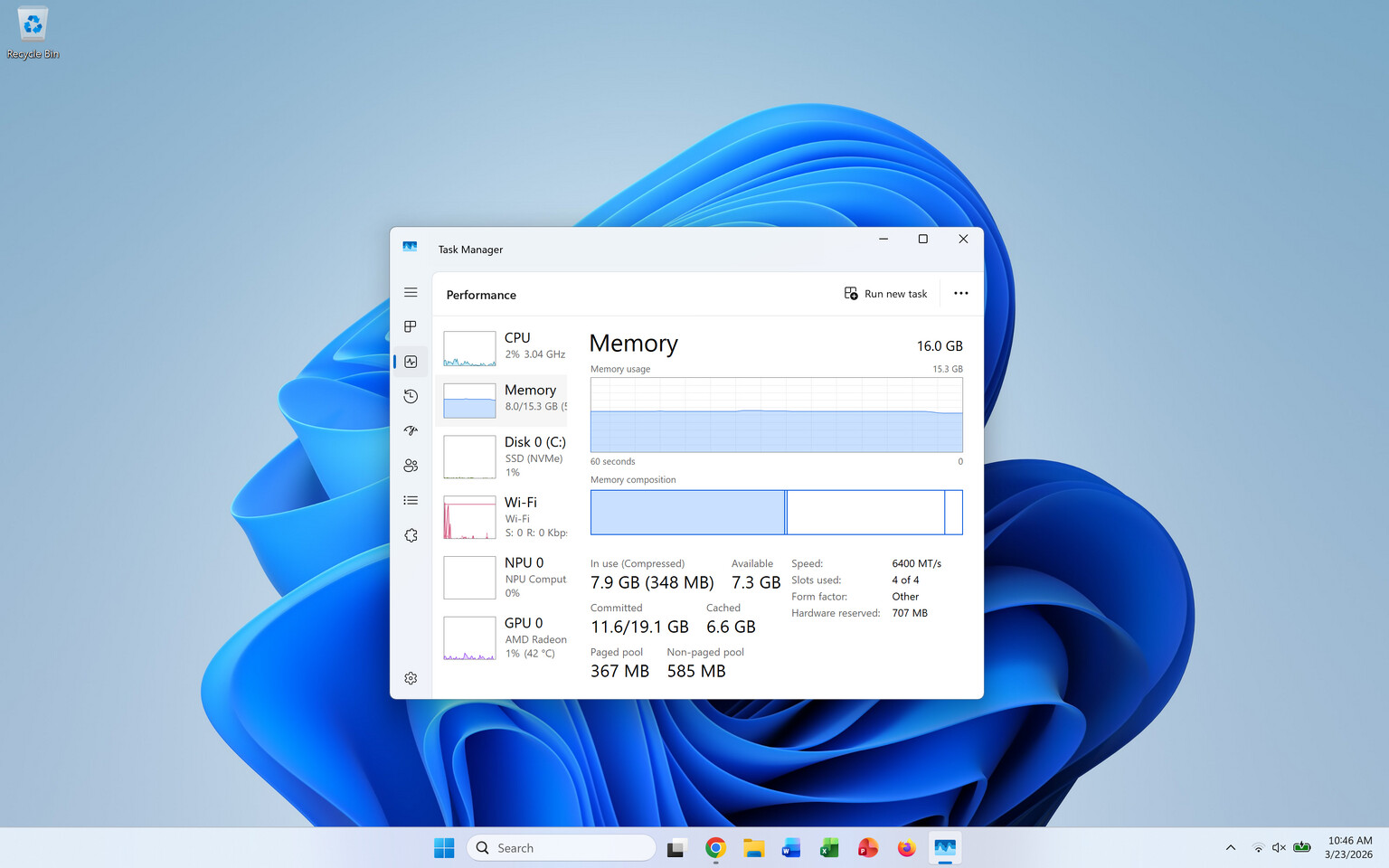
There are limits, however. The improvements focus on optimization rather than raw capacity. Systems with 8 GB of RAM will still feel constrained in demanding scenarios, and the changes may not fully address fragmentation issues in long-running processes. Users relying solely on background tasks—such as sync services or media streaming—might notice less noticeable gains.
For developers building applications for Windows 11, this update could reduce the need for manual memory management in certain cases. However, workloads that push beyond 16 GB of RAM will still require careful optimization to avoid bottlenecks. The best beneficiaries will be mid-range systems running professional or creative software, where efficient memory handling directly translates to faster workflows.