Minisforum has unveiled two new all-flash NAS systems designed to cater to both home users and power users, built around Intel’s latest Core Series 3 (Wildcat Lake) processors. The S5 and S7 units mark a shift toward silent, high-performance storage solutions without traditional HDDs.
The S5 is positioned as a compact, fanless NAS with five M.2 2280 PCIe 4.0 x1 SSD slots, making it ideal for environments where noise is a concern, such as home theaters. It supports up to 16 GB of LPDDR5X-7200 memory and includes a range of connectivity options: a 10 GbE RJ45 port, a 2.5 GbE RJ45 port, two USB4 40 Gbps ports for high-speed data transfer, and HDMI 2.1 for display output. Wi-Fi 7 is also integrated, ensuring robust wireless performance. Combined SSD throughput reaches up to 10.8 GB/s, making it suitable for demanding tasks such as media streaming or light AI workloads.
On the other hand, the S7 scales up with seven NVMe slots, built on Minisforum’s MS-03 workstation platform, targeting more intensive storage needs like home labs or small business environments. Networking is more enterprise-focused, featuring dual 10G SFP+ fiber ports alongside a 10G RJ45 and a 2.5G RJ45 port. It also includes two USB4 40 Gbps ports for versatility. An LED status display provides real-time system and storage activity monitoring, making it easier to manage workloads.
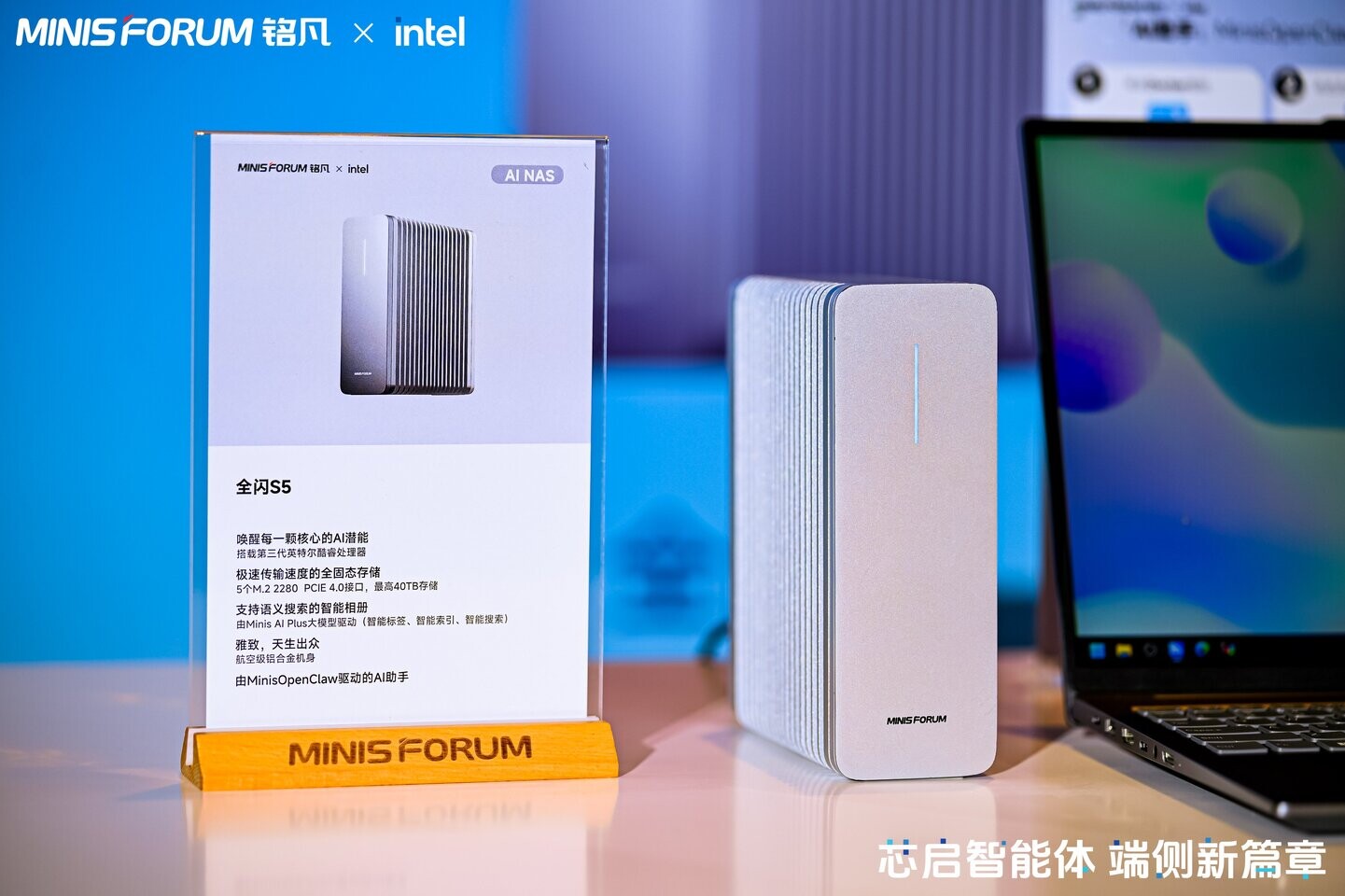
Both units support Minisforum’s MinisOpenClaw AI agent, which offers features like semantic photo search with a one-click installation process. This integration hints at future-proofing for AI-driven workflows, though the extent of these capabilities remains to be fully explored.
While no pricing or release date has been announced, the focus on silent operation and high-speed connectivity suggests these units aim to address gaps in both consumer and professional NAS markets. The absence of HDDs in favor of all-flash designs aligns with current trends toward faster, more reliable storage solutions.
The next steps will likely involve official pricing announcements and availability timelines, which could determine how quickly these systems gain traction among power users seeking seamless integration between performance and silence.