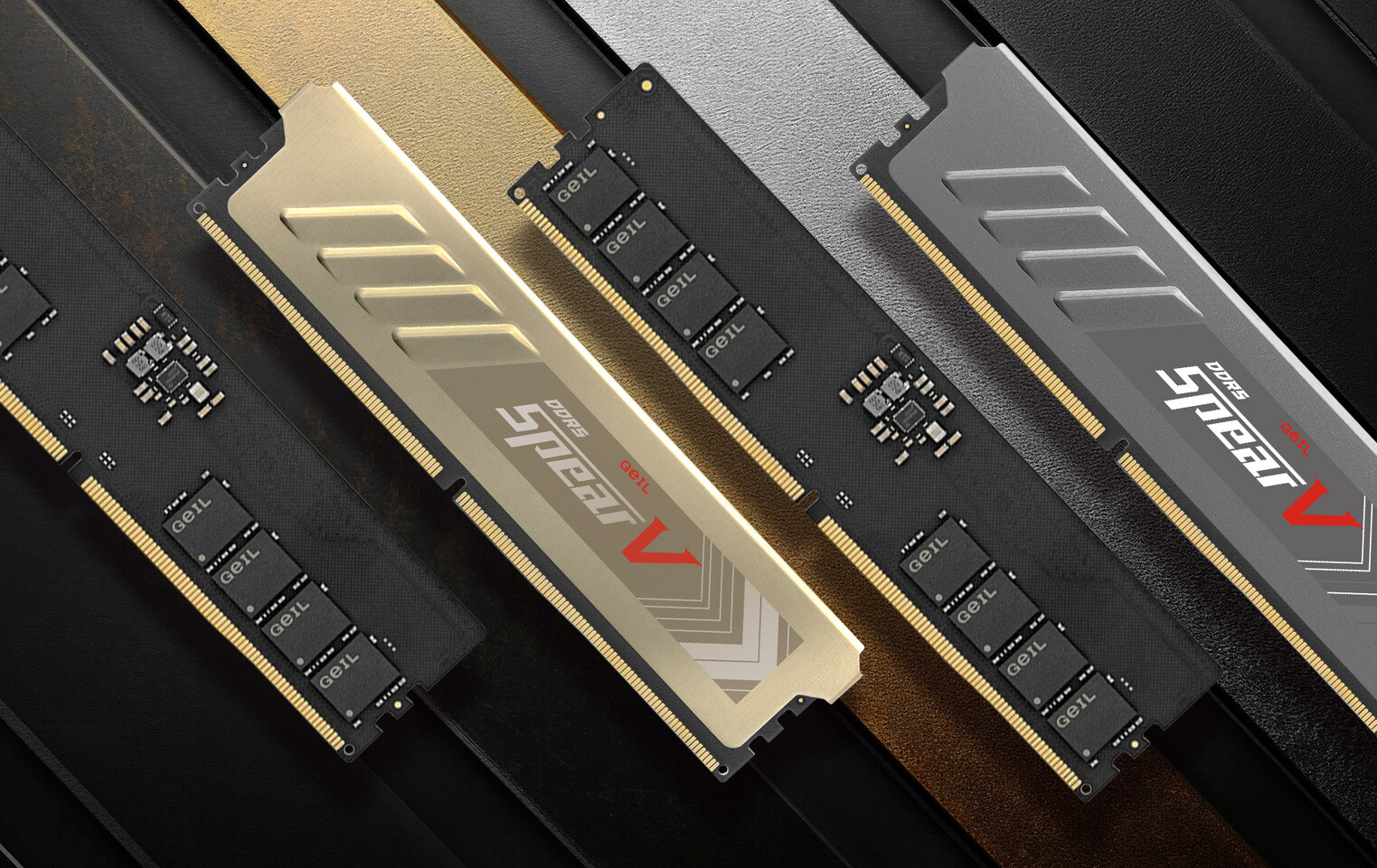
GeIL Breaks The DDR5 Overclocking Barrier With Spear V, Pushing 8000 MT/s Under Official JEDEC Specs Without Touching The BIOS Sarfraz Khan • at EDT Add on Google Unlike conventional DDR5 memory modules that need to push to 8000 MT/s manually, the GeIL Spear V can reach 8000 MT/s out of the box. GeIL Announces Spear V DDR5 Memory Ahead of Computex, Rated at 8000 MT/s Under Official JEDEC Standards Memory maker, GeIL, has reached a major milestone by achieving what conventionally was possible only through manual overclocking. Since the debut of the DDR5 memory standard, enthusiasts have been trying to push the DDR5 memory speeds beyond the official JEDEC standards, but the new GeIL Spear V DDR5 memory breaks that constraint. Related Story Biostar Teases “Next-Gen” AMD Motherboards for Computex 2026, Hinting at the First Ryzen “Zen 6” Designs With the announcement of Spear V DDR5 ahead of Computex 2026, GeIL has brought 8000 MT/s memory speed under official JEDEC standards, enabling enthusiasts and even regular users to access such high memory speeds without manual overclocking. Typically, pushing DDR5 memory requires using Intel XMP or AMD EXPO technologies to overclock beyond the JEDEC-rated speeds, but the Spear V DDR5 can reach 8000 MT/s natively without any overclocking profiles. The Spear V DDR5 works at CL64-64-64-128, which appears quite high for high-speed DDR5 memories, but it's more about making higher speeds mainstream for users than for latency-sensitive tasks. Given that the Spear V works at 1.1V at 8000 MT/s, it's a big improvement over regular DDR5 memory modules that tend to operate at a much higher voltage to reach 8000 MT/s. Therefore, the GeIL Spear V DDR5 is more efficient, brings better thermals, and should bring better reliability overall. Traditionally, users have to tweak DDR5 memory parameters from the BIOS to hit 8000 MT/s, which isn't guaranteed on every platform. The GeIL memory makes it possible natively on various platforms, particularly the Intel Arrow Lake. However, GeIL did say that it is working with industry partners to ready the memory modules for future-gen platforms, hinting indirectly at the AMD Zen 6 processors on the AM5 platform. It appears that memory vendors are focusing more on official standards compliance than on raw overclocking numbers. This could reduce the importance of XMP and EXPO-like overclocking profiles for mainstream users. Hopefully, we can also see tighter timings on such high-frequency JEDEC-standard memory modules in the near future, which could benefit various types of workloads. About the : Sarfraz Khan is a hardware with a focus on PC components and the builder community. With years of experience writing about PC hardware and laptops, his work has been featured on several reputable technology publications. Sarfraz's hands-on experience is demonstrated through his first-person accounts of using and comparing different hardware configurations, providing practical and relatable insights for everyday users. His technical analysis is respected by peers in the enthusiast community and has been cited by specialized hardware sites such as Germany's Igor's Lab. Follow on Google to get more of our news coverage in your feeds. Further Reading Teamgroup Pushes Elite DDR5 to 8000 MT/s at Just 1.1V, Squeezing JEDEC-Compliant Speed Out of Mainstream Memory DDR6 Memory Development Kicks off As Samsung, SK Hynix & Micron Race Towards Commercialization By 2028-2029 AMD’s Entry-Level Ryzen AI 5 435G Matches Ryzen 5 8600G in Leaked Benchmark, Despite Running Well Below Its Boost Clock User Walks Out From Walmart With A Ryzen 7 7800X3D And 7600X For Just $220 Read all on GeIL Breaks The DDR5 Overclocking Barrier With Spear V, Pushing 8000 MT/s Under Official JEDEC Specs Without Touching The BIOS