Storage solutions are evolving beyond the confines of subscription models, and LincPlus is positioning its new LincStation E1 as a tangible alternative for users seeking both flexibility and data sovereignty. Unlike traditional cloud services that lock users into recurring payments, the LincStation E1 allows individuals to build their own private cloud infrastructure—one that grows with their needs without the burden of monthly fees.
The device is set to debut on Kickstarter, targeting creators, home lab enthusiasts, and households looking for a more autonomous way to manage data. Its 4-bay design supports expansion as storage demands increase, while its compact form factor ensures it fits seamlessly into home offices or creative workspaces.
At the heart of the system is LincOS, an operating environment tailored specifically for NAS devices. It balances simplicity with robust functionality, enabling users to set up shared folders, automate backups, and access files remotely without the complexity often associated with self-hosted solutions. This approach appeals to both beginners and seasoned NAS users who want a streamlined experience without sacrificing control.
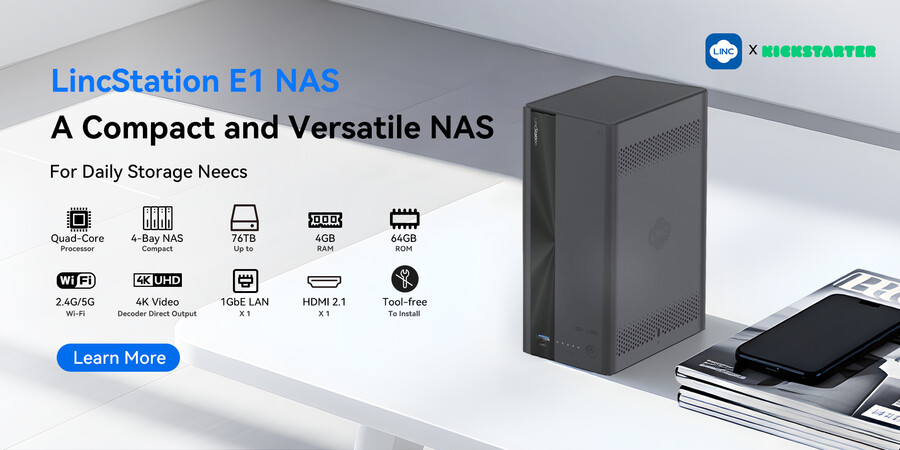
- Scalable Storage: 4-bay expansion for growing data needs
- Compact Design: Space-efficient for desktops or small workspaces
- Private Cloud Access: Secure, remote file management without third-party dependencies
- Creator-Focused Features: Supports media libraries, backups, and self-hosted services
The LincStation E1 is not just a hardware release—it’s a response to the shifting landscape of data storage. As subscription fatigue sets in and privacy concerns deepen, solutions that offer ownership without compromise are gaining traction. Whether for personal projects or professional workflows, this device aims to redefine how users interact with their digital assets.
While details on pricing and exact launch timelines remain under wraps, early supporters on Kickstarter will have the chance to secure the system at introductory rates. LincPlus, known for its design-forward approach (with awards like the Red Dot Design Award), continues to push boundaries in accessible computing solutions. The question remains: can it deliver on its promise of simplicity without sacrificing performance?