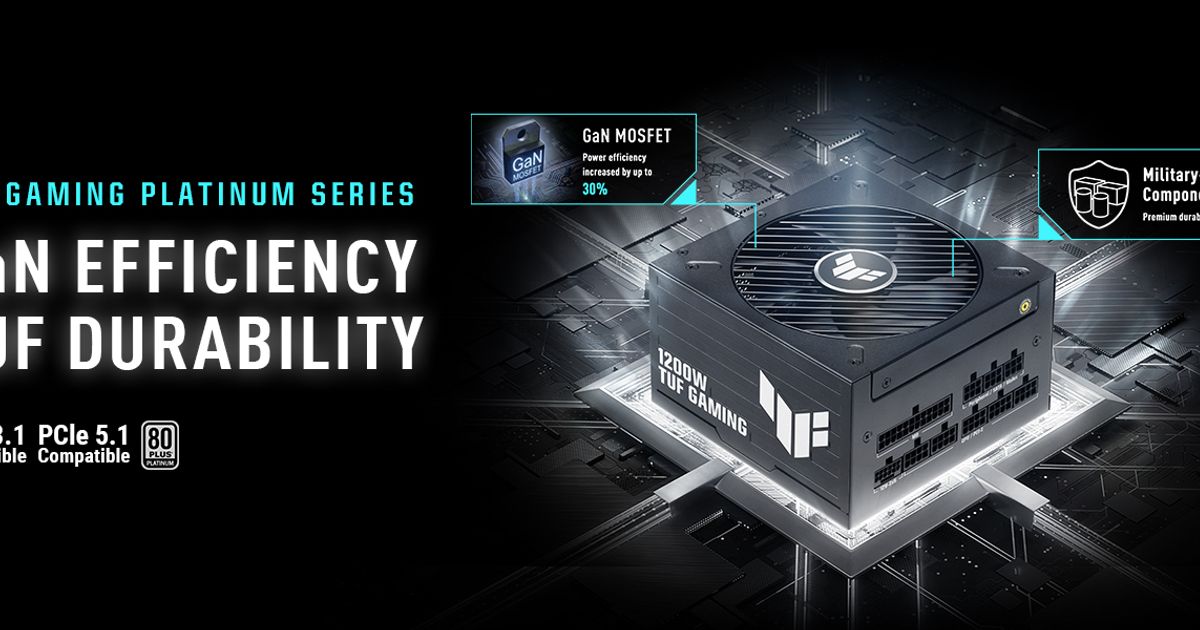
A PC builder’s worst fear isn’t a dead CPU or a faulty motherboard—it’s a power supply that fails mid-overclock. That’s why the new TUF Gaming Platinum series from ASUS stands out: it’s designed to handle extreme workloads without breaking down, and it does so while sipping less electricity than older models.
ASUS has introduced three variants in this series: 850W, 1000W, and 1200W. Each is built around an 80 PLUS Platinum certification, meaning at least 92% efficiency under typical loads—critical for systems running multiple GPUs or high-core-count CPUs. But the real innovation lies in how these PSUs manage heat and noise, especially when pushed to their limits.
Specs and Design: Built for Stress
The 850W model, for example, can deliver up to 96A on a single +12V rail—a figure that matters more than it seems. High-end graphics cards demand precise voltage delivery, and this PSU avoids the common pitfall of voltage sag when multiple GPUs are installed. The 1000W and 1200W models take this further, with up to 108A and 132A respectively, making them suitable for multi-GPU setups or systems with extreme power demands like liquid-cooled CPUs.
Where the series shines is in its thermal management. ASUS has moved away from traditional fan designs, opting for a dual-fan layout that keeps noise levels under 25 dB(A) at low loads and only ramping up when necessary. This matters because most high-wattage PSUs become obnoxiously loud under sustained load—a flaw this series avoids.
Context: The Platform Lock-In Question
High-end PC components are getting more power-hungry, but not all PSUs can keep up without overheating or failing prematurely. The TUF Gaming Platinum series addresses that gap, but it also raises a question for builders: is this another step toward platform lock-in? ASUS’s design choices, like the proprietary connector layout and firmware optimizations, suggest these PSUs are tuned for specific motherboard ecosystems. That could limit flexibility if you’re not building with ASUS components in mind.
On the other hand, the series supports fully modular cabling, which is a win for cable management and airflow. The 1200W model, in particular, is overkill for most single-GPU builds but makes sense for extreme multi-GPU rigs or workstations with multiple high-power GPUs.
Implications: Who Benefits Most?
The biggest beneficiaries are enthusiasts and professionals who run systems that push the limits of current hardware. Gamers with multi-GPU setups, AI researchers using high-end GPUs, and 3D rendering workstations will find these PSUs reliable under sustained loads. However, the platform-specific optimizations mean they’re less ideal for modular builds where components from different brands are mixed.
For most mainstream users, an 850W unit is more than enough, especially with the rise of single-GPU setups. But if you’re building a system that will run 24/7 under heavy loads, the TUF Gaming Platinum series offers peace of mind—provided you’re willing to commit to ASUS’s ecosystem.
The future of high-end power supplies is moving toward smarter thermal management and tighter integration with platform hardware. Whether this trend is a good thing depends on how much flexibility builders value over reliability. For now, the TUF Gaming Platinum series delivers where it matters most: under stress.