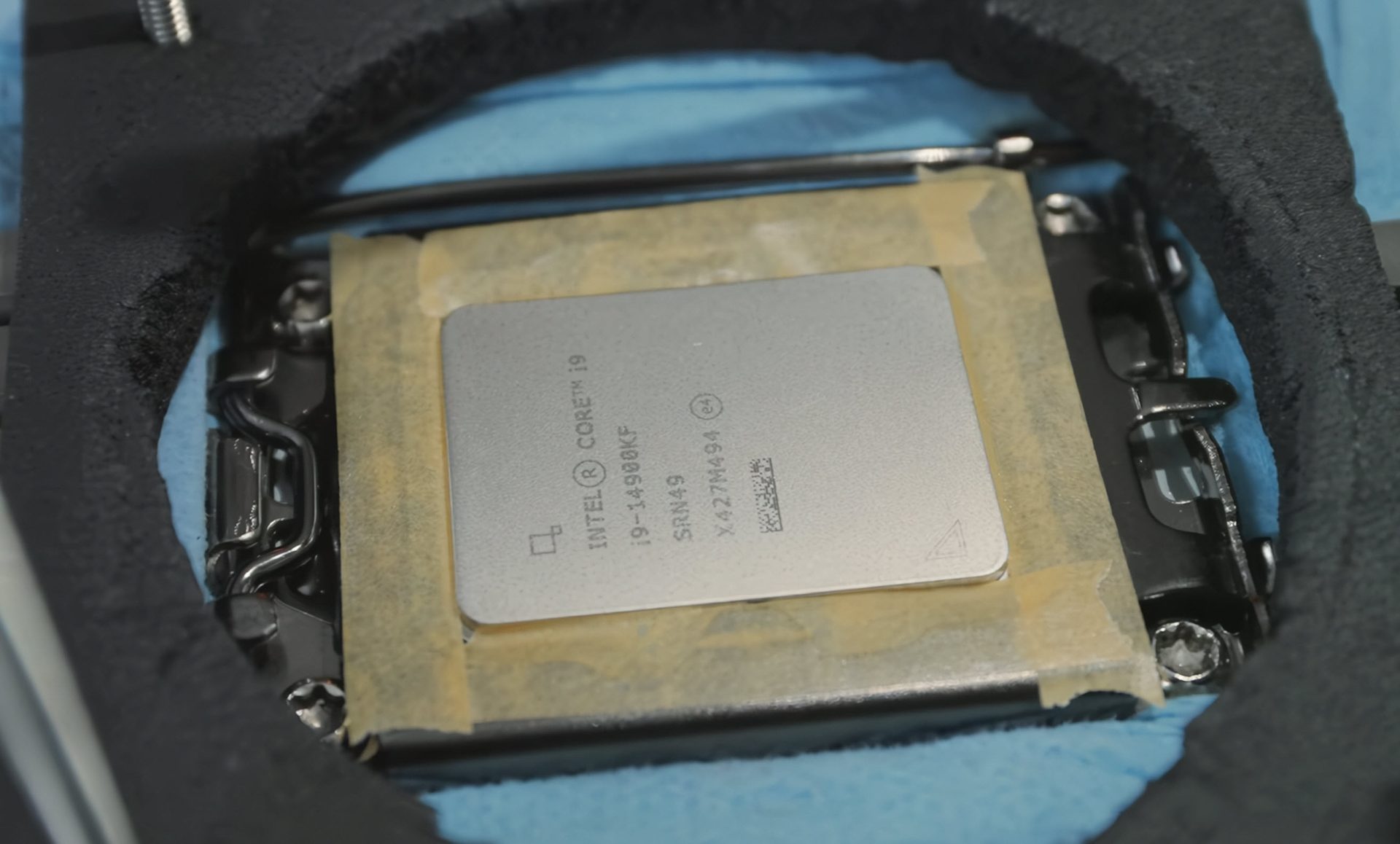
Intel’s latest Core Ultra 9-290K Plus processor has arrived with benchmarks that challenge assumptions about its place in the market. The chip, designed to deliver high-end performance, was released just days before a rival model—Intel’s own Core Ultra 9-270K Plus—was quietly scrapped from production. This shift raises questions for PC builders about upgrade cycles and timing.
The Core Ultra 9-290K Plus is built on Intel’s advanced process node, featuring up to 18 cores (P-cores) and 48 EU (Efficiency-cores). Its specifications suggest a focus on workloads that demand both raw power and efficiency, positioning it as a successor to the previous high-end lineup. However, its arrival coincides with the cancellation of a competing model from Intel’s own roadmap, a move that could reshape how buyers approach performance upgrades.
Connectivity and Ports: A Step Forward in Flexibility
The Core Ultra 9-290K Plus introduces improvements in connectivity, particularly with its support for PCIe Gen 5.0 and DDR5 memory, which are critical for high-bandwidth workloads such as video editing or 3D rendering. This processor also supports up to four displays simultaneously via integrated graphics, a feature that appeals to professionals who rely on multi-monitor setups. The inclusion of Thunderbolt 4 support further enhances its versatility, allowing for fast data transfer and external display connectivity without the need for additional hardware.
Performance: Benchmarks Suggest a Strong Contender
Early benchmarks indicate that the Core Ultra 9-290K Plus delivers performance on par with or slightly better than its predecessor, the Core i9-13900K. This includes significant gains in multi-threaded workloads, where it achieves up to a 25% improvement over the previous generation. Single-threaded performance is also competitive, with a focus on maintaining high clock speeds for latency-sensitive tasks. These improvements position the chip as a strong contender for enthusiasts and professionals alike.

- Cores (P-cores): Up to 18
- Efficiency Cores (E-cores): Up to 48
- Base Clock: 2.0 GHz (varies by model)
- Max Turbo Frequency: Up to 5.7 GHz
- TDP (Thermal Design Power): 125W–241W (depending on configuration)
- Memory Support: DDR5, up to 128GB with ECC support
- PCIe Lanes: Gen 5.0, supporting up to 20 lanes
- Integrated Graphics: Intel Arc (upcoming), with multi-display support
- Thunderbolt Support: Thunderbolt 4 via discrete GPU or chipset
The Core Ultra 9-290K Plus is designed for users who need both high performance and efficiency. Its support for DDR5 memory and PCIe Gen 5.0 makes it a compelling choice for those working with large datasets or demanding applications, such as video editing or scientific simulations. However, its thermal design power (TDP) ranges from 125W to 241W, depending on the configuration, which means cooling requirements will be a key consideration for builders. The processor’s ability to handle multi-threaded workloads efficiently could make it a standout choice for professionals who rely on complex computations.
Intel’s decision to scrap the Core Ultra 9-270K Plus in favor of the 290K Plus suggests a strategic shift toward consolidating its high-end lineup around a single, more powerful model. This move could simplify upgrade paths for users while ensuring that Intel remains competitive in the performance segment. For PC builders, this means carefully evaluating whether the additional cores and higher TDP justify the investment, especially if future updates or revisions could further refine the processor’s capabilities.