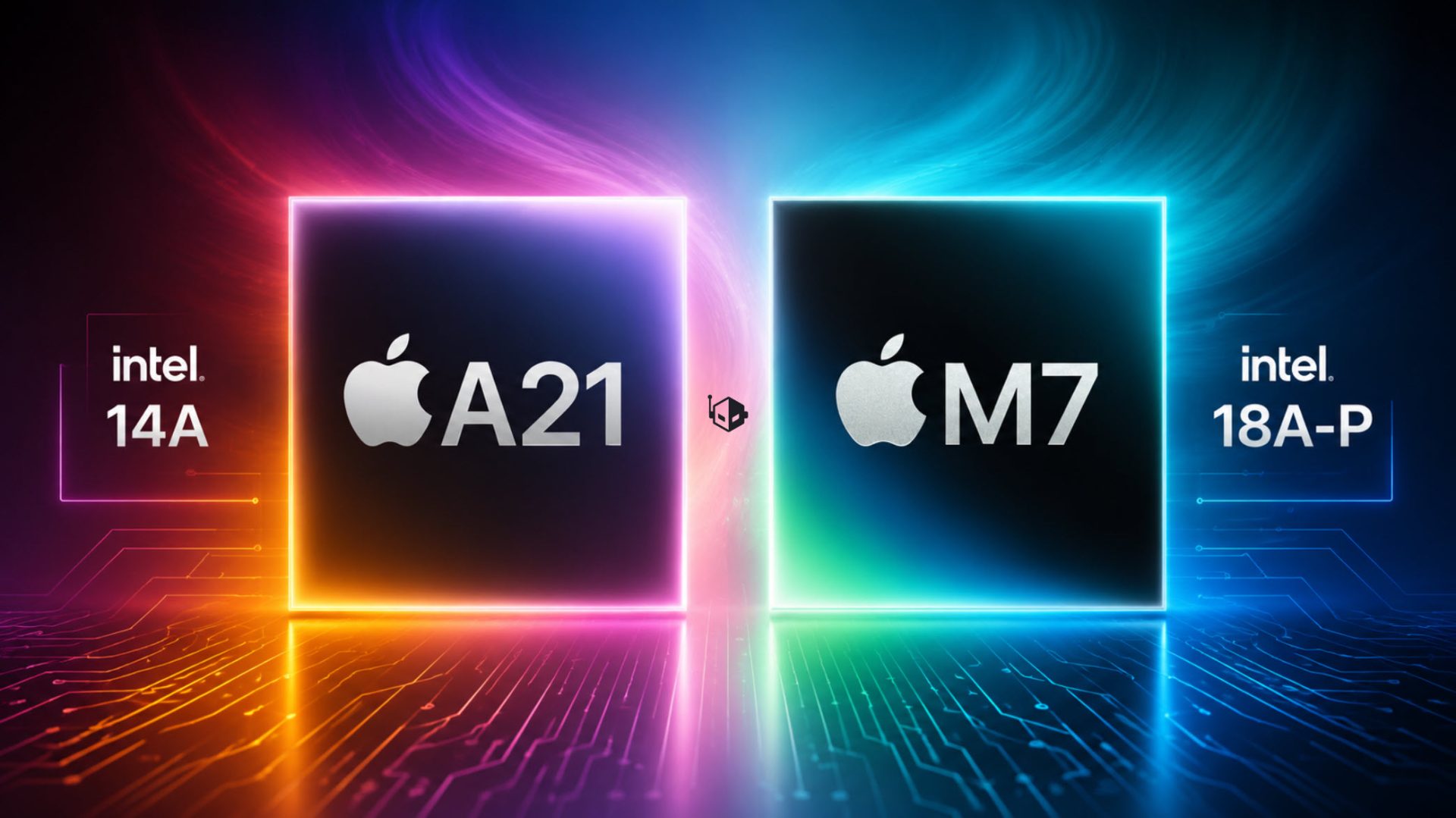
Apple’s chip strategy is set for a significant pivot, with Intel’s 18-angstrom process node slated to power next-generation M-series chips as early as 2027. Simultaneously, rumors suggest Apple may be preparing to shift iPhone processors to a new manufacturing partner by 2028, marking a potential turning point in its long-standing relationship with TSMC.
This dual-track transition—one for performance-focused M-series chips and another for mass-market iPhones—could have ripple effects across the industry. While Apple has historically relied on TSMC for volume production, leveraging Intel’s leading-edge process could signal a push for even greater efficiency in high-performance silicon.
At a glance
- Intel 18A-P: Expected to underpin M-series chips (M3, M4) starting in 2027, potentially improving power efficiency and performance density.
- iPhone chip transition: Rumored shift to a new manufacturing partner by 2028, possibly Intel or another advanced node supplier, challenging TSMC’s dominance.
- Performance implications: 18A-P could enable thinner, faster M-series chips with lower thermal output, appealing to creators and power users.
- Market impact: If confirmed, this would be Apple’s first major departure from TSMC for high-volume iPhone production since the A5 in 2012.
The move aligns with Intel’s resurgence in advanced process nodes, which have shown promise in both yield and performance. However, the catch lies in balancing supply stability and cost—factors critical for Apple’s ecosystem. While M-series chips cater to a niche but high-margin market, iPhones demand scalability that only TSMC has mastered at scale.
What’s confirmed—and what isn’t
Intel’s 18A-P node is the headline here, with reports suggesting it could debut in M-series chips (likely the M3 or M4) by late 2027. This follows Intel’s successful tape-out of its first 18A test chips earlier this year, which outperformed expectations in power efficiency—a key metric for Apple.
For iPhones, the timeline is less certain. A transition to a new partner by 2028 would be unprecedented, given TSMC’s role since the A5. If Intel steps in, it would need to prove not just node leadership but also manufacturing agility at scale—a challenge even Samsung has struggled with in recent years.
The biggest unknown remains pricing. Apple’s chip strategy has always been about balancing performance and cost, especially for iPhones. If Intel can deliver on both fronts, this could pressure TSMC to accelerate its own roadmap. But if yield or supply constraints emerge, the consequences for availability—and ultimately, device pricing—could be significant.
For creators and power users, the M-series shift is more straightforward: thinner, faster chips with better thermal management. For iPhone buyers, the stakes are higher, with potential tradeoffs in battery life, thermal throttling, or even form factor if Apple rethinks design around a new node. The roadmap is set to get far more complicated before it simplifies.