The ASUS ROG Flow Z13 Kojima Edition isn’t just a tablet—it’s a statement about what mobile workstations can achieve today. Its design, inspired by the visual language of Death Stranding, is more than aesthetic; it signals a shift in how users interact with portable devices. The question isn’t whether this device delivers performance, but rather how it redefines workflows for professionals who demand both power and portability.
This iteration builds on the ROG Flow Z13’s foundation, which already pushed boundaries with its 12th-generation Intel Core i7 processor, 16GB LPDDR5X RAM, and 512GB PCIe 4.0 SSD storage. The Kojima Edition, however, takes those specs further, integrating them into a form factor that feels both premium and functional. For small businesses or freelancers who rely on mobile workstations, this device could be a game-changer—not because it’s the fastest, but because it optimizes every component for real-world tasks like video editing, 3D modeling, or even VR development.
Where It Fits in the Ecosystem
The ROG Flow Z13 Kojima Edition slots into ASUS’s broader strategy of blending high-end performance with creative design. Unlike traditional laptops or tablets, it bridges the gap between productivity and entertainment, offering features like a 13.4-inch QHD+ OLED touch display (2700x1800 resolution) that supports 90Hz refresh rates for smoother workflows. The addition of an Intel Iris Xe graphics chip with 96 execution units ensures it can handle demanding applications without thermal throttling, a common issue in compact devices.
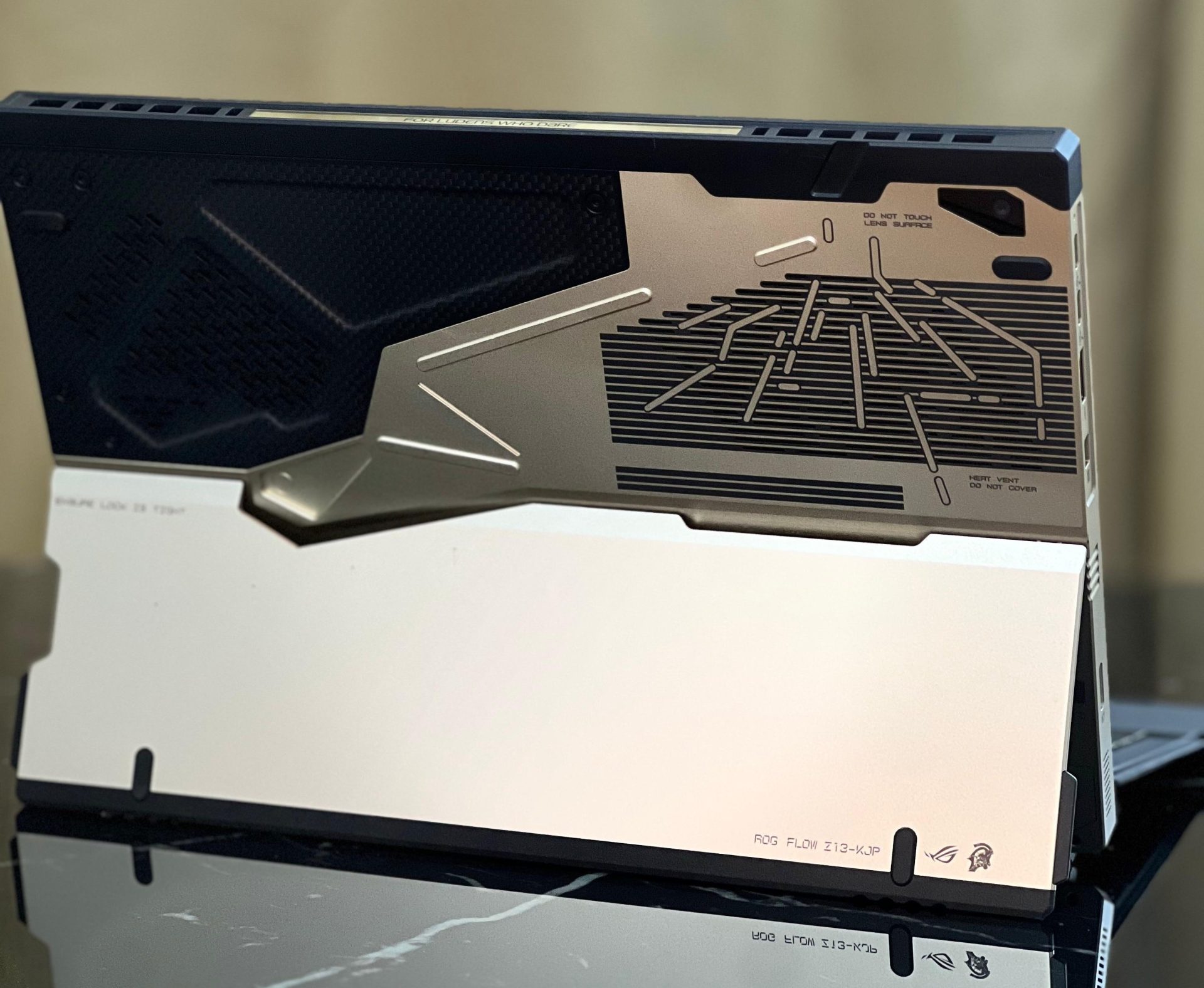
- 13.4-inch QHD+ OLED touch display (2700x1800 resolution)
- 90Hz refresh rate
- Intel Iris Xe graphics with 96 EUs
- 12th-gen Intel Core i7 processor, up to 4.7GHz
- 16GB LPDDR5X RAM (upgradable)
- 512GB PCIe 4.0 SSD storage (upgradable)
For users who’ve relied on older generations of mobile workstations, the leap here is noticeable. The OLED display alone—with its deeper blacks and brighter whites—improves color accuracy for tasks like video grading or digital art. Meanwhile, the 90Hz refresh rate reduces eye strain during long editing sessions, a practical upgrade over traditional 60Hz displays.
Who Benefits
The Kojima Edition is tailored for professionals who need both raw power and portability. Small businesses, freelance designers, or developers working on resource-intensive projects will find its performance compelling. The device’s thermal design, with vapor chamber cooling, ensures sustained performance even in extended use, a critical factor for users who can’t afford downtime.
Yet, the real innovation lies in how it integrates into existing workflows. For example, the inclusion of Thunderbolt 4 (USB-C) ports allows seamless connectivity to external monitors or high-speed storage, while the Windows 11 Pro operating system brings enterprise-grade security and multitasking capabilities. These features aren’t just incremental upgrades; they redefine what a mobile workstation can do in a professional setting.
What remains unconfirmed is how long battery life will hold up under heavy workloads, a common trade-off with high-performance devices. But if the rest of the specifications are any indication, this tablet could set a new standard for what’s possible on the go—without sacrificing the premium feel that users expect from ASUS.