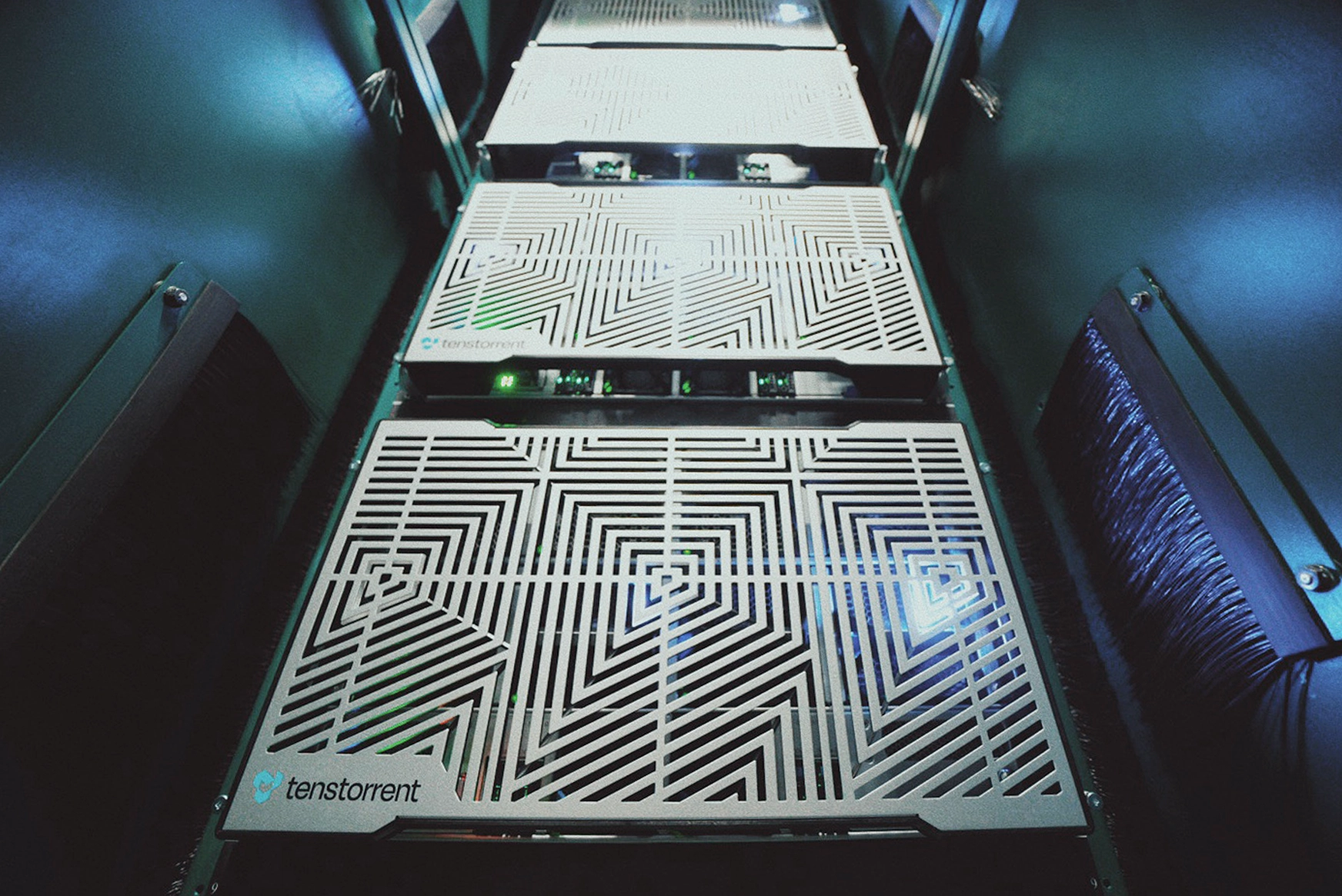
In the relentless pursuit of AI performance, Tenstorrent has introduced its Galaxy Blackhole accelerator, setting a new benchmark that could reshape the industry's cost-performance equation. With a reported 350 tokens per second on DeepSeek R1, it not only outpaces NVIDIA's GB300 but does so with a total cost of ownership that is five times more economical—a development that could accelerate adoption in data centers and edge deployments.
The Galaxy Blackhole's performance metric is a critical milestone for AI workloads. While the exact specifications remain under wraps, its ability to deliver such throughput suggests a focus on efficiency that goes beyond raw processing power. For developers working on large language models or generative AI tasks, this could mean faster training cycles and lower operational costs without sacrificing accuracy.
Key Specifications
- Performance: 350 tokens per second on DeepSeek R1 benchmark.
- Total Cost of Ownership (TCO): Reportedly five times lower than NVIDIA's GB300 for comparable workloads.
- Target Workloads: Optimized for AI inference and training, particularly in deep learning applications.
The Galaxy Blackhole's advantage over the GB300 extends beyond raw numbers. While NVIDIA's accelerator has been a staple in high-performance computing, its cost structure—including power consumption, cooling requirements, and software licensing—has often made it prohibitive for smaller enterprises or edge deployments. Tenstorrent appears to address these pain points head-on, offering a more accessible alternative without compromising on performance.
For everyday users, the implications are less immediate but no less significant. AI-driven applications, from recommendation engines to real-time analytics, rely on hardware that can process vast amounts of data efficiently. The Galaxy Blackhole's efficiency could lead to faster response times and lower latency in these systems, ultimately improving user experiences without requiring significant changes to existing workflows.
Looking ahead, the Galaxy Blackhole's success hinges on its ability to maintain this performance edge while scaling across different AI workloads. If it delivers on its promise, it could become a game-changer for developers who are increasingly looking for cost-effective solutions that don't compromise on power. For now, the focus remains on whether Tenstorrent can translate its benchmark results into real-world adoption—a challenge that will define the next phase of AI hardware competition.