PNY has reportedly sent customers a more powerful GeForce RTX 5070 Ti instead of the requested RTX 5070 during an RMA replacement. The mix-up underscores the ongoing supply chain disruptions in the GPU market, where inventory mismatches can lead to unintended hardware upgrades or downgrades for consumers and businesses alike.
The RTX 5070 Ti, based on NVIDIA's AD104 architecture, offers higher performance than the RTX 5070, which is built on the older AD102. This discrepancy suggests that PNY may have faced difficulties in sourcing the correct models, a common issue in today's tight GPU market. The situation raises questions about how companies handle RMAs and whether customers are receiving the hardware they truly need for their workflows.
For small businesses or content creators relying on specific GPU performance tiers, this mix-up could either boost productivity unexpectedly or leave them underpowered if the higher-end model isn't optimized for their needs. The lack of clarity around why such mismatches occur—whether due to supply constraints, miscommunication, or other factors—adds another layer of complexity to an already volatile market.
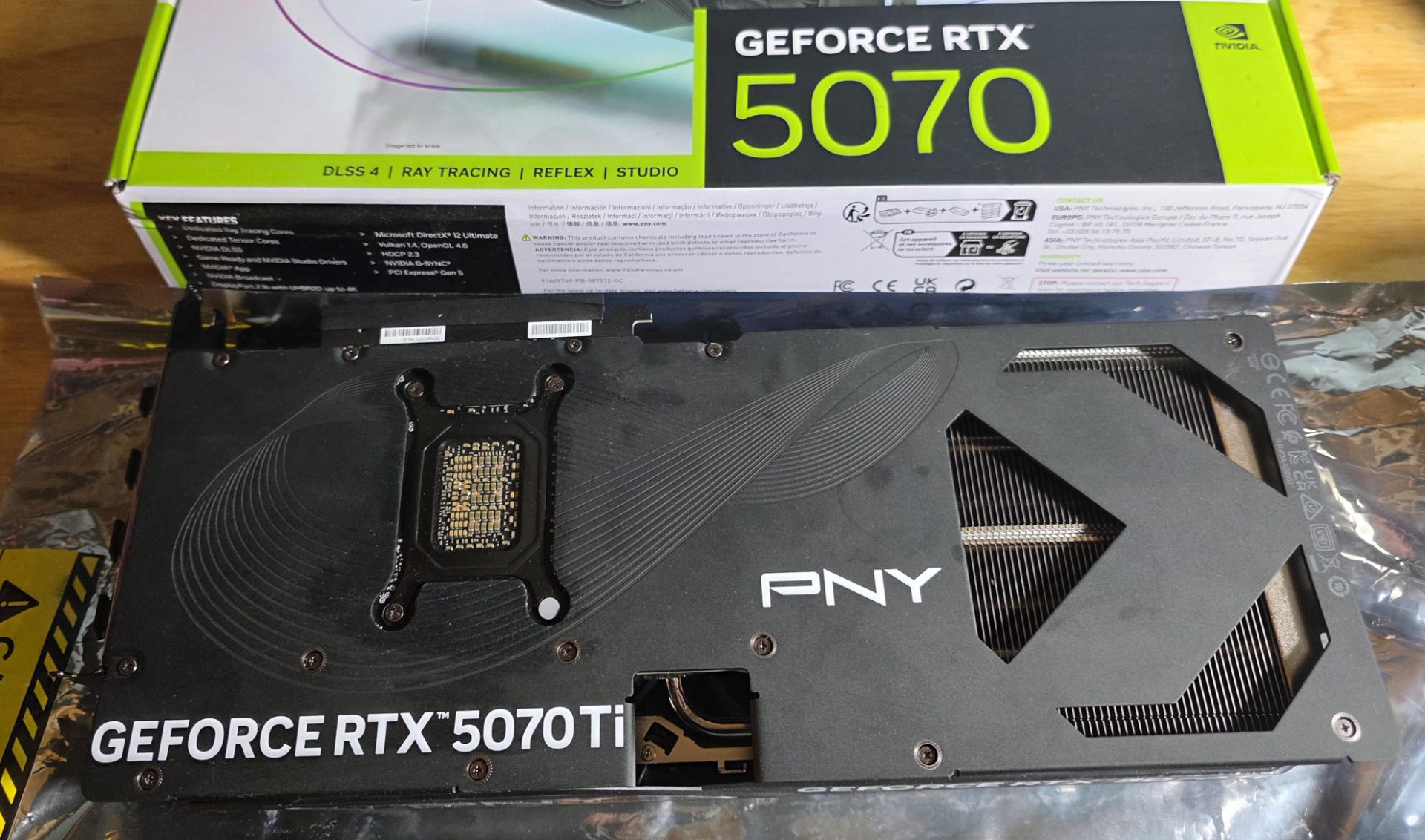
- Model: GeForce RTX 5070 Ti (AD104) vs. RTX 5070 (AD102)
- Architecture: AD104 (5070 Ti) vs. AD102 (5070)
- Performance: Higher in the 5070 Ti due to larger CU count and memory capacity
- Memory: 16GB GDDR6X (5070 Ti) vs. 8GB GDDR6 (5070)
- Power Draw: Higher TDP in the 5070 Ti, requiring robust cooling solutions
The RTX 5070 Ti's larger memory capacity and higher CU count make it better suited for AI workloads or high-resolution rendering, while the RTX 5070 remains a more budget-conscious option. However, businesses that rely on specific performance benchmarks—such as those in video editing or 3D modeling—may find themselves with hardware that doesn't align with their existing software optimizations.
While PNY's error may have inadvertently provided some users with a more capable GPU, the underlying issue of supply chain mismatches remains unresolved. Customers should verify the exact model received during an RMA to ensure it meets their workflow requirements, while companies must address inventory discrepancies to avoid similar situations in the future.
What to watch: Pricing stability and availability of both models, as well as how PNY or other manufacturers handle RMAs in a market where supply is unpredictable. The next few months will reveal whether such mix-ups become more common or if the industry stabilizes enough to prevent them.