Real-time path tracing is still a distant dream for most games, but NVIDIA’s latest advancements are bringing it closer to practicality. The company has developed an algorithm that promises 2-3 times faster rendering with better image quality, potentially making high-end visuals more accessible without requiring extreme hardware upgrades.
Path tracing, known for its photorealistic results, has long been limited by computational demands. Current GPUs struggle to handle full path tracing efficiently, leading developers to rely on emulations and denoising techniques. NVIDIA’s new approach aims to bridge this gap by optimizing reservoir-based spatiotemporal importance resampling (ReSTIR PT), reducing spatial reuse costs and improving robustness in dynamic scenes.
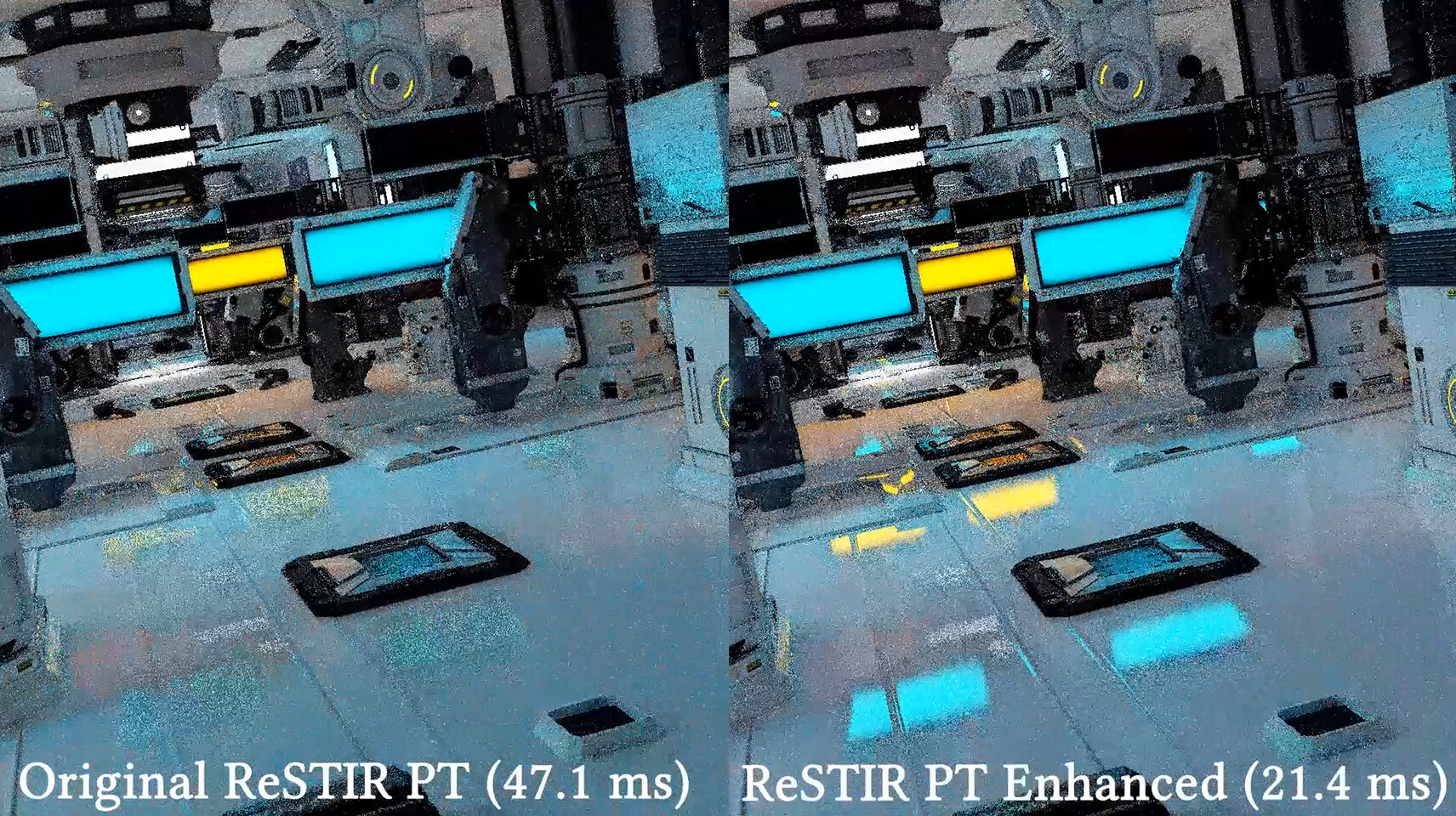
While the algorithm is still in development, its potential implications are significant. If refined, it could enable games to achieve cinematic lighting without sacrificing performance—a major shift for both developers and players. However, whether this will translate into real-world improvements depends on how NVIDIA integrates these optimizations with future hardware.
The technology is expected to be demonstrated at an upcoming conference, but its path to commercial games remains uncertain. The question isn’t just about speed; it’s about whether the trade-offs—like increased memory usage or thermal constraints—will make this viable for mainstream adoption.
For now, NVIDIA’s focus on efficiency and visual fidelity suggests a long-term play rather than an immediate overhaul. If successful, this could redefine what gamers expect from real-time rendering, but the journey is far from over.