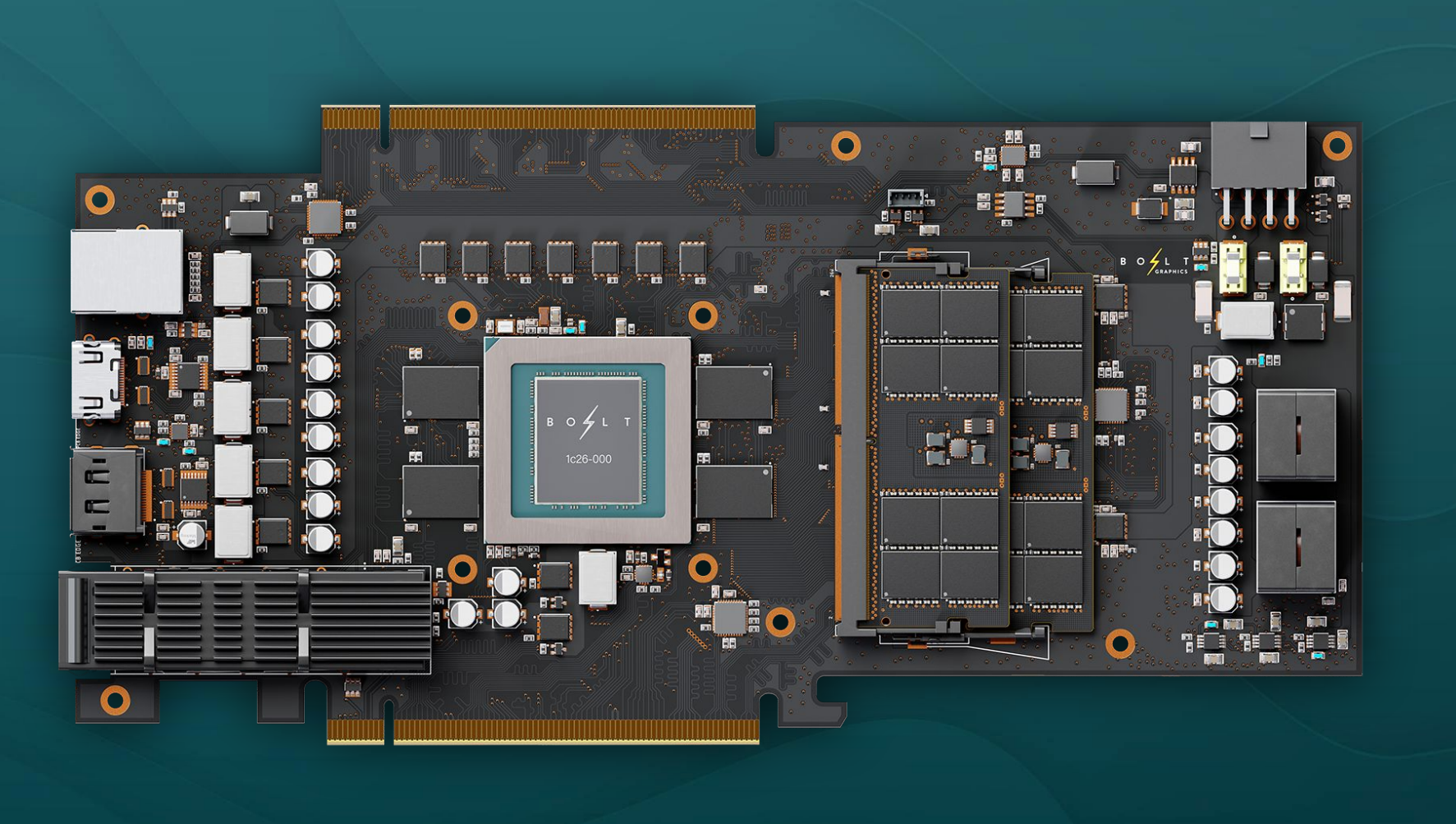
Nimbus Data is introducing FlashMax as a radical reimagining of enterprise storage, combining block, file, and object protocols into a single, scalable flash platform. Unlike traditional storage arrays that require separate systems for different access methods, FlashMax unifies them under one namespace, simplifying management and reducing operational overhead.
The platform marks a departure from legacy architectures by eliminating proprietary flash modules in favor of industry-standard NVMe SSDs. This shift not only avoids vendor lock-in but also improves supply resilience and cost efficiency. FlashMax’s design prioritizes simplicity, with hardware-accelerated deduplication and compression reducing raw capacity needs by up to 70%, depending on workload.
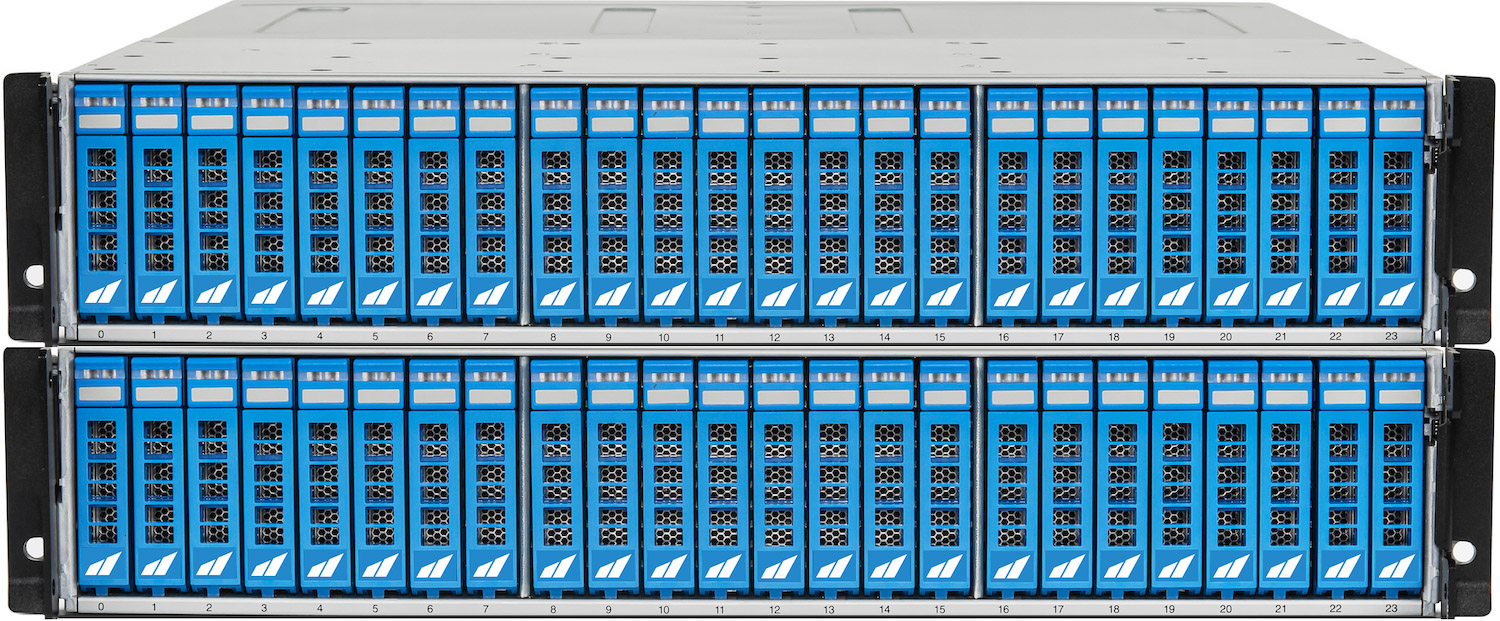
Available immediately in three configurations—F500, F700, and F900—the system targets high-performance environments like virtualization, databases, and unstructured data workloads. Each model supports up to 24 SSDs in the base unit, with expansion options scaling raw capacity to 21PB.
Key Specifications
- Models: F500, F700, F900
- Base SSD Capacity: 24 drives (up to 3PB)
- Max Expanded Capacity: F500 (6PB), F700 (15PB), F900 (21PB)
- Connectivity: NVMe-oF (TCP/RoCEv2), Fibre Channel (up to 64G), iSCSI, NFS, SMB, S3
- Network Ports (per IOC): F500: 3x 100G Ethernet or 6x 25G Ethernet or 4x 32G FC; F700/F900: 4x 400G Ethernet or 8x 200G Ethernet or 16x 64G FC
- Built-in Ports: 2x 10GbE SFP+, 2x 10GBASE-T
- Performance: F500: up to 30GBps, 2.2M IOps; F700/F900: up to 100GBps, 6.8M IOps
- Latency: As low as 100µs (F500) or 80µs (F700/F900)
- Expansion: DirectLink PCIe architecture (up to 6 expansion chassis)
- Power Consumption: F500: 600W (max 900W); F700: 1100W (max 2000W); F900: 1400W (max 2200W)
- Resiliency: Rack-level failure protection, synchronous mirroring, redundant controllers
- Warranty: Up to 10 years with 24/7 support
FlashMax’s DirectLink expansion architecture replaces traditional daisy-chained shelf designs, delivering dedicated PCIe bandwidth between controllers and expansion units. This eliminates oversubscription and latency bottlenecks, enabling linear scaling beyond 20PB raw and 100PB effective capacity with data reduction. The system also features a write-through architecture, committing data directly to flash instead of DRAM, which Nimbus Data claims improves resiliency by reducing cache-related failures.
Licensing is simplified with per-system pricing, including all features without per-terabyte costs. Enterprise services like immutable snapshots, ransomware protection, and hardware encryption are bundled, ensuring predictable expenses as deployments grow. Management is handled via Omni, Nimbus Data’s centralized platform for monitoring, automation, and API-driven workflows.
While FlashMax addresses complexity in modern data centers, some questions remain. The platform’s long-term adoption will depend on how well it integrates with existing environments and whether its unified approach reduces total cost of ownership compared to legacy systems. Performance benchmarks under mixed workloads—especially for file and object access—will also be critical for validation.