The EG7 series from KIOXIA marks a shift in how quad-level cell (QLC) storage is perceived—no longer just an enterprise or data-center tool, but a viable option for everyday PCs. These drives bring the cost advantages of QLC to consumer and small business workloads while maintaining performance that keeps them competitive with more expensive single- or multi-level cell SSDs.
QLC has long been the domain of bulk storage, where endurance takes a backseat to price per gigabyte. The EG7 series challenges that narrative by positioning itself as a practical choice for users who need large capacities without the premium cost of traditional NAND. Drives in this lineup start at 1TB and scale up to 8TB, with sequential read speeds reaching 3500 MB/s and write speeds around 2400 MB/s—figures that make them suitable for media editing, gaming, or general file-heavy workflows.
What sets the EG7 apart is its focus on balancing cost and performance. Unlike some QLC drives that prioritize raw capacity at the expense of speed or endurance, KIOXIA has optimized the series to handle common PC tasks efficiently. For example, 4K/120fps video playback and large file transfers remain smooth, while gaming workloads see minimal slowdowns. The tradeoff is in write endurance—drives are rated for 300 TBW (terabytes written), which is lower than single-level cell SSDs but still robust enough for everyday use.
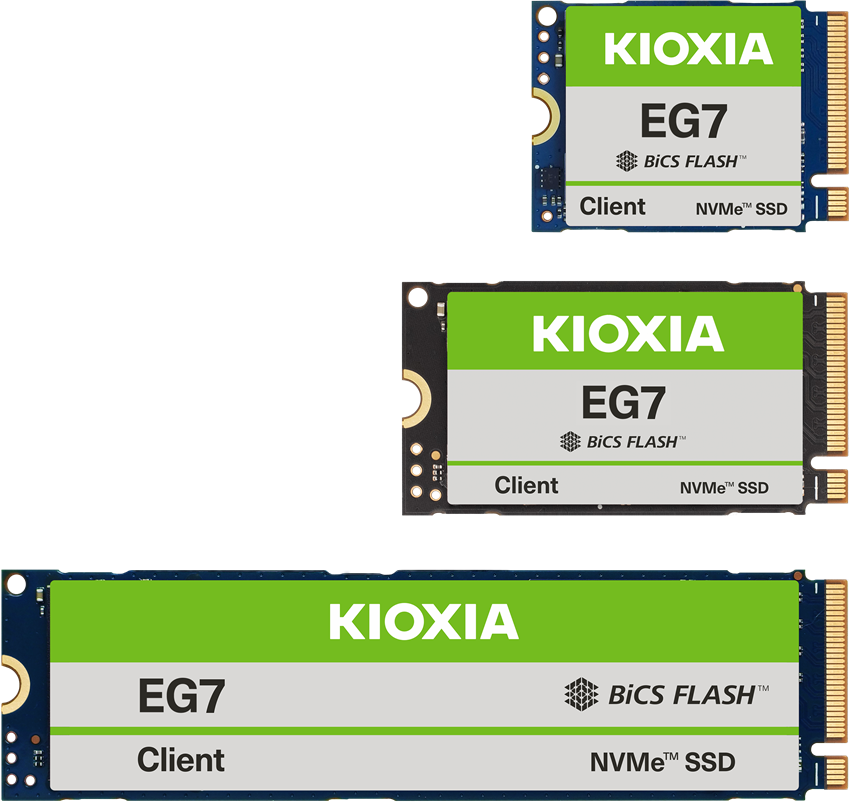
This isn’t the first time QLC has entered the mainstream, but KIOXIA’s approach here feels more deliberate. By targeting users who need high capacities—such as video editors, streamers, or power users with large libraries—the EG7 series removes a common excuse for avoiding QLC: that it’s too slow or unreliable. The price point, which starts below $50 for the 1TB model and drops further at higher capacities, makes it an attractive alternative to more expensive M.2 NVMe SSDs.
Looking ahead, the EG7 series could reshape how users view storage upgrades. For those who prioritize capacity over longevity or performance over cost, this is a compelling option. It’s not a replacement for high-endurance drives in professional or mission-critical setups, but for everyday PCs, it offers a middle ground that balances all three factors: price, speed, and endurance.