The shift toward larger monitors in office environments has long been associated with premium pricing—especially when it comes to ergonomic solutions like adjustable arms. Yet MSI is upending that narrative with a $80 monitor arm built to support 49-inch ultrawide displays, proving that high screen real estate doesn’t have to come with a high price tag.
This isn’t just about saving money; it’s about redefining what’s possible at this price point. The arm handles monitors weighing up to 26 pounds (11.8 kg) and accommodates VESA mounts from 75mm to 200mm, making it a versatile solution for IT teams managing diverse setups. Traditional monitor arms in this weight class often start at $150 or more, so MSI’s offering forces a conversation about value in desk accessories.
- Supports monitors up to 49 inches
- Weight capacity: 26 pounds (11.8 kg)
- VESA compatibility: 75mm–200mm
- Gas spring mechanism for smooth height adjustment
- 360-degree swivel and tilt for ergonomic positioning
- Price: $80, significantly below industry standards
The impact on IT procurement could be substantial. Businesses that have hesitated to upgrade workstations due to budget constraints may now find an affordable way to introduce larger, more immersive displays without overhauling entire setups. The arm’s compatibility with existing monitors also means it can be integrated into current workflows, reducing the need for costly replacements.
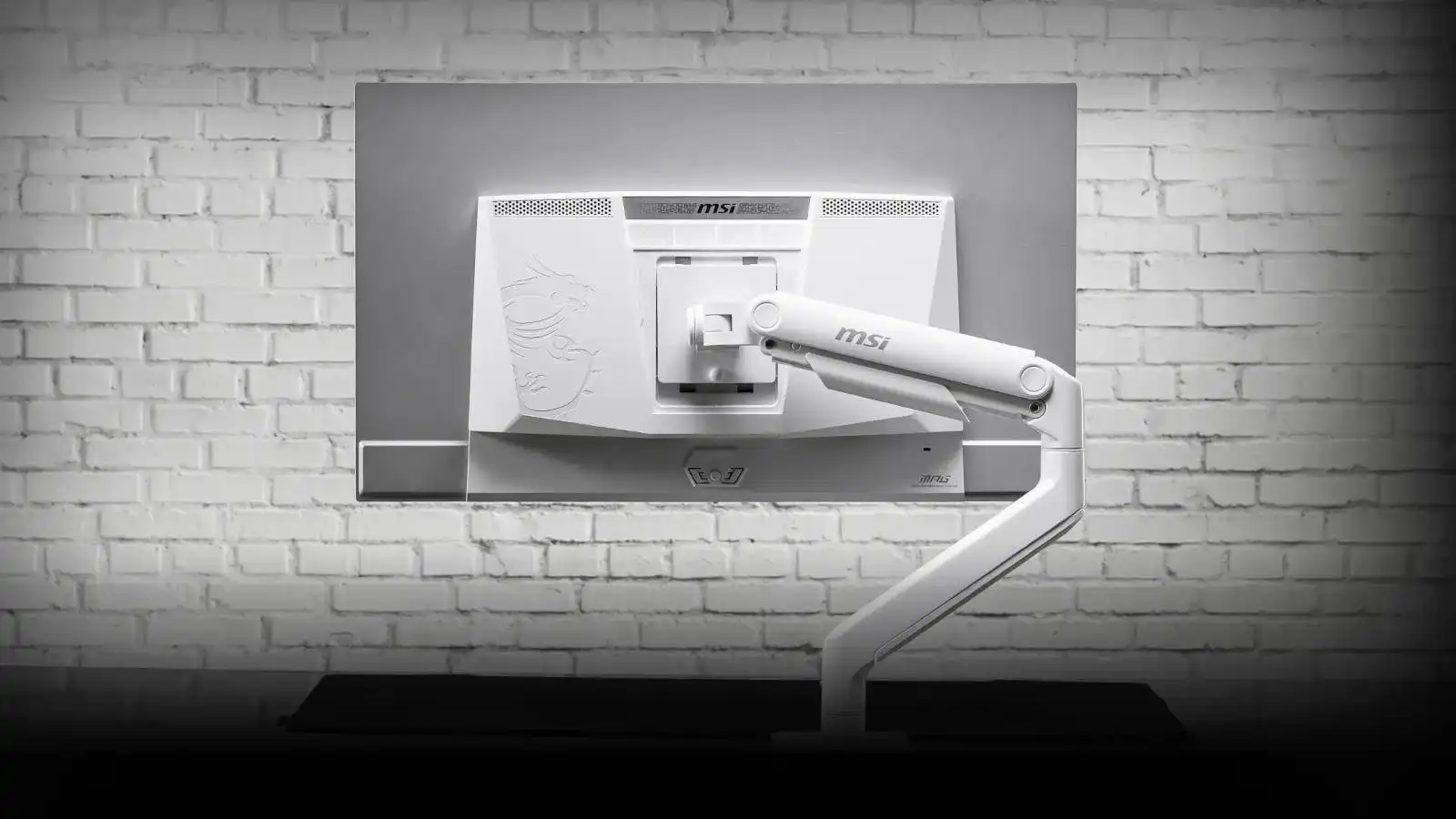
That said, the trade-off is clear: while the arm meets performance benchmarks, its build quality reflects its price point. Steel and reinforced plastic construction prioritize cost efficiency over longevity in high-stress environments, making it better suited for standard cubicles than heavy-duty collaborative spaces. Early adopters will determine whether MSI’s approach to pricing holds up under real-world demands.
For now, the arm serves as a case study in how innovation can break free from traditional cost barriers. Whether it becomes an industry standard or remains a niche solution depends on its durability over time—but one thing is certain: the conversation around monitor arms has shifted permanently.