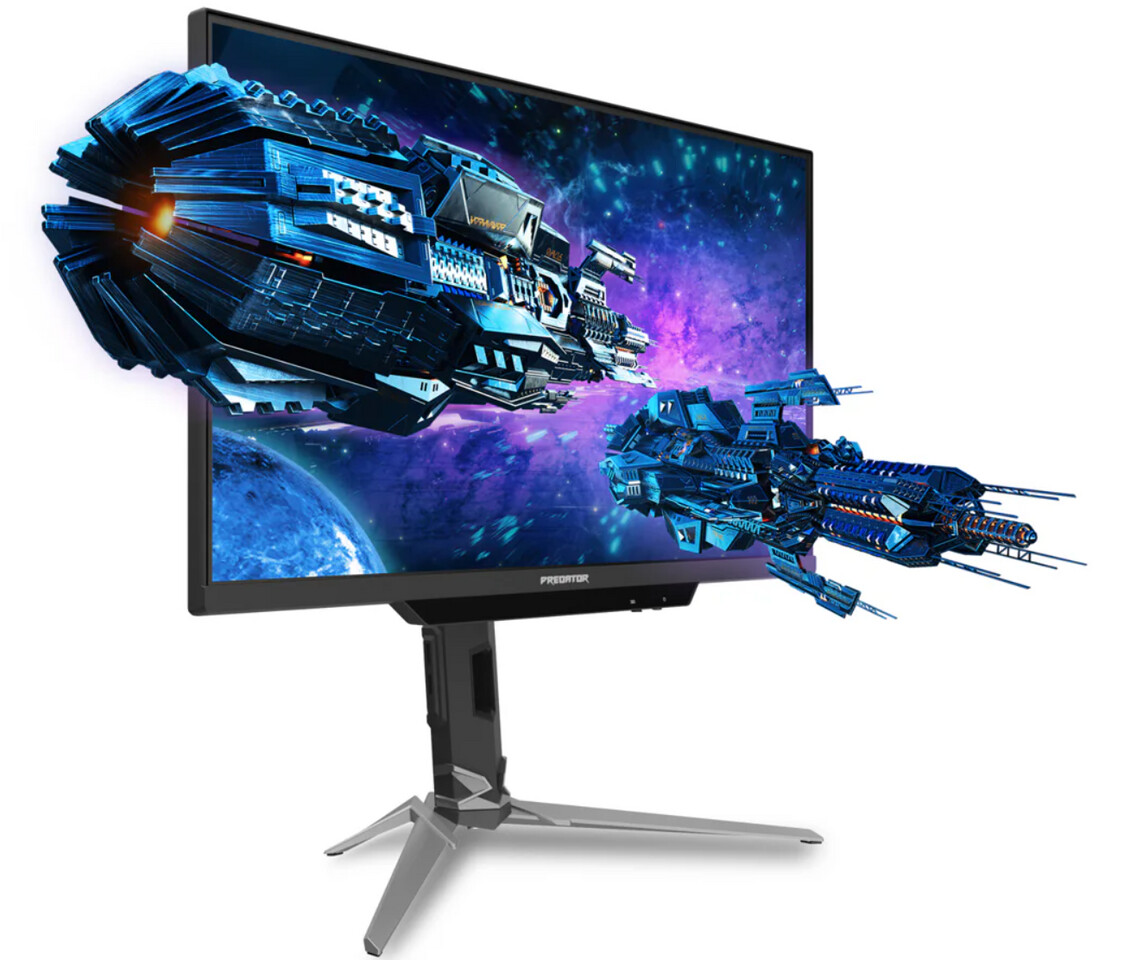
A gamer’s screen is no longer just a canvas—it’s a dynamic tool that adapts to the demands of both competition and creation. MSI’s latest innovation, unveiled at Computex, takes this idea further by introducing what it claims to be the world’s first triple-mode QD-OLED monitor. This device doesn’t just switch between modes; it fuses three distinct display technologies—QD-OLED, OLED, and Mini-LED—into one seamless unit, promising a leap in visual fidelity that could reshape how users experience content.
Dubbed the MPG 321URX, this 32-inch monitor packs a 4K resolution with a 175Hz refresh rate, catering to both high-end gaming and professional workflows. It supports HDR10+ and Dolby Vision, delivering a contrast ratio of 1,000,000:1 in OLED mode, while Mini-LED mode offers 800 nits of brightness with local dimming zones. The QD-OLED mode ensures a color gamut of 95% DCI-P3 and 125% sRGB, providing vibrant hues and deep blacks without compromise. G-Sync Ultimate is included for smooth gaming performance, ensuring fluid visuals even in fast-paced scenarios.
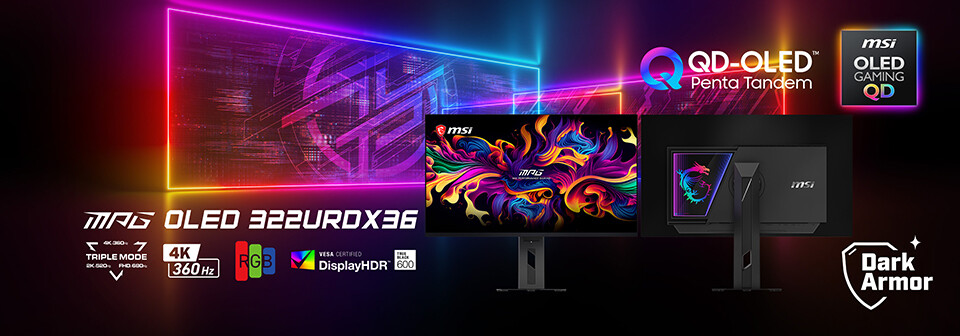
- QD-OLED mode: 95% DCI-P3, 125% sRGB color gamut, ultra-deep blacks
- OLED mode: 1,000,000:1 contrast ratio, HDR10+ and Dolby Vision support
- Mini-LED mode: 800 nits brightness, local dimming zones for balanced backlighting
The integration of three display technologies isn’t without challenges. Industry observers point out that such multi-mode displays often face trade-offs in power efficiency or longevity. MSI claims to have mitigated these issues through advanced thermal management and backlight stability, but real-world durability remains a critical factor in long-term adoption.
For gamers, the potential is immense. A monitor capable of switching between these modes could adapt instantly—whether transitioning from competitive esports titles that demand crisp visuals to creative work requiring precise color accuracy. However, the seamless integration of these technologies without sacrificing performance will be key to its success.
This development represents a pivotal shift in display technology, where the fusion of multiple modes could set a new benchmark for visual performance. While the full implications are still unfolding, one thing is certain: the future of gaming and content creation monitors is no longer limited to a single approach. Whether this innovation delivers on its promises or introduces new hurdles remains an open question, but it undeniably signals a bold step forward in how we experience digital content.