Intel has achieved a 90% yield rate on its EMIB (Embedded Multi-die Interconnect Bridge) packaging process, marking a critical step forward in its push to become a more competitive foundry player. The milestone suggests that the company is closing in on commercial-scale production of advanced chiplets, which could reshape how PC components are designed and assembled.
EMIB allows multiple dies—such as CPUs, GPUs, or memory—to be stacked and interconnected with high bandwidth, reducing latency while increasing performance density. The 90% yield rate means that nearly all packaged units meet Intel's quality standards, a significant improvement from earlier stages of development. This is particularly relevant for PC builders who integrate custom solutions, as it opens the door to more reliable and scalable multi-die configurations.
A New Era for Chiplet Design
Intel's focus on EMIB isn't just about improving yield; it's also about scaling the technology for broader adoption. The company has been refining its chiplet architecture, which separates processing logic from memory and other components, allowing for more flexible system designs. This approach is already being adopted in high-performance workloads, such as AI inference or specialized compute tasks.
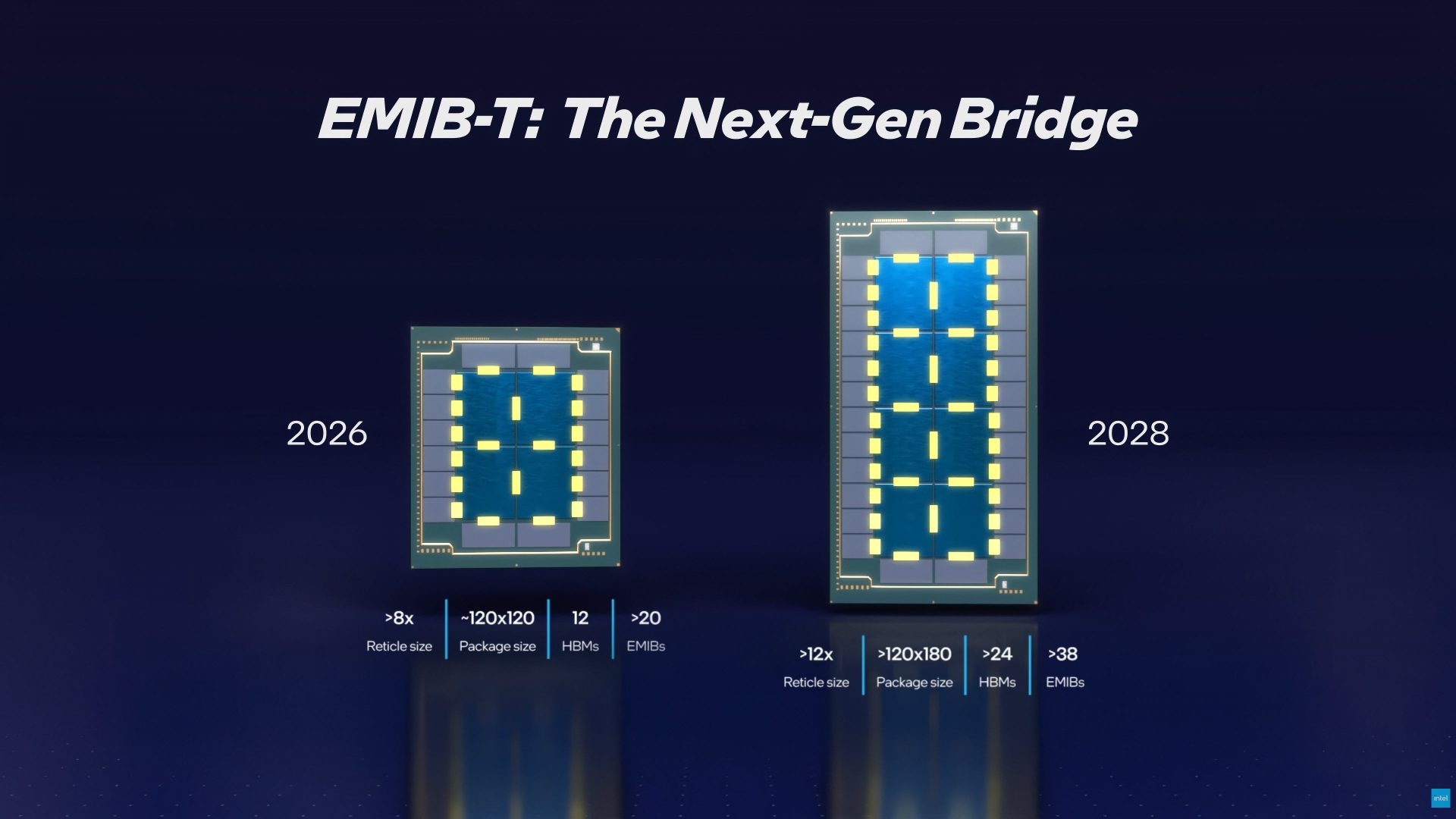
One of the key challenges in EMIB production has been managing die sizes and reticle limitations—traditional lithography tools struggle with large, multi-die configurations. Intel's EMIB-T (EMIB-Tile) variant aims to address this by breaking larger dies into smaller, more manageable tiles that can be processed within standard reticle boundaries. Early projections suggest that EMIB-T could scale to over 12x reticle sizes by 2028, which would significantly expand the range of possible chiplet designs.
Why This Matters for PC Builders
The implications for PC builders are substantial. Higher yield rates mean more stable supply chains, reducing the variability that has plagued custom builds in recent years. Additionally, EMIB-T's ability to handle larger multi-die configurations could lead to more specialized solutions tailored for specific workloads—whether it's AI-optimized systems or high-performance gaming setups.
However, the transition to a foundry model also introduces new considerations. Intel will need to balance its existing fabs with third-party demand, ensuring that its EMIB technology doesn't become a bottleneck for other manufacturers. The company has been cautious in its messaging, but industry analysts suggest this is a deliberate strategy to avoid overwhelming its production capabilities.
For now, the 90% yield milestone is a positive sign that Intel is making steady progress toward its foundry goals. If the trend continues, it could redefine how PC components are designed and assembled, offering builders more options for performance and efficiency without sacrificing reliability.