The GIGABYTE X870E motherboard series is arriving at a moment when builders are scrutinizing every dollar spent on high-end components. It’s not the first time a chipset has tried to carve out a niche between budget and premium, but this one does so with deliberate engineering tradeoffs that could make it a standout choice for those prioritizing performance-per-dollar in 13th-gen Intel builds.
What’s confirmed: The X870E is a stripped-down variant of the full-featured X870, omitting PCIe 5.0 support and some high-speed connectivity options. What’s not yet clear is how those cuts will translate to real-world performance in workloads that rely on those features, or whether GIGABYTE will address potential bottlenecks in future updates.
The X870E retains the core strengths of its predecessor—dual M.2 slots with PCIe 4.0 x4 lanes for high-speed storage, a robust VRM setup capable of handling up to 350W CPUs, and full support for DDR5 memory at official speeds. Where it diverges is in connectivity: Ethernet is downgraded from 2.5G to 1G, Wi-Fi 6E is replaced by Wi-Fi 6, and Thunderbolt 4 support is removed entirely. These are not trivial omissions, but they align with a broader trend of chipset manufacturers rethinking what’s essential in an era where many users rely on external adapters or built-in USB-C solutions.
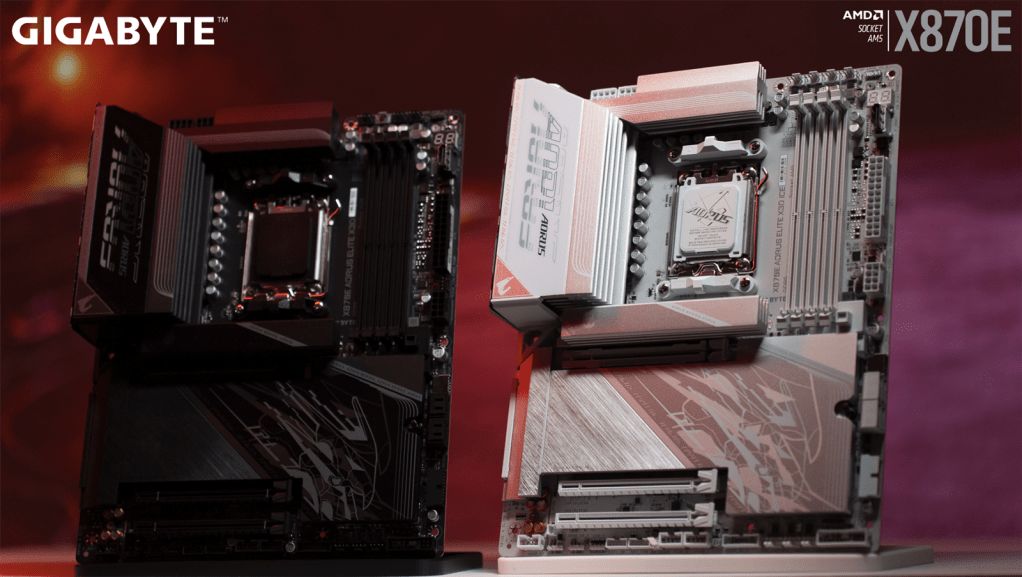
For creators working with large datasets or high-resolution media, the loss of PCIe 5.0 might be a dealbreaker, but for those whose needs are more balanced—rendering, light video editing, or gaming—the X870E offers a compelling alternative to the Z890 chipset, which carries a premium price tag without always delivering proportional gains in real-world performance.
The implications are twofold. On one hand, this could accelerate adoption of 13th-gen Intel platforms for builders who’ve been waiting on the sidelines, offering a path to upgrade without committing to the highest-tier chipset. On the other, it signals that GIGABYTE is betting on a market where flexibility in feature selection outweighs the need for maximum expandability.
What’s confirmed: A new chipset with deliberate compromises, aimed at a specific performance-to-cost sweet spot. What remains to be seen: Whether those compromises will prove meaningful in practice, or if they’ll simply reflect the evolving priorities of builders who no longer treat PCIe lanes and Thunderbolt ports as non-negotiables.
The single most important change is that GIGABYTE has successfully created a chipset that doesn’t just follow the premium tier—it redefines what’s necessary for high-performance builds, offering a clear path to 13th-gen Intel without the full feature set of its predecessors.