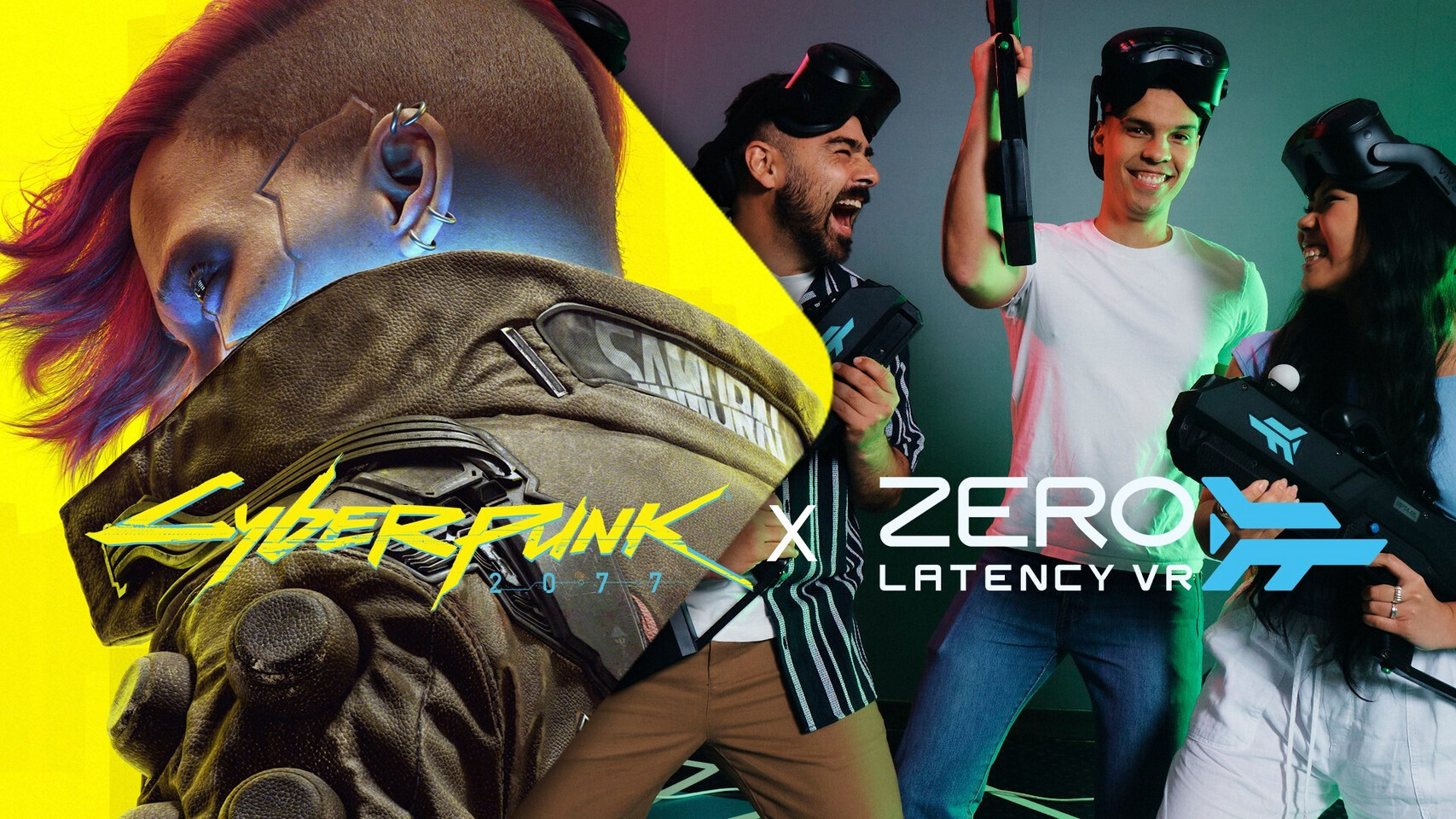
Cyberpunk 2077 is taking its next major step beyond screens. Through a partnership with Zero Latency VR, Night City—the sprawling, neon-lit megacity at the heart of CD Projekt Red’s award-winning universe—will soon be explorable in physical, warehouse-scale VR spaces. This marks a shift from traditional video game experiences to large-group, shared adventures that prioritize movement and social engagement over scripted narratives.
Zero Latency VR’s platform specializes in untethered, free-roam VR experiences, allowing multiple players to move through shared digital environments without physical constraints. The Cyberpunk 2077 adaptation will leverage this technology to create a self-contained experience that captures the game’s atmosphere and style while introducing new mechanics tailored for immersive, large-scale play.
Key Highlights
- Built for Zero Latency VR’s global network of venues, featuring wireless headsets and full-body tracking.
- A non-direct translation of Cyberpunk 2077, emphasizing social exploration over traditional gameplay loops.
- Launch slated for select Zero Latency locations worldwide at a later date.
The experience is designed to push the boundaries of immersive entertainment, offering players a chance to physically traverse Night City’s streets and districts in ways that were previously impossible. While not a direct adaptation of the original game, it will draw heavily from its lore, visual identity, and open-world design, creating a hybrid experience that blends storytelling with real-time interaction.
Industry Implications
The partnership signals a broader trend toward large-scale, shared VR experiences that prioritize social dynamics over solitary gameplay. For Zero Latency VR, this collaboration reinforces its position as a leader in location-based VR, while for CD Projekt Red, it represents an innovative way to extend the lifespan of one of gaming’s most ambitious franchises.
However, the transition from screen to physical space introduces challenges. Traditional VR experiences often rely on scripted content or single-player immersion, whereas Zero Latency’s format demands dynamic, real-time interactions that can scale across large groups. The success of this adaptation will depend on how well it balances narrative depth with the fluidity required for untethered movement.
For power users and VR enthusiasts, this experience could redefine expectations for open-world immersion. If executed successfully, it may set a new standard for how games transition from digital screens to physical environments, blending the best elements of both mediums without sacrificing the core identity of Night City.