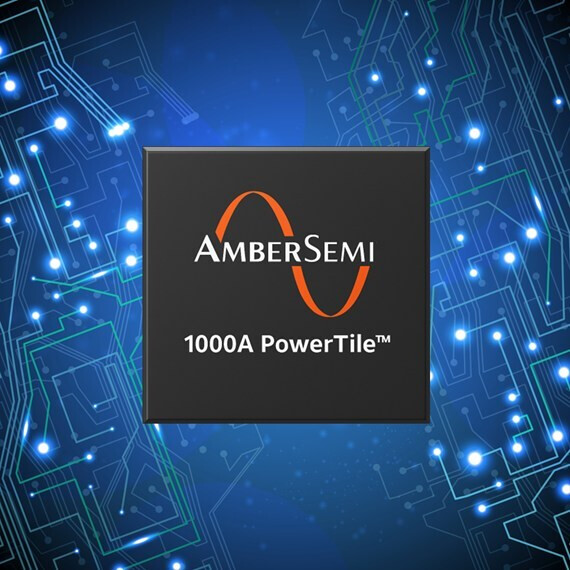
AmberSemi has achieved a technical milestone that could redefine how power is delivered to AI processors in data centers. The company has completed the tape-out of **PowerTile**, a vertical power delivery solution designed to address the growing inefficiencies of traditional lateral power distribution systems. Unlike conventional setups, PowerTile mounts directly beneath a processor, delivering current vertically and reducing power losses by over **85%**—a critical advancement as AI workloads demand ever-higher performance.
The breakthrough isn’t just about efficiency—it’s about **scaling**. A single PowerTile measures **20mm x 24mm x 1.68mm** yet can deliver up to **1,000 amps** of current. Multiple units can be paralleled to support systems requiring **over 10,000 amps**, a threshold that aligns with the most power-hungry AI processors on the horizon. This compact, high-current approach eliminates the need for bulky lateral power rails, freeing up space on server boards and improving thermal management.
Why Traditional Power Systems Are Failing AI
Data centers built around today’s AI processors are hitting a fundamental bottleneck: power delivery. As chips like GPUs and FPGAs require more current, traditional lateral power architectures—where power is distributed horizontally across a board—introduce significant resistance and inefficiency. This results in wasted energy, higher operating temperatures, and physical constraints that limit scalability.
PowerTile flips this model. By delivering power **vertically**, directly beneath the processor, it shortens the current path, minimizes resistive losses, and allows for denser, more efficient designs. The technology is particularly well-suited for next-generation AI workloads, where even marginal improvements in power efficiency can translate to massive cost savings and performance gains.
Collaboration and Commercialization
AmberSemi is not developing PowerTile in a vacuum. The company has been working closely with **leading chipmakers and data center partners**, ensuring the solution aligns with emerging processor roadmaps. Evaluation and testing with key collaborators are expected to begin later this year, with initial production volumes targeting **2027**. This timeline suggests PowerTile could become a standard component in next-gen AI infrastructure within the next few years.
In parallel, AmberSemi will host an **industry session at APEC 2026** in March, titled *Vertical Power for AI Data Centers*. The session will feature speakers from **AMD, NVIDIA, and Global Foundries**, underscoring the broad industry interest in rethinking power delivery for AI. The discussion will explore how vertical power architectures could shape the future of data center design, particularly as demand for high-performance computing continues to surge.
What This Means for AI Data Centers
- Higher efficiency: By reducing power losses by **over 85%**, PowerTile could lower operational costs and improve the overall energy efficiency of AI systems.
- Scalability: The ability to parallel multiple PowerTile units to support **10,000+ amps** enables data centers to accommodate increasingly power-hungry processors without redesigning their power architectures.
- Space savings: The ultra-low-profile design (**1.68mm thick**) allows for more compact server layouts, potentially increasing rack density and reducing cooling requirements.
- Future-proofing: As AI processors evolve, traditional power systems may struggle to keep up. PowerTile’s modular approach ensures it can adapt to next-gen demands.
The tape-out of PowerTile marks a pivotal moment for AmberSemi and the broader AI infrastructure ecosystem. If commercialized successfully, it could set a new standard for power delivery in data centers, enabling the high-performance, energy-efficient systems required to support the next wave of AI innovation.