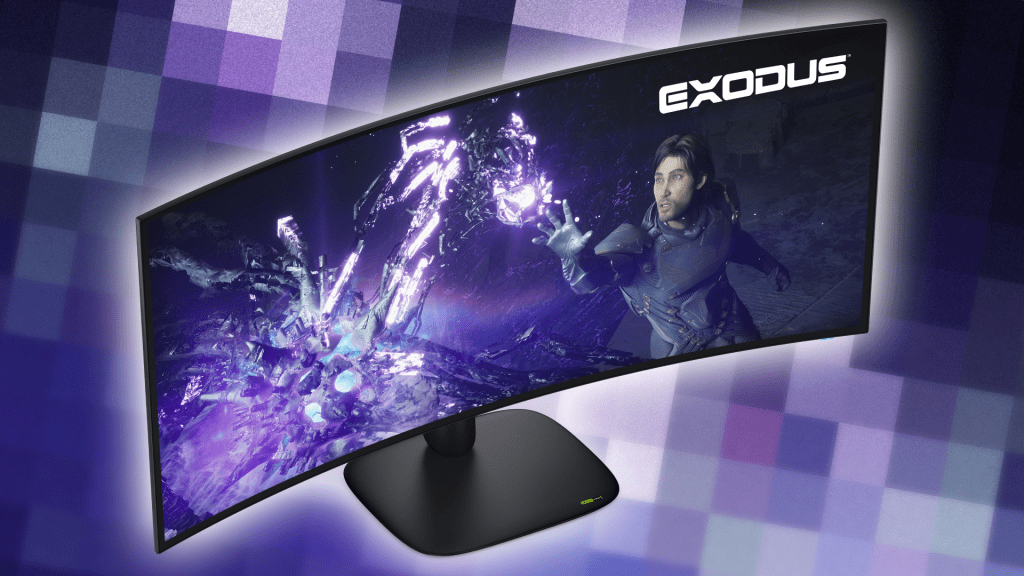
Ultrawide monitors have long been a staple in creative workstations, offering immersive displays that expand productivity. But the introduction of a 39-inch OLED model by Alienware pushes the boundaries further, forcing small businesses to reconsider how they balance screen real estate with compatibility and cost.
The new monitor, measuring 39 inches diagonally, is not just an upgrade in resolution or color accuracy—it’s a redefinition of what an ultrawide workstation display can be. Previously, the largest common ultrawides topped out around 34 inches, leaving little room for significant jumps without introducing practical challenges. This shift raises questions about desk space constraints, portability, and whether the added screen area justifies the premium pricing.
At its core, the monitor features a 5120 x 1440 resolution, delivering sharpness across its curved 39-inch display. OLED technology ensures deep blacks and vibrant colors, which are critical for tasks like video editing or graphic design. However, the larger size also means higher power consumption and potential heat output, factors that small businesses must weigh against productivity gains.
For small businesses, the decision to adopt such a large monitor hinges on workflow needs. A 39-inch display is overkill for tasks like data entry or spreadsheet work but could be transformative for roles requiring spatial awareness, such as architectural design or video production. The challenge lies in ensuring that existing software and hardware can handle the increased screen resolution without performance lag.
The monitor’s compatibility with both Windows and macOS systems is a plus, but users will need to verify whether their current setups—particularly GPUs and CPUs—can sustain the higher demands of such a large OLED panel. Benchmark tests suggest that mid-range GPUs may struggle to maintain smooth performance at native resolution for demanding applications, which could limit its appeal to budget-conscious small businesses.
Another consideration is the monitor’s thickness and weight. At approximately 10.5 kg (23 lbs), it’s heavier than standard ultrawide monitors, making wall mounting or desk placement a more deliberate choice. This adds logistical complexity for businesses with limited office space or those prioritizing mobility.
While the monitor is a technical achievement, its market adoption will depend on whether small businesses see tangible returns on investment. The price point, estimated to be around $2,500, positions it as a premium offering, meaning cost justification will be critical. For now, the question remains: Is this the future of workstation displays, or is it a niche product that only a select few can truly benefit from?
The larger screen does offer undeniable advantages for certain workflows, but without broader industry standardization around software optimization and hardware support, its practicality may remain limited. Businesses will need to carefully evaluate whether the leap in size is worth the potential tradeoffs in performance, cost, and compatibility.