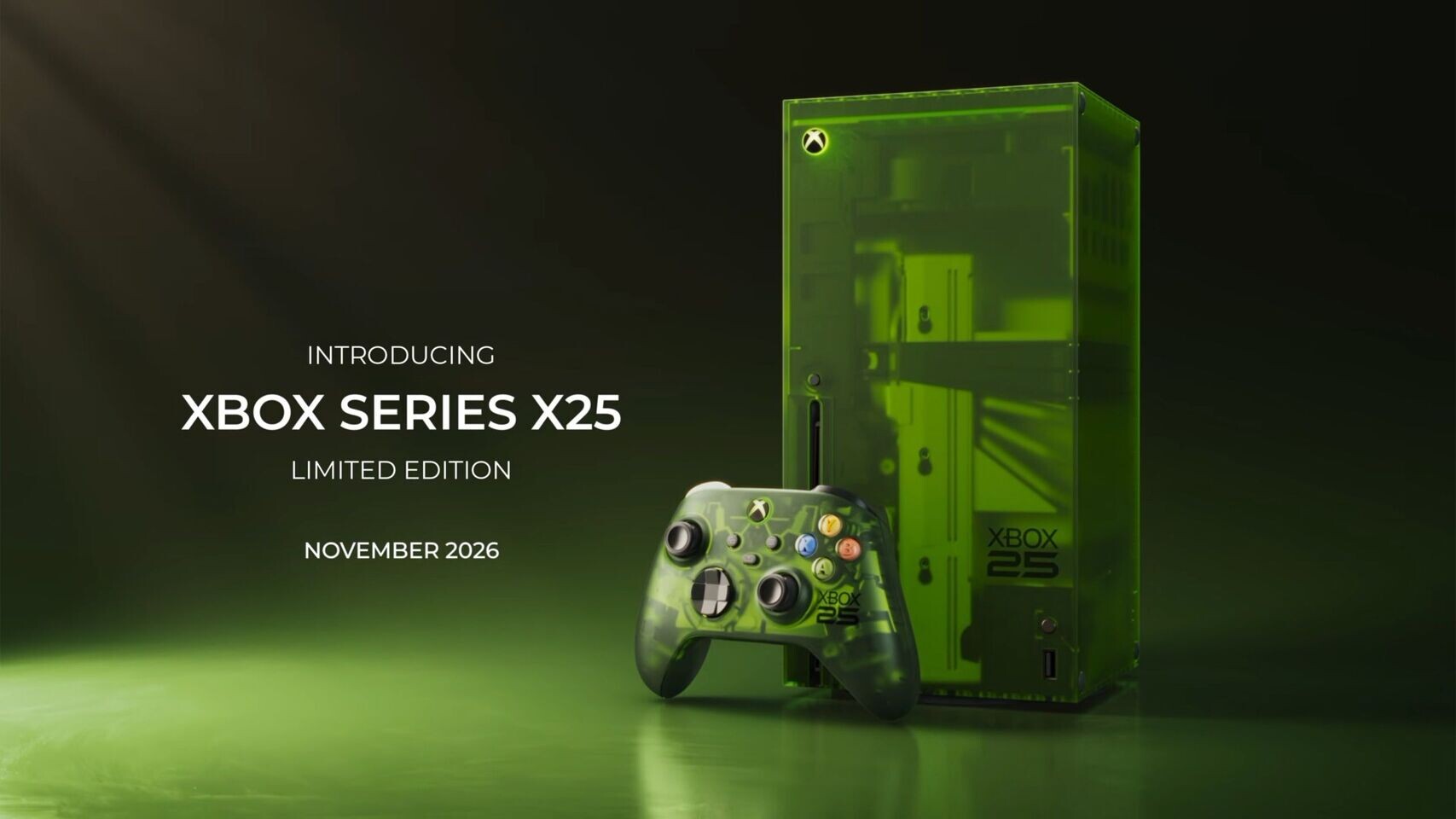
Limited-edition consoles often serve as both a tribute to legacy and a glimpse into the future. Microsoft’s latest offering, the Xbox Series X25, does precisely that—without altering the hardware under the hood.
The console’s most striking feature is its translucent green body, which allows users to peer inside at its internal components. This aesthetic choice extends to the included controller, which also carries an exclusive Xbox 25 branding. While the specifications remain identical to those of the production Xbox Series X, the dashboard may introduce unique artwork, hinting at a deeper integration of this milestone into the system’s software.
What Remains Unchanged
The Xbox Series X25 does not represent an evolution in performance or capabilities. It retains the same architecture as its predecessor, including a custom AMD Zen 2 CPU and RDNA 2 GPU, capable of delivering 4K gaming at 120 frames per second. The 16 GB GDDR6 RAM (with 12 GB allocated to games) and 1 TB NVMe SSD are unchanged, ensuring compatibility with existing libraries and hardware optimizations.
Design as a Statement
The translucent design is more than cosmetic—it serves as a visual narrative of the console’s engineering. The green hue, along with the exposed internal structure, suggests a balance between form and function, reinforcing Microsoft’s commitment to both aesthetics and performance. However, this transparency does not come without tradeoffs; durability may be slightly compromised compared to opaque models, though no official confirmation on materials or build quality has been provided.
Looking Ahead
The Xbox Series X25 is set to launch in November 2026, aligning with a period of significant transition for the platform. While it does not introduce new hardware innovations, its arrival coincides with discussions around future console generations and potential shifts in Microsoft’s gaming strategy. Whether this edition will influence those conversations remains to be seen, but its design undeniably positions it as both a collector’s item and a functional piece of gaming history.