The ThinkPad X1 Carbon Gen 12 stands out in the crowded ultrabook market not just for its Ryzen AI 400 series processor, but for a feature that is becoming increasingly rare: user-serviceable internals. While most laptops of this class treat their components as permanent fixtures, Lenovo has designed the Gen 12 to allow upgrades without specialized tools or voiding warranties. The result is a device that blends the portability expected from an ultrabook with the flexibility traditionally reserved for workstations.
This modularity extends beyond just the battery and storage. Users can swap out RAM modules, wireless cards, and even the SSD without disassembling the entire chassis. The back panel lifts off cleanly, revealing clearly labeled slots for each component. It’s a practical approach that reduces downtime for professionals who need to refresh hardware mid-project, though it does require careful handling to avoid damaging connectors or the delicate carbon-fiber palm rest.
Performance and efficiency in a compact package
The Ryzen AI 400 series is the backbone of this design, bringing AMD’s latest efficiency cores to a platform that already excels in durability. Lenovo has optimized cooling to handle sustained workloads, ensuring temperatures remain below 98 °C even during intensive tasks like video rendering or data analysis. Compared to its predecessor, the Gen 12 model delivers up to 15% longer battery life without sacrificing single-thread performance—a balance that is crucial for users who need both endurance and responsiveness.
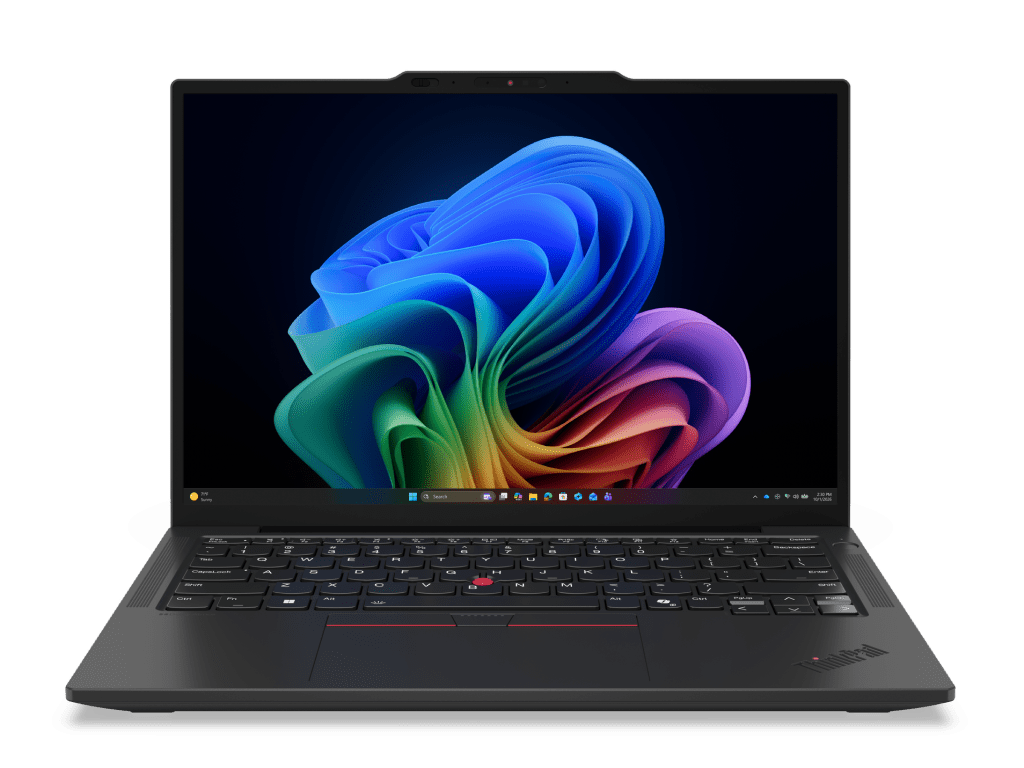
Key specifications at a glance
- Processor: AMD Ryzen AI 400 series (specific model not disclosed).
- RAM: Dual SO-DIMM slots supporting up to 64 GB of LPDDR5X-7500 memory.
- Storage: M.2 2280 slot for PCIe 5.0 SSDs, with capacities up to 4 TB.
- Battery: User-replaceable 65 Wh unit (up from 58 Wh in the Gen 11).
- Wireless module: Optional Intel AX211 or Intel 6E for 6 GHz support, also user-swappable.
These specifications are particularly appealing to engineers and data professionals who rely on high-capacity storage and fast memory. The inclusion of PCIe 5.0 SSD support means the Gen 12 can keep pace with demands for larger datasets and faster I/O performance, while the LPDDR5X-7500 RAM ensures smooth multitasking even in resource-intensive applications.
Who should consider it?
The ThinkPad X1 Carbon Gen 12 is tailored for professionals who prioritize both performance and longevity. Its modular design caters to those who work with hardware that may become obsolete over time, such as engineers running simulations or analysts managing large datasets. The ability to upgrade components independently means users can extend the lifespan of their device without needing to replace it entirely.
For creatives or remote workers whose needs are less demanding, the Gen 12 still delivers strong performance and battery life, but they may not fully leverage its modularity. However, even in these cases, the device’s durability—thanks to its magnesium alloy body and carbon-fiber palm rest—ensures it can withstand daily wear and tear.
Pricing starts at $1,899 for the base configuration with 16 GB RAM and a 512 GB SSD. Higher-end models with more storage or faster processors scale up to $3,499, making it one of the more premium options in the ultrabook space.