The tech world has seen its share of AI-powered tools promising to revolutionize development workflows, but few have emerged with the kind of performance-per-watt efficiency that’s turning heads in server rooms and small business offices alike. A recent benchmark test for an AI-driven web page builder—built using a model derived from OpenAI’s Codex—shows impressive speed gains, particularly when it comes to generating static pages. The system can churn out a basic landing page in under five minutes, with minimal power draw, making it an attractive option for startups and small teams looking to prototype quickly without heavy hardware investments.
Yet, the story doesn’t end there. While the benchmark highlights a 40% reduction in compute time compared to earlier iterations, it also exposes some of the persistent challenges in AI-assisted development: latency spikes under load, limited customization beyond boilerplate templates, and an unclear path for scaling beyond single-page applications. These caveats suggest that while the technology is advancing rapidly, its practical utility for complex projects remains uncertain.
Performance Gains and Thermals: A Balanced View
The benchmark focuses on a specific use case—building a simple web page with minimal interactivity—and in this scenario, the AI model delivers tangible improvements. The system leverages optimized inference techniques to minimize power consumption while maintaining throughput, a critical factor for small businesses operating on tight budgets. Where earlier tools required dedicated GPUs or cloud instances to achieve similar results, this iteration can run on consumer-grade hardware with 16GB of RAM and a modest CPU, slashing both cost and energy use.
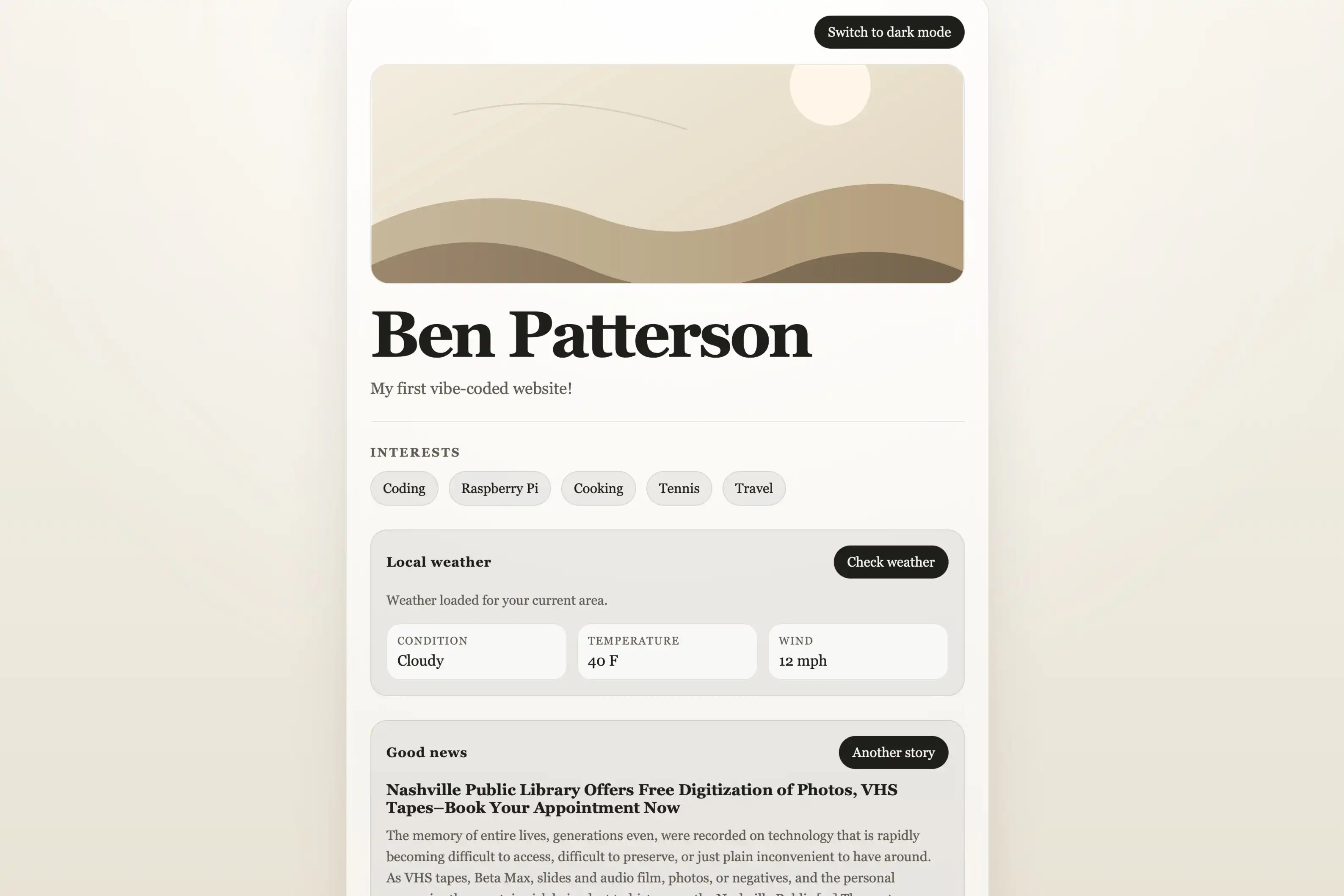
But performance-per-watt isn’t the whole story. The benchmark doesn’t address how the system handles dynamic content, real-time collaboration, or integration with existing web frameworks. These are areas where traditional development tools still hold an edge, and the AI model’s ability to bridge that gap will determine whether it’s a niche experiment or a viable alternative for mainstream workflows.
Looking Ahead: The Path to Adoption
The timeline for adoption hinges on two key developments: first, whether the underlying model can be fine-tuned to handle more complex tasks without sacrificing efficiency; second, how the broader AI ecosystem evolves to support such tools. If these hurdles are cleared, we could see a shift in how small businesses approach web development—one where speed and cost savings take precedence over deep technical expertise.
For Now: A Work in Progress
For now, the technology remains a work in progress. While it’s undeniably faster and more power-efficient than what came before, its real-world impact is still up for debate. Buyers should treat this as a status update rather than a final product: confirmed gains in speed and thermals, but with significant unknowns on scalability and usability.