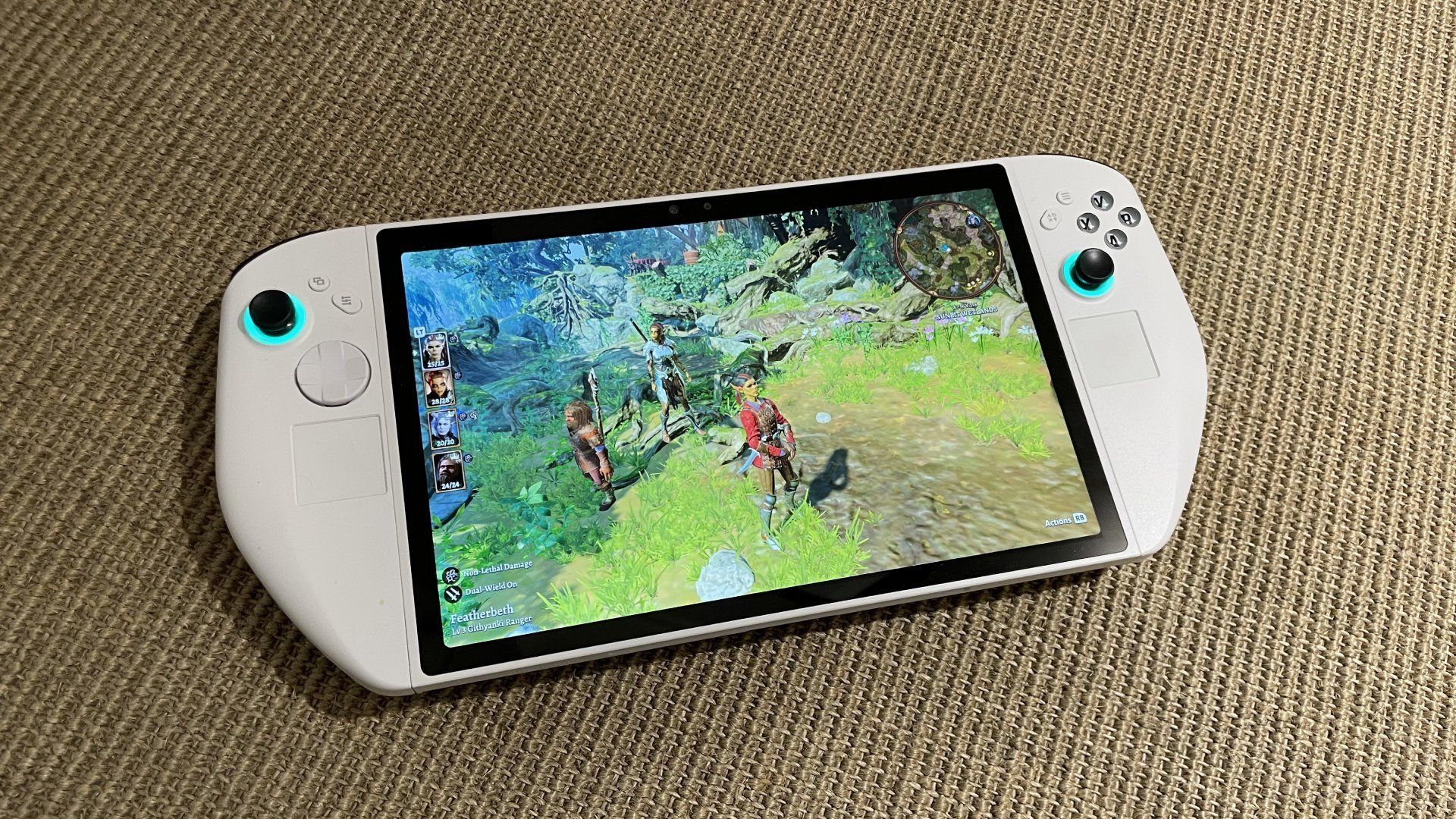
The Abxylute 3D One isn’t just a gaming handheld—it’s a reinvention of the form factor itself. While the 3D display dominates headlines, the device’s modular architecture and productivity-focused specs hint at a broader ambition. The split between screen and controller modules isn’t merely a gimmick; it’s a deliberate shift toward adaptability. Attach a keyboard and kickstand, and the 3D One transforms into a desktop replacement with a portable footprint. The 10.95-inch 2.5K IPS panel, though demanding on the integrated GPU, delivers vibrant colors and smooth 120Hz refresh—ideal for content creation, video editing, or even light 3D rendering tasks.
The real question is whether this versatility can compensate for the 3D’s shortcomings. For productivity users, the answer is likely yes. The Thunderbolt 4 port enables external GPU docking, turning the device into a low-power workstation when paired with an eGPU. The 32GB LPDDR5x RAM and 1TB PCIe 4.0 SSD ensure snappy performance in multitasking scenarios, while the 50Wh battery—though modest—holds up for moderate workloads. Abxylute’s AI-assisted 3D mode, while flawed, could still find niche use in presentations or design reviews, where depth effects might enhance visual storytelling.
A Different Kind of Gaming Experience
Gaming remains the Achilles’ heel, but not for the reasons one might expect. The 3D One isn’t a powerhouse—it’s a trade-off machine. The Core Ultra 7 288V CPU and Xe2 iGPU handle modern titles at lower resolutions or settings, but the moment 3D is enabled, the frame rate plummets. This isn’t a failure of hardware alone; it’s a deliberate choice to prioritize the 3D effect over raw performance. For comparison, a similar system with a 1080p display would likely see far less degradation, but Abxylute’s engineering team opted for the higher resolution to maintain sharpness in 2D mode.
Yet there’s an intriguing workaround. The device’s modularity extends to software. Abxylute’s proprietary 3D API allows developers to optimize titles specifically for the hardware, potentially mitigating some performance losses. Early access games like Starfield and Death Stranding run in 3D, but only at heavily reduced settings. The takeaway? The 3D One isn’t a gaming beast—it’s a specialized tool for those willing to accept compromises for novelty.
The Future of 3D Handhelds
Glasses-free 3D is still in its infancy, and the Abxylute 3D One serves as both a proof of concept and a cautionary tale. The technology works for static or slow-moving content, but dynamic gaming scenes expose its limitations. Eye strain, reduced brightness, and the lack of true volumetric depth make it impractical for extended use. Still, Abxylute isn’t the first to attempt this—high-end monitors like the Acer Predator SpatialLabs have faced similar criticism. The difference here is portability, which amplifies the flaws while also highlighting the potential.
If future iterations refine the 3D rendering pipeline—perhaps with dedicated hardware or AI upscaling—the concept could evolve. For now, the 3D One’s greatest strength isn’t its 3D capabilities but its adaptability. It’s a handheld that dares to be something more: a productivity hub, a presentation tool, and, occasionally, a gaming curiosity. Whether that’s enough to justify its $1,599 price remains an open question.
Final Verdict
The Abxylute 3D One is a device of contradictions. It’s ambitious yet constrained, innovative yet impractical for its primary advertised use. The 3D display is its most polarizing feature, but the machine’s true value lies elsewhere—in its modular design, its bright screen, and its potential as a productivity companion. Gamers may find it underpowered, but creatives and professionals might see it as a refreshing alternative to traditional laptops.
One thing is certain: the 3D One won’t be the last attempt at glasses-free handheld gaming. Its flaws are well-documented, but its existence proves the market is hungry for something different. The challenge now is whether future iterations can turn this experiment into a viable product—or if the 3D dream will remain just that: a fascinating but ultimately impractical novelty.