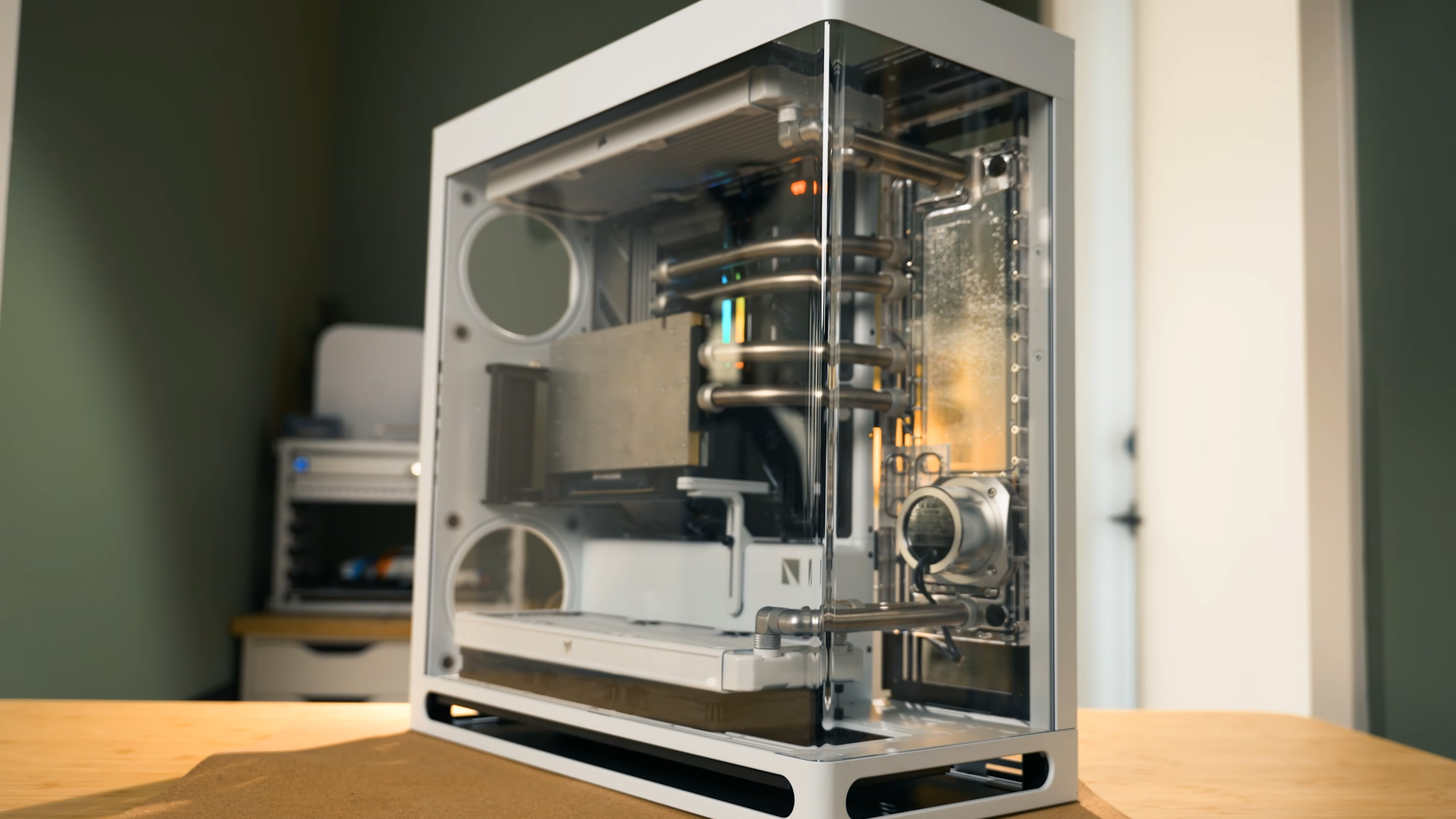
Most high-end PCs are built to last. This one was built to fail—slowly, and in style. The centerpiece is a custom titanium liquid-cooling loop, a six-meter serpentine of automotive-grade tubing that wraps around the case like a futuristic exhaust system. The idea was simple: replace standard copper with titanium for a sleek, corrosion-resistant aesthetic. The reality? A high-performance system now at risk of galvanic corrosion, a $140 DIY tubing bender that couldn’t handle precision work, and a builder who now admits the project was a mistake.
The build’s hardware is undeniably impressive. A Ryzen 9 9950X3D paired with an RTX 5090 and a 1,600W PSU ensures raw power, while 96GB of DDR5 RAM and a 4TB Gen5 SSD eliminate any bottlenecks. But the custom titanium loop—designed in 3D software and bent by hand—introduces a critical flaw: titanium and copper don’t mix well in liquid cooling. Over time, the two metals will react, corroding the copper components and potentially ruining the entire system.
Key specs: Power meets self-destruction
- CPU: AMD Ryzen 9 9950X3D (16C/32T, 5.7GHz boost)
- GPU: Nvidia RTX 5090 (24GB VRAM) with custom water block
- RAM: 96GB G.Skill Trident Z5 NEDO DDR5 (unconfirmed speed)
- Storage: 4TB Sabrent Rocket 5 Gen5 NVMe SSD
- Cooling: Custom titanium tubing loop (6 meters) + distro plate
- Power: Seasonic Prime TX 1600W PSU
- Case: Havn HS 420 fishtank
- Custom tools: $140 tubing bender (failed repeatedly)
- Corrosion risk: Titanium-copper galvanic reaction
The titanium loop, while visually stunning, serves no functional advantage over standard copper or nickel-silver tubing. The $140 tubing bender—intended for hobbyist exhaust work—proved useless for precise bends, forcing the builder to improvise with sand-filled tubes and makeshift vices. Even the acrylic case panels arrived undersized, requiring last-minute adjustments that added weeks to the project.
Performance vs. long-term viability
Despite the chaos, the system performs exceptionally well. Under load, the Ryzen 9 9950X3D stays below 75°C, while the RTX 5090 maintains sub-50°C temps in demanding games. The 96GB of DDR5 ensures no memory bottlenecks, and the 1,600W PSU future-proofs the build for any future upgrades. But none of that matters if the titanium loop accelerates copper corrosion, turning a $1,300 RAM kit and custom components into a ticking time bomb.
The builder’s regret is clear: ‘Would I do it again? Most definitely not.’ The titanium tubing, while visually striking, introduces unnecessary complexity and long-term risks. Off-the-shelf copper or nickel-silver tubing would have achieved the same cooling without the corrosion threat. The $140 tubing bender, meanwhile, was a waste of money—precision bends required hours of trial and error, and even then, the results were imperfect.
A lesson in over-engineering
This build is a masterclass in what happens when aesthetics override engineering. The custom titanium loop is a gimmick, not a solution—one that introduces corrosion risks, complicates maintenance, and adds no real performance benefit. The 1600W PSU and 96GB of RAM reflect a desire for overkill, while the custom cooling loop embodies a rejection of practicality in favor of novelty.
For most users, the takeaway isn’t to replicate this build—but to recognize the dangers of chasing customization at the expense of reliability. Titanium tubing, custom distro plates, and DIY cooling tools have their place, but not when they introduce unnecessary risks. In the end, this PC is a reminder that even the most skilled builders can be undone by a single bad idea—especially when that idea involves titanium, copper, and a complete disregard for chemistry.
The system may still run, but it’s already failing—just not in the way you’d expect.