Shuttle has added several new mini-PC platforms to its lineup, marking the first wave of systems built around Intel's 14th-generation Core Ultra 'Arrow Lake-S' processors. These designs span from fanless workstations targeting low-power environments to more capable desktop configurations aimed at professional workloads.
The most notable addition is the XB860G2, a compact desktop barebone that supports up to 128 GB of DDR5-5600 memory and features three M.2 slots—one PCIe 5.0 x4 and two PCIe 4.0—for storage expansion. It also includes a PCIe 5.0 x16 slot for add-in cards, catering to users who need both high-speed storage and GPU acceleration. Display outputs are comprehensive, with HDMI 2.1, HDMI 2.0, and DisplayPort 1.4a supporting up to three independent monitors.
Complementing the XB860G2 is the DH810, another Arrow Lake-based system that shares similar memory and processor support but focuses more on portability with a 2.5-inch drive bay and M.2 NVMe SSD slot. It also introduces USB4 connectivity, dual DisplayPort outputs, and integrated WLAN, making it suitable for environments where both performance and connectivity flexibility are priorities.
On the lower-power side, Shuttle is showcasing two fanless designs: the DL40N and the NC50N. The DL40N succeeds the older DL30N, using Intel Core 3 N-series processors (N350, N250, or N150) with a maximum of 16 GB DDR5 memory. It includes dual 2.5 GbE networking ports, HDMI, DisplayPort, VGA, and eight USB 3.2 Gen 1 ports, positioning it for embedded or kiosk applications where passive cooling is critical.
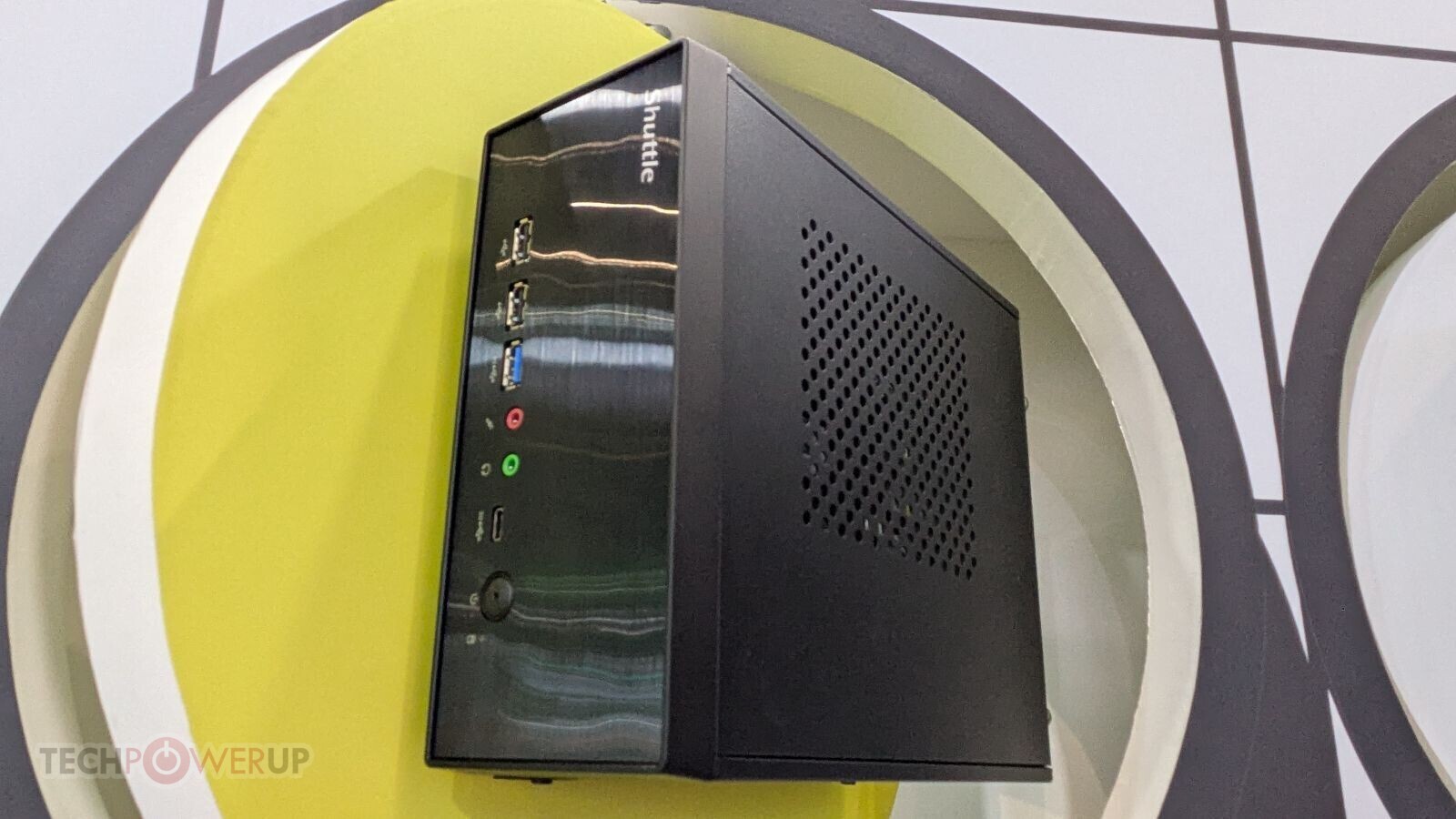
The NC50N follows a similar profile but adds a PCIe 3.0 x4 M.2 SSD slot and Realtek 2.5 GbE networking, targeting slightly more demanding workloads while maintaining its fanless design. Both systems are built around Intel's 'Twin Lake' N-series processors, which offer a balance of efficiency and performance for niche markets.
Industry observers note that Shuttle's focus on both Arrow Lake and Twin Lake platforms reflects the ongoing transition in x86 hardware, where power efficiency and thermal constraints remain key considerations. The introduction of PCIe 5.0 support in the XB860G2 is particularly noteworthy, as it aligns with Intel's push for higher bandwidth in storage and peripherals, though real-world adoption of PCIe 5.0 remains limited outside high-end workstations.
For IT teams evaluating upgrade paths, the timing of these releases is critical. Arrow Lake processors are expected to extend Intel's lead in efficiency, but their long-term viability will depend on software support and ecosystem maturity. Shuttle's inclusion of both high-performance and low-power options suggests a deliberate strategy to cover multiple segments, though pricing and availability details have not yet been confirmed.
What to watch: Pricing and release timelines for these platforms, which could influence adoption in enterprise and embedded markets where Shuttle has historically strong presence.