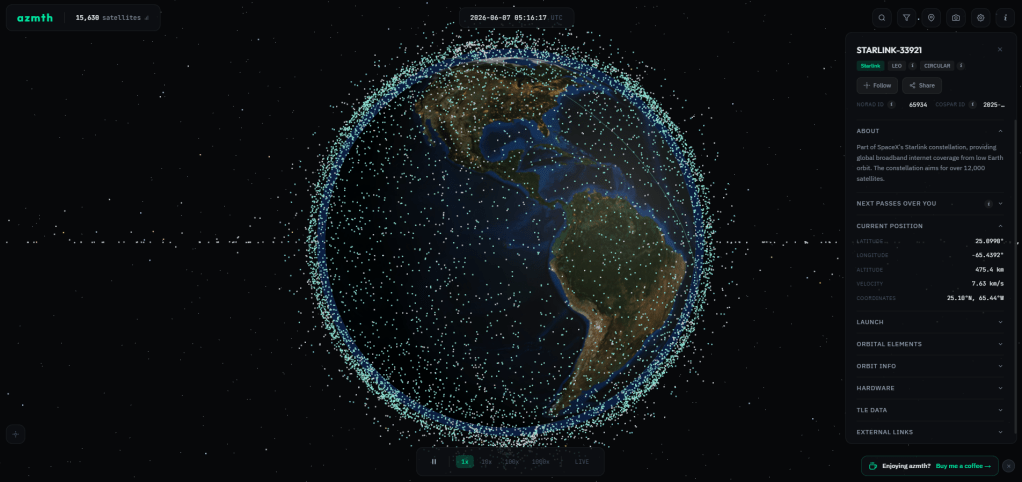
Earth’s orbit is now more transparent than ever, thanks to a new platform that streams real-time data on every object circling the planet. This isn’t just another space watch tool—it’s a comprehensive, no-cost resource that updates continuously, giving users an unfiltered view of low-Earth orbit activity.
The system aggregates telemetry from multiple sources, including government and commercial tracking networks, to deliver a single, cohesive feed. What makes this different is its scale: it covers not just satellites but also debris fragments, ensuring no object slips through the cracks. For researchers, this means faster access to orbital data without the usual paywalls or delays.
Why It Matters Now
Space traffic has grown exponentially in recent years, with thousands of new satellites launched annually. Traditional tracking methods often lag behind deployments, leaving gaps in real-time monitoring. This platform closes that gap by syncing data as it happens, allowing users to watch launches, track satellite movements, and even monitor deorbit events—all without registration or cost.
Key Features
- Live Tracking Feed: A dynamic map with real-time updates on every object in low-Earth orbit, including satellites and debris.
- No Registration Required: Access is completely free, eliminating barriers for researchers, students, or hobbyists.
- Comprehensive Coverage: Data includes active payloads, defunct satellites, and even small debris fragments, providing a full picture of orbital activity.
- Interactive Tools: Users can filter by object type, altitude, or ownership, making it easier to focus on specific datasets.
The platform’s design prioritizes usability without sacrificing depth. For example, users can toggle between different layers—such as operational satellites versus debris—to refine their view. This level of granularity is rare in free tools, which often either oversimplify or require paid subscriptions for advanced features.
While the system is still refining its accuracy during early testing, it already outperforms some commercial alternatives in terms of data freshness. The team behind it has also hinted at future additions, such as collision warnings and automated alerts, though those are not yet live.
For now, this platform serves as a benchmark for transparency in space tracking. It proves that large-scale orbital monitoring can be both accessible and immediate—a shift from the past, where such data was reserved for institutions with deep pockets or classified access. Whether you’re a researcher analyzing space traffic or an enthusiast curious about what’s above, it offers a rare unobstructed view.