OLED displays have taken another leap forward with LG Display achieving an industry-first: 100% dimming consistency across all its large-sized panels. Validated by UL Solutions, this milestone demonstrates that OLED's pixel-level dimming maintains perfect brightness uniformity even at the smallest reference areas, a feat no other display technology has matched.
Dimming consistency measures how effectively a display reproduces content based on brightness performance. Unlike LCD or Mini LED, which rely on larger backlight blocks, OLED panels emit light at the pixel level—each pixel measuring just 0.1 mm². This allows them to maintain consistent brightness even when the test reference area shrinks from 1/10 of the screen down to 2/1000, eliminating variations that cause blurring or color inaccuracies.
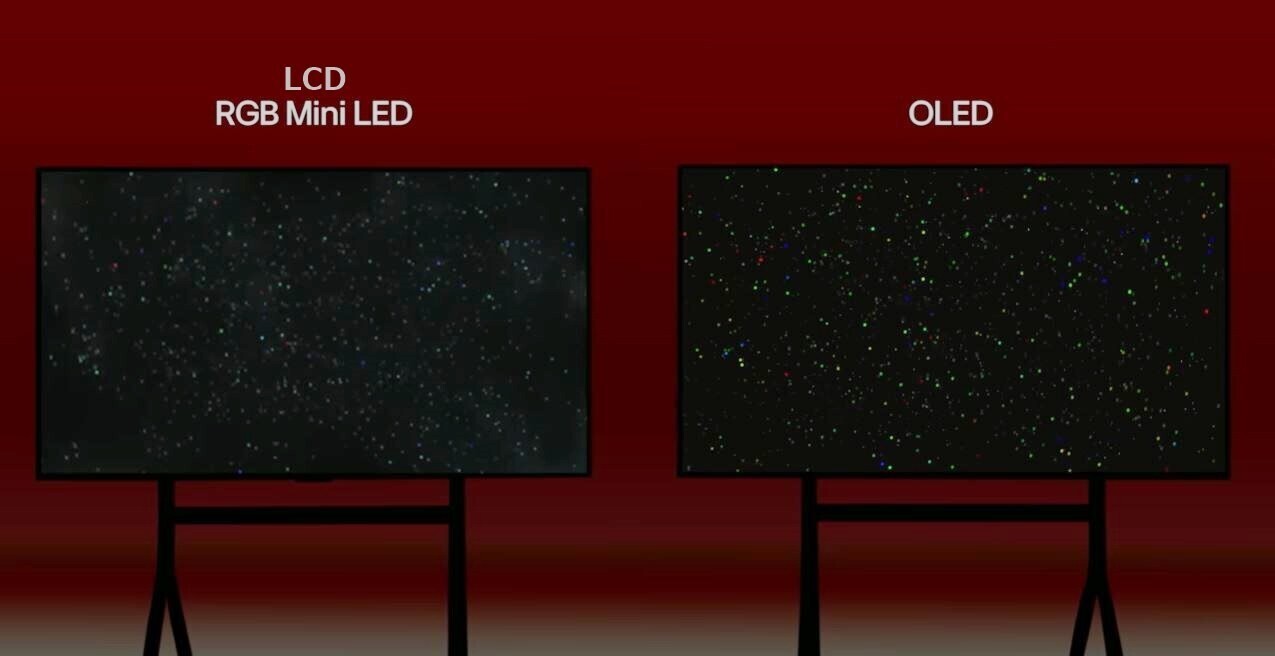
In contrast, LCD-based panels—including advanced Mini LED displays—struggle with dimming consistency. As the test area reduces, their brightness drops significantly, often falling below 50%. This is due to backlight blocks that are up to 830,000 times larger than OLED pixels, leading to light bleeding (the halo effect) and blurred color boundaries. For example, when a bright star in a dark sky is smaller than the backlight block, the transition between starlight and darkness appears hazy rather than sharp.
Why This Matters for AI and Future Displays
The significance of 100% dimming consistency extends beyond technical benchmarks. In an era where AI-generated content demands high luminance, resolution, and color accuracy, OLED's ability to reproduce natural colors without distortion becomes critical. Unlike LCD or Mini LED, which struggle with fine details at low brightness levels, OLED ensures that AI-rendered visuals—whether in gaming, video, or professional design—remain crisp and true to the original intent.
Key Specifications
- Dimming Consistency: 100% (OLED) vs. max 83% (LCD/Mini LED)
- Pixel Size: OLED: ~0.1 mm² | Mini LED backlight blocks: up to 830,000× larger
- Brightness Uniformity: No light bleeding or halo effect in OLED; LCD/Mini LED suffer from edge dimming and blur
- Color Boundary Clarity: OLED maintains sharp transitions even at minimal reference areas
This advantage positions OLED as the optimal choice for high-end displays, particularly where precision—such as in gaming monitors or professional workflows—is paramount. However, trade-offs remain: OLED panels typically consume more power than LCD, though advancements like LG's Primary RGB Tandem 2.0 technology are addressing this by reducing reflectance to just 0.3%—the lowest in the industry.
Looking Ahead
LG Display plans to leverage this validation to further solidify its leadership in large OLED panels, including those for TVs and monitors. While availability details for consumer products aren't yet confirmed, the technology behind this achievement—such as stacked primary color layers (red, green, blue) and advanced light dispersion techniques—hints at future displays with peak luminance up to 4,500 nits. Whether these innovations will translate into mainstream adoption remains to be seen, but one thing is clear: OLED has set a new benchmark for brightness uniformity that other technologies are unlikely to match.