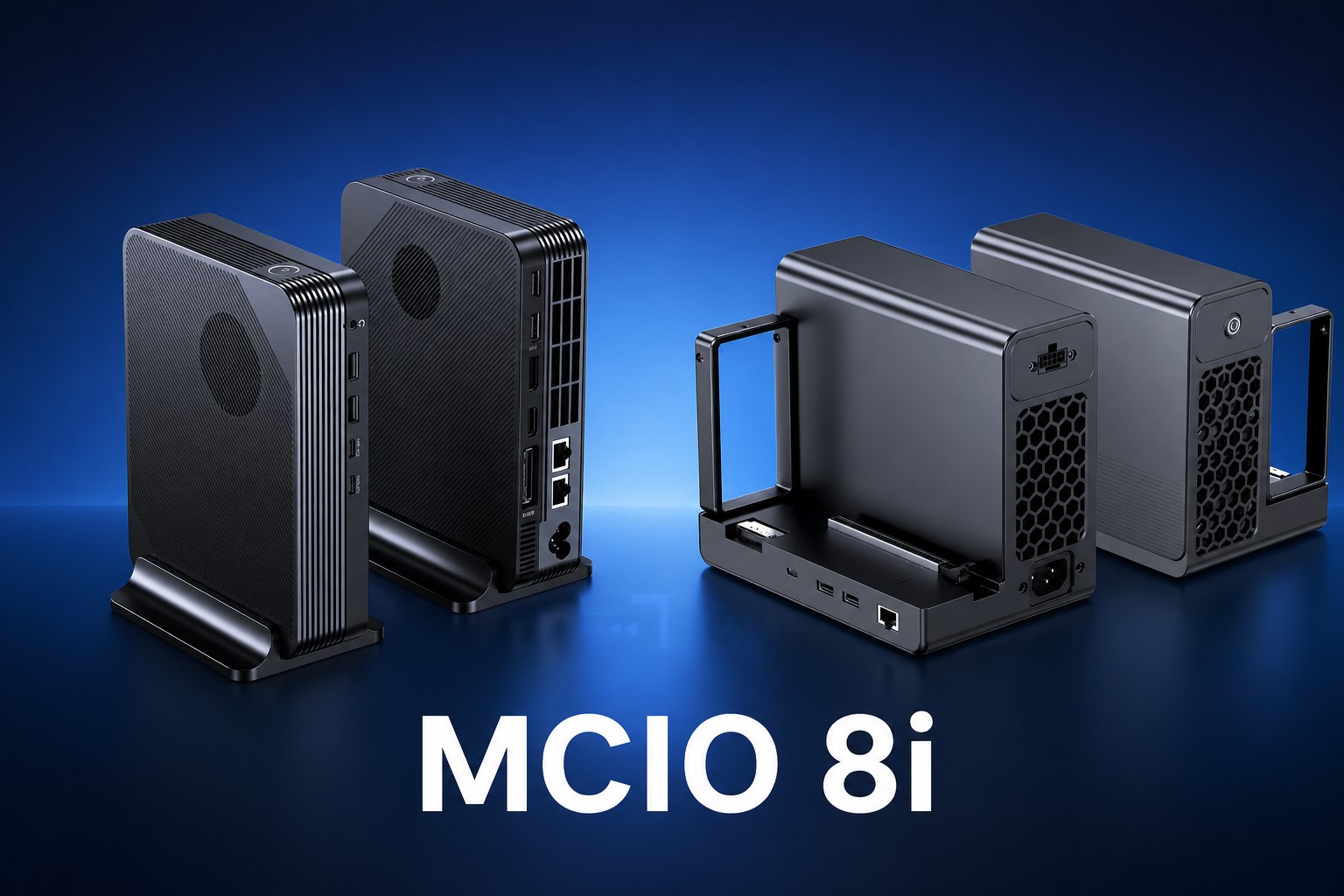
The MCIO 8i interface represents a significant advancement in external GPU connectivity, offering 512 Gbps of bandwidth that surpasses the limitations of previous solutions like OCuLink. This increase in throughput allows for smoother and more efficient processing of high-demand tasks such as real-time rendering and AI model training. For small businesses, this translates to improved workflow efficiency and reduced latency, which are critical factors in maintaining competitive edges in industries where computational performance is paramount.
GPD's adoption of the MCIO 8i interface on its Box Mini and G2 eGPU platforms marks a strategic move away from OCuLink, which has historically been plagued by compatibility issues. These problems often manifested as driver or firmware constraints that limited the full potential of external GPU setups. By switching to MCIO 8i, GPD aims to provide a more stable and future-proof solution that can handle the demands of newer GPUs without sacrificing performance. This shift is particularly relevant for businesses that rely on external GPUs for tasks requiring significant computational power, such as AI workloads or complex rendering projects.
The benefits of MCIO 8i extend beyond just raw speed. Early benchmarks indicate that these setups can now fully utilize the bandwidth of an RTX 4090 without encountering the compatibility issues that have been a persistent challenge with OCuLink-based systems. This stability is crucial for businesses that depend on external GPUs, as it reduces the risk of workflow disruptions and ensures that performance remains consistent even under heavy loads. Additionally, the new interface positions GPD's platforms as more adaptable to future advancements in GPU technology, reducing the likelihood of obsolescence.
Despite these advantages, the transition to MCIO 8i is not without its challenges. One notable drawback is the requirement for a different cable infrastructure compared to OCuLink, which could lead to higher initial costs or logistical hurdles for some users. Furthermore, not all existing external GPU setups will be immediately compatible with this new interface, potentially creating adoption barriers. For small businesses considering an upgrade, the decision will hinge on whether the performance gains and stability improvements justify the investment in new hardware.
The implications of this shift are far-reaching, particularly as AI workloads become more integrated into business operations. The ability to scale compute power without compromising portability or flexibility is increasingly valuable in today's fast-evolving technological landscape. GPD's move suggests a maturing market where smaller players are recognizing the need for high-bandwidth solutions that can keep pace with the demands of modern computing. This development could serve as a catalyst for the industry to adopt more standardized, high-performance interfaces in the future, ultimately benefiting businesses that rely on external GPUs for their operations.