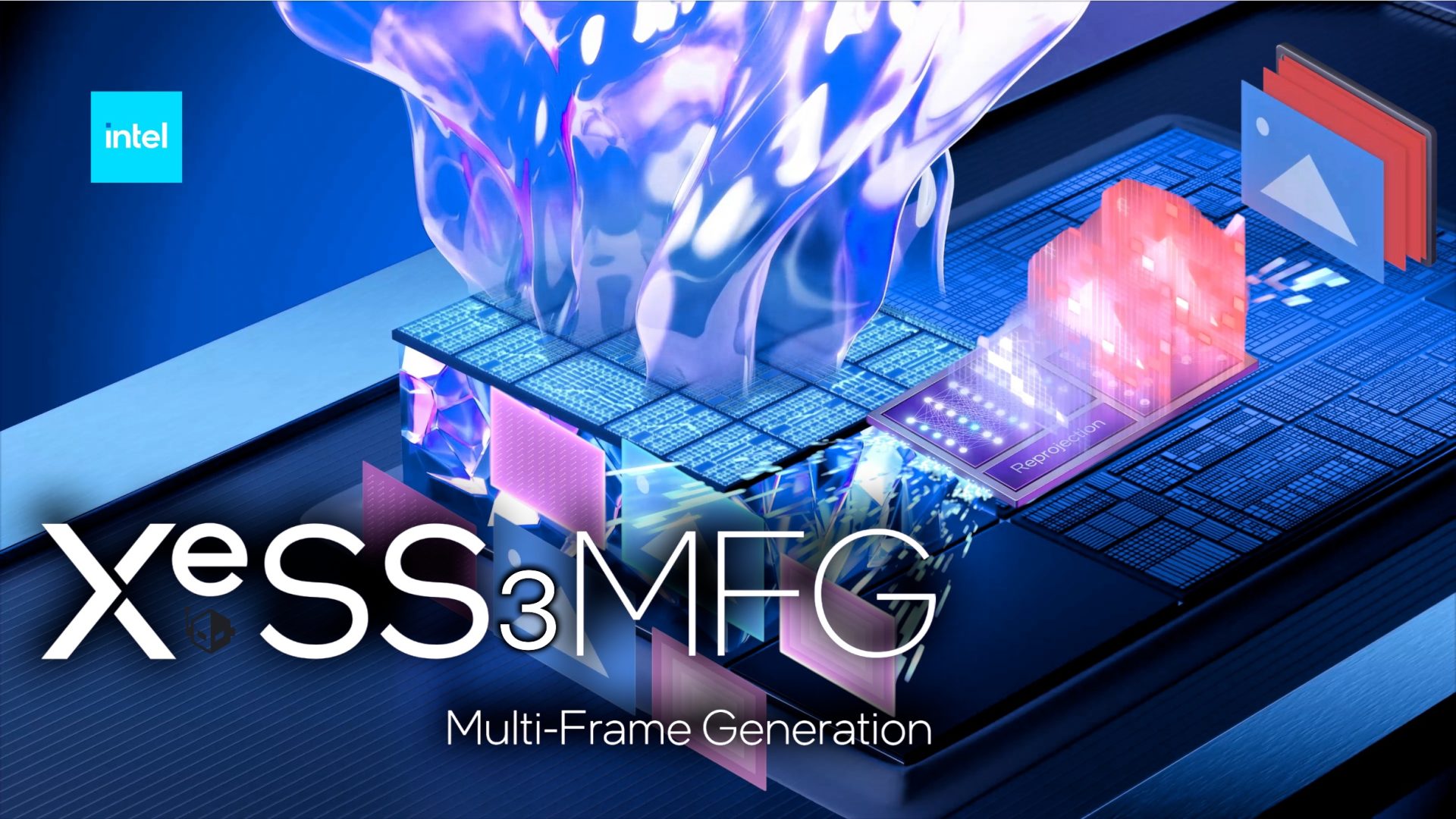
For developers working on Intel hardware, accessing advanced AI upscaling tools just became slightly easier—but not without significant constraints. Intel’s latest XeSS 3 SDK is now available on GitHub, offering a more streamlined path to integrate its proprietary Multi-Frame Generation (MFG) and upscaling technologies into games. However, the release comes with notable limitations that could shape how widely this technology is adopted in the coming years.
The XeSS 3 SDK, which supports Intel’s Panther Lake, Arc Alchemist, and Battlemage GPUs, is built on binary-only Windows libraries, maintaining its closed-source status despite earlier promises of openness. This stands in contrast to competitors like AMD’s FSR, which provides developers with modifiable source code. The Windows exclusivity also excludes Linux users, a demographic that has increasingly become a focal point for open ecosystems.
Key Specifications and Constraints
- Platform Support: Windows-only (no Linux support)
- Hardware Compatibility: Intel Panther Lake series, Arc Alchemist, and Battlemage GPUs
- SDK Type: Closed-source binary distribution via GitHub
- Technology Included: XeSS 3 upscaling, Multi-Frame Generation (MFG)
The lack of Linux support is particularly notable in today’s market, where open-source ecosystems are gaining traction. While Intel’s MFG technology offers a viable solution for gamers using its hardware to push frame rates beyond native performance, the absence of cross-platform compatibility could leave a significant portion of users—and developers—on the sidelines.
Implications for Developers and Gamers
The XeSS 3 SDK’s release is a strategic move for Intel, aiming to solidify its position in the AI upscaling space. However, the closed-source model may limit innovation compared to open alternatives like FSR. For developers, this means less flexibility in modifying or optimizing the technology, while gamers on non-Intel hardware or Linux systems will miss out entirely. The potential for future openness remains a wildcard; if Intel were to shift toward an open-source approach, adoption could accelerate significantly.
For now, the XeSS 3 SDK is a step forward for Intel’s ecosystem, but its current limitations may leave room for competitors to fill the gap in both performance and accessibility. The technology’s real-world impact will depend on how broadly it can be integrated—and whether Intel revisits its stance on openness in future iterations.