For users accustomed to Intel's GPU offerings, the arrival of Panther Lake and Wildcat Lake represents more than just incremental progress—it is a fundamental rethinking of how graphics processing can be balanced with power efficiency. The problem these architectures aim to solve is twofold: first, the persistent gap between raw performance and thermal output in high-end GPUs; second, the growing demand for AI-accelerated workloads that require both computational horsepower and energy efficiency.
Panther Lake enters the market as a mid-range solution, designed to bridge the divide between entry-level integrated graphics and high-performance discrete GPUs. It features up to 128 execution units, with base clock speeds of 1.4 GHz and boost frequencies that can push beyond 2.0 GHz. Wildcat Lake, on the other hand, is Intel's answer for enthusiasts and professionals, scaling up to 192 execution units with a base clock of 1.5 GHz and boost clocks reaching 2.1 GHz. Both architectures leverage Intel's latest memory technologies, including DDR5 and LPDDR5X, ensuring compatibility with modern system designs that prioritize bandwidth and efficiency.
What has changed is not just the hardware specifications but also the way these GPUs are being integrated into desktop ecosystems. Panther Lake and Wildcat Lake are built to handle complex workloads—from real-time ray tracing in gaming to AI-driven rendering in professional applications—without the traditional trade-offs of power consumption or thermal throttling. The inclusion of advanced ray tracing units and dedicated AI acceleration engines means these GPUs are not just faster; they are smarter, capable of processing tasks that were once the domain of specialized hardware.
Maxsun's introduction of cooling solutions tailored for Panther Lake and Wildcat Lake underscores the practical challenges of integrating these high-performance chips into desktop systems. Traditional cooling methods often struggle to keep pace with the thermal output of modern GPUs, leading to noise, throttling, or even premature hardware degradation. Maxsun's designs address this by combining advanced heat pipe technologies with low-noise fan profiles, ensuring that users can push these GPUs to their limits without sacrificing system stability or user experience.
Why it matters is clear when considering the broader implications for the industry. Intel has long been positioned as a leader in CPU innovation, but its GPU strategy has often lagged behind competitors like NVIDIA and AMD. Panther Lake and Wildcat Lake signal a renewed commitment to closing that gap, particularly in areas where AI acceleration and ray tracing are becoming standard requirements rather than optional luxuries. For developers, this means access to hardware that can handle the increasingly complex demands of modern applications without proportional increases in power consumption—a critical factor in data center and edge computing environments.
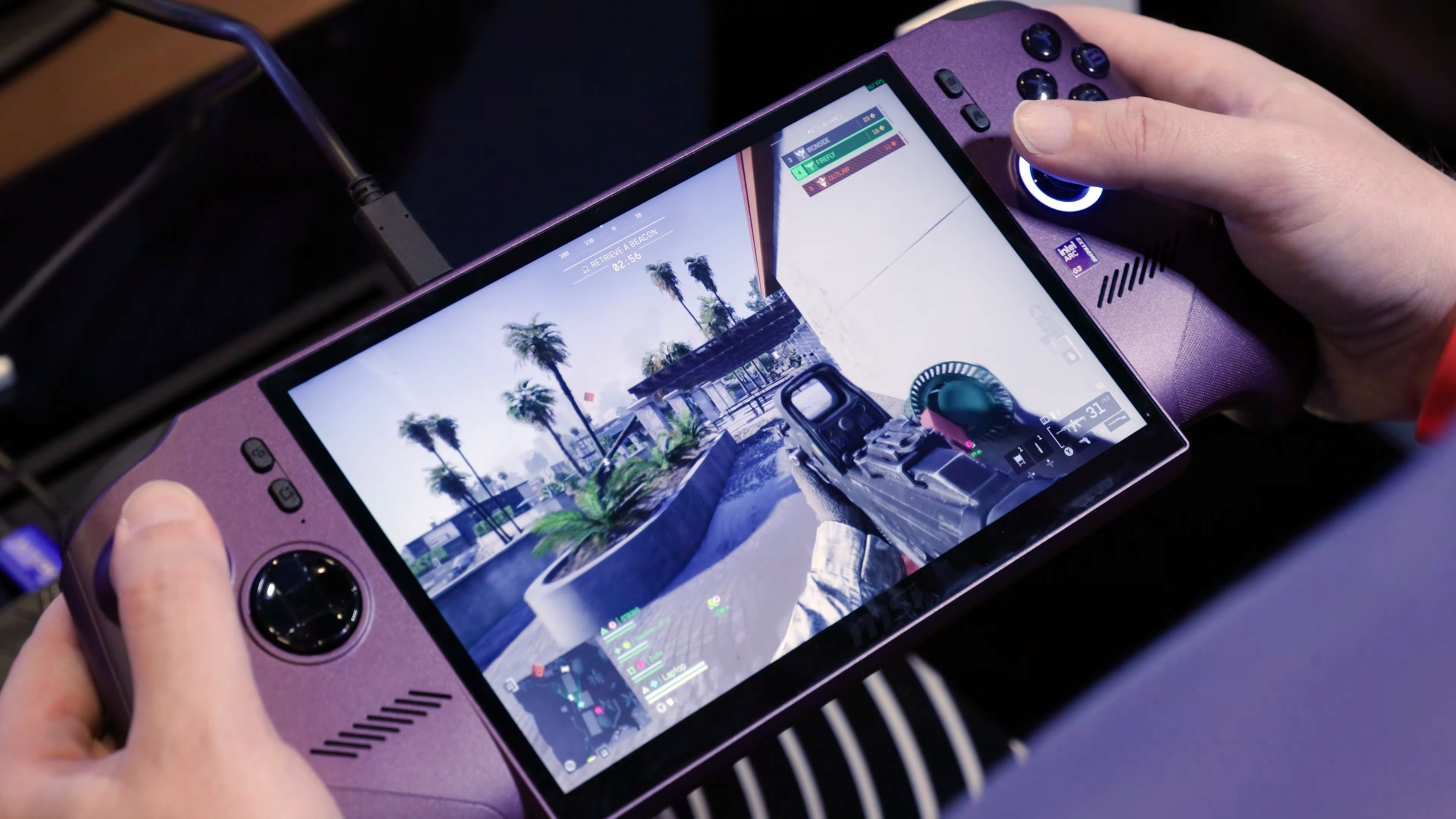
The immediate impact for users is the availability of these GPUs in desktop form factors, paired with cooling solutions that match their thermal requirements. This shift opens new possibilities for system builders and integrators, allowing them to design systems that are both powerful and efficient. However, the full potential of Panther Lake and Wildcat Lake will only be realized as more products based on these architectures enter the market. Intel's focus on balancing performance with efficiency suggests a future where compute demands are met without the traditional trade-offs of power consumption or thermal output.
Looking ahead, the next phase for Intel will be optimizing its driver stack and ecosystem support to fully unlock the capabilities of Panther Lake and Wildcat Lake. While the hardware specifications are impressive, real-world performance gains will depend on how well Intel can translate these improvements into tangible benefits for users—whether in gaming, professional rendering, or AI-driven workloads. The company's long-term strategy appears to be one of measured aggression: pushing performance while maintaining a focus on efficiency, a balance that could redefine the landscape for compute-intensive applications in the coming years.