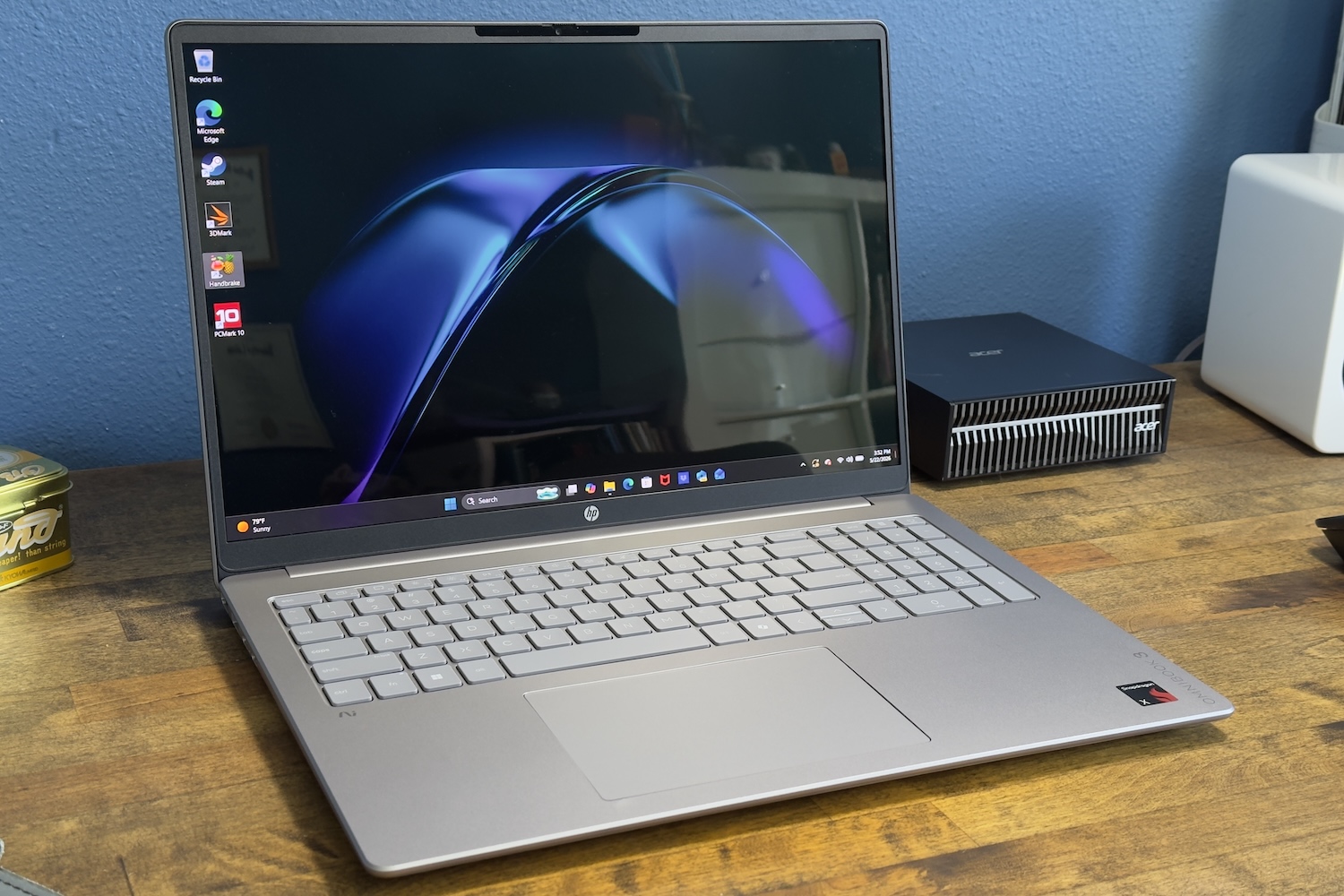
HP has released its 2025 refresh of the Omnibook 3 laptop line, but beneath the surface, very little has changed. The new models retain the same core specifications introduced last year, including an AMD Ryzen 7 8845HS processor, Radeon 780M GPU, and 16 GB of LPDDR5X RAM. The only visual distinction is a slight redesign in the hinge mechanism, which now supports a slightly wider screen angle.
Gamers and power users may find this update underwhelming. While the Ryzen 7 8845HS remains a strong performer for its price point, the lack of an upgrade to newer CPU or GPU architectures means it's no longer leading in raw performance benchmarks. The Radeon 780M, for example, still trails behind NVIDIA's RTX 40 series in both rasterization and ray-tracing capabilities.
Storage options also remain unchanged, with a 512 GB NVMe SSD as standard. This is a notable limitation, especially when compared to competitors that offer larger base storage or the option for more capacity without significant cost increases. The display, a 14-inch 1080p IPS panel, continues to deliver solid color accuracy and brightness but doesn't push the boundaries of what modern laptops can achieve.
A closer look at the build reveals some subtle improvements. The hinge mechanism is more robust, reducing flex during heavy use, which could be a boon for those who prioritize durability over portability. However, the laptop still weighs in at 3.2 lbs (1.45 kg), making it one of the heavier options in its class without compensating features like extended battery life.
Where this update does stand out is in platform support. The Omnibook 3 now includes full compatibility with Windows 11's latest feature updates, including advanced gaming features like DirectStorage and Auto HDR. This means users can take advantage of faster load times for games and better visual fidelity without needing to upgrade hardware. However, this benefit is somewhat offset by the lack of newer GPUs that could fully leverage these features.
For gamers, the decision to stick with last year's hardware raises questions about platform lock-in. While AMD's Ryzen 7 8845HS and Radeon 780M are still capable, they're no longer at the forefront of performance innovation. This could leave users in a position where they're stuck with mid-range hardware while competitors move forward, potentially limiting upgrade paths or forcing them to consider more expensive alternatives for future-proofing.
So, is this update worth it? For those already using the 2024 model, there's little incentive beyond minor refinements. New buyers might find value in the updated platform support and slightly improved build quality, but they'll be missing out on the performance gains seen elsewhere in the market. The Omnibook 3 remains a solid choice for those who prioritize reliability and value over cutting-edge specs, but it's no longer the top performer.