Task lists have long been a staple of productivity tools, but Google’s latest AI-driven to-do feature aims to redefine how users organize and prioritize their work. Unlike traditional to-do apps that rely on manual input, this new system leverages Google’s vast data ecosystem—search history, calendar events, and email—to generate context-aware suggestions. The result is a more fluid, less intrusive way to manage tasks, but whether it can stand up to dedicated productivity platforms remains an open question.
The feature, integrated into Google’s core services, dynamically pulls in information from across the company’s suite—including Gmail, Calendar, and Drive—to propose relevant actions. For example, if a user searches for ‘project deadlines,’ the system might automatically suggest adding related tasks or setting reminders without explicit prompting. This is not just incremental improvement; it represents a shift toward AI-driven task management that adapts to user behavior rather than forcing rigid structures.
How It Compares
Developers familiar with existing productivity tools will notice both familiarity and innovation in Google’s approach. Traditional to-do apps, such as Microsoft To Do or Apple Reminders, often require manual entry and lack deep integration with other services. Google’s feature, however, pulls from a broader context—search queries, email threads, and calendar entries—to surface tasks proactively. This reduces friction but also raises concerns about data privacy and how well the system will handle complex workflows.
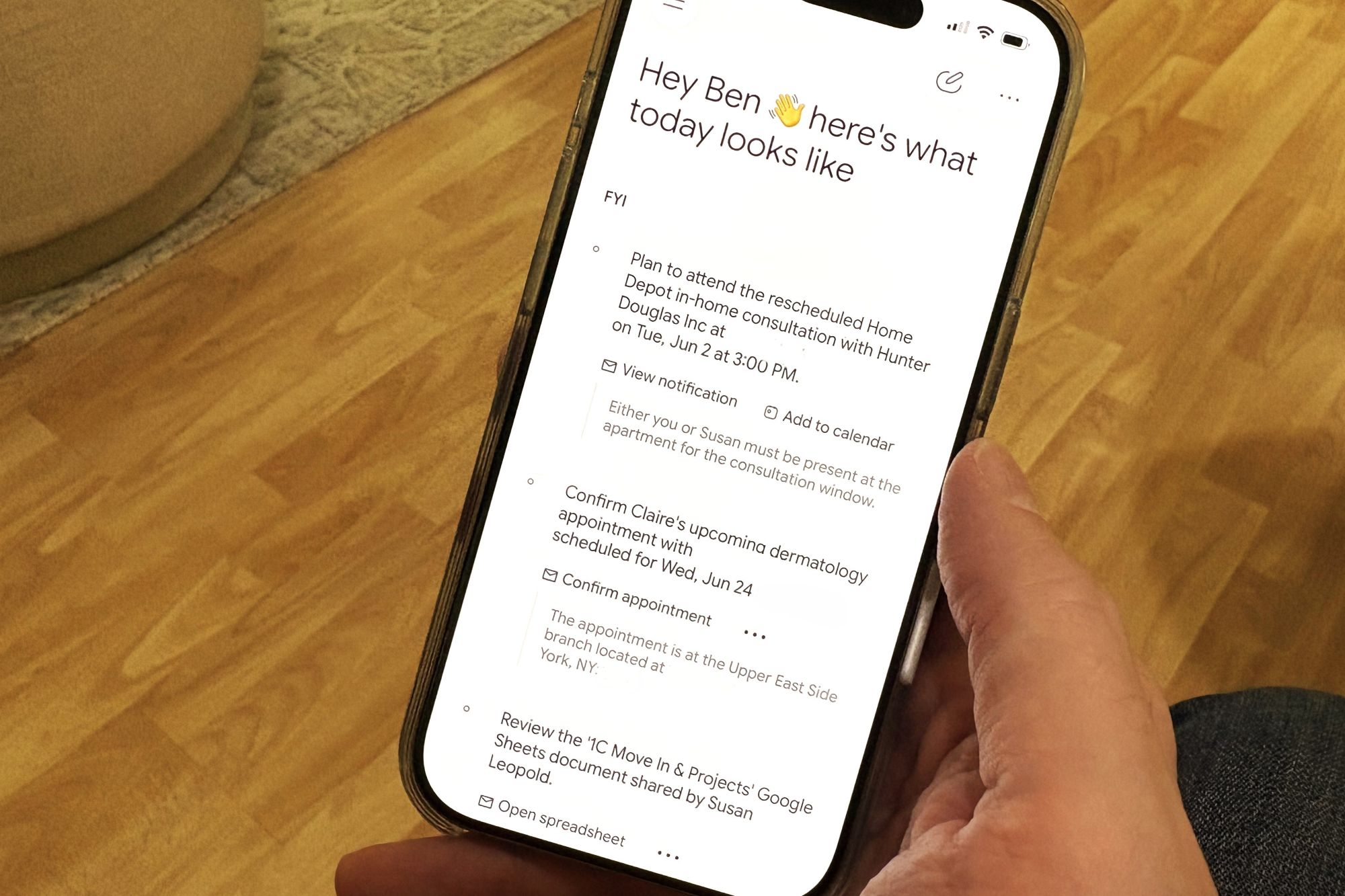
- Smart suggestions based on search history and email content
- Seamless integration with Google’s ecosystem (Calendar, Drive, etc.)
- No manual entry required for basic tasks
The real test will be how this feature performs outside Google’s walled garden. While it excels in environments where users rely heavily on Google services, its effectiveness may diminish in mixed-device or cross-platform workflows. Developers should also consider whether the AI’s learning curve is steep—will users adapt quickly, or will they find it gimmicky?
What It Means for Future-Proofing
The most significant implication of this feature is its potential to set a new standard for AI-driven task management. If successful, it could push other platforms to adopt similar approaches, blending natural language processing with contextual awareness. However, the long-term viability hinges on two factors: scalability and user adoption.
Scalability is critical. Google’s infrastructure supports this feature, but can it maintain performance as more users rely on AI-generated tasks? Additionally, will developers find value in integrating such a system into their own tools, or will they prefer more customizable solutions?
User adoption is the wild card. While smart suggestions are convenient, they risk becoming noise if not finely tuned. Google has a track record of refining its AI features over time, but this one must prove it can deliver consistent value without overwhelming users.
The Bottom Line
Google’s new to-do feature is a meaningful step toward more intuitive task management, but its success depends on balancing innovation with practicality. For developers, the question isn’t just whether it works—it’s whether it can evolve alongside their needs without becoming a crutch. If it does, we may see a broader shift in how AI handles routine tasks, making productivity tools smarter and less intrusive by design.