The ASUS NUC 16 Pro is breaking the mold for what a mini PC can achieve. It’s not just about fitting powerful components into a small space; it’s about redefining performance benchmarks while maintaining the flexibility and durability that enterprises demand. At its core, this device blends Intel Core Ultra Series 3 processors with a built-in Intel Arc B390 GPU and a 50 TOPS NPU, delivering real-time AI inference without sacrificing thermal efficiency or security.
For professionals in AI-driven fields—whether developers, data analysts, or enterprise IT teams—the NUC 16 Pro offers a compact yet robust solution. Its combination of high-speed memory (up to 96GB of LPDDR5x running at 8533MT/s), advanced wireless connectivity (WiFi 7 and Bluetooth 6.0), and dual 2.5G LAN ports ensures it can handle both local and cloud-based workloads with ease.
Why the NUC 16 Pro Stands Out
The real innovation lies in how this mini PC balances performance, connectivity, and AI capabilities. Unlike traditional desktop replacements, the NUC 16 Pro is designed to compete head-on with larger systems while offering unmatched portability. Its dual-fan thermal system, featuring three heat pipes and fin arrays, keeps temperatures stable even under prolonged heavy workloads—critical for AI tasks like videoconferencing, real-time analytics, or language translation.
- Up to an Intel Core Ultra X9 processor with a built-in Intel Arc B390 GPU, providing up to 1.5 times faster graphics performance than previous generations.
- A 50 TOPS NPU that delivers low-latency AI inference, making it ideal for edge computing applications.
- Up to 96GB of LPDDR5x memory, delivering 20% faster performance and 50% lower power consumption compared to previous models.
- WiFi 7 and Bluetooth 6.0 for seamless wireless connectivity, plus dual 2.5G LAN ports for network redundancy.
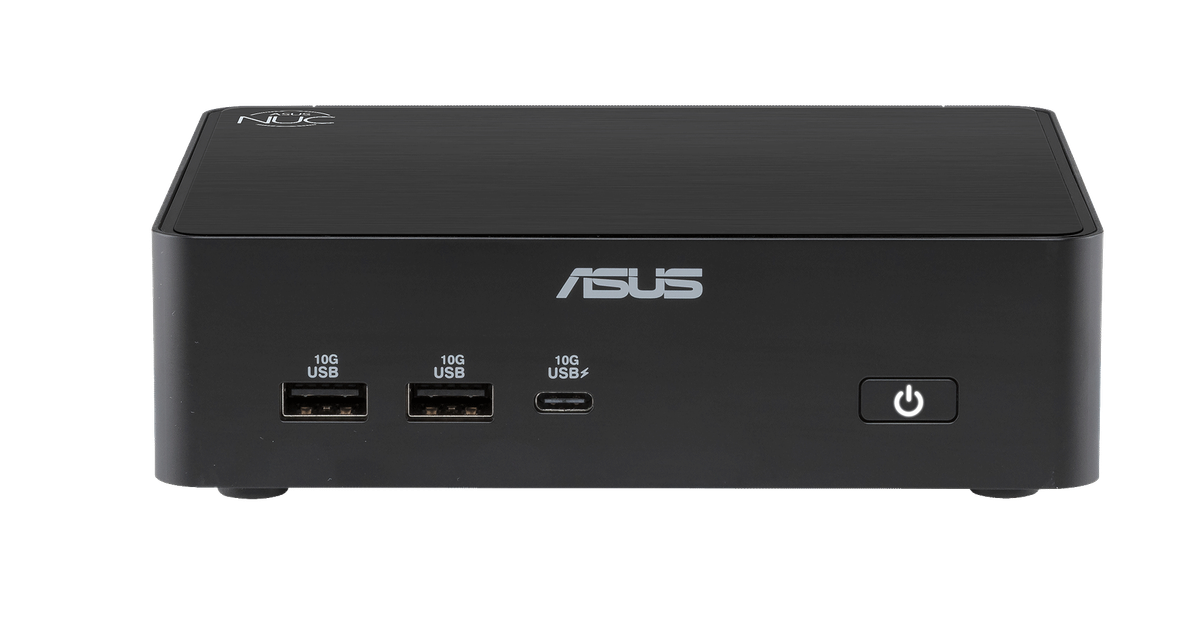
The NUC 16 Pro also supports multi-monitor setups via two HDMI 2.1 ports (with DisplayPort available as an optional upgrade), ensuring compatibility with high-resolution displays and modern enterprise workflows. Its front panel includes three USB 3.2 Gen2 10G ports, while the rear offers two Thunderbolt 4 ports and two additional USB 3.2 Gen2 10G ports, providing comprehensive connectivity for both AI and general computing needs.
Security, Durability, and AI Optimization
Security is built into the NUC 16 Pro’s DNA. Select models feature fTPM 2.0 technology, which provides enterprise-grade security and management, while Zero Trust protocols ensure sensitive data remains protected. This level of security is further reinforced by its rugged design, meeting the U.S. MIL-STD-810H standard for reliability—a critical feature for industries like healthcare or finance where durability and data integrity are non-negotiable.
For users who need to deploy AI models on-premises without relying on cloud connectivity, the NUC 16 Pro comes with ASUS AI SuperBuild software. This tool allows for the deployment of customized Large Language Models (LLMs) locally, enhancing data privacy and enabling continuous AI-assisted operations—ideal for environments where patient records or financial data must remain secure.
A Shift in Mini PC Capabilities
The NUC 16 Pro isn’t just a step forward; it’s a paradigm shift. Compact devices are no longer seen as auxiliary or secondary machines but as full-fledged alternatives to traditional desktops, capable of handling complex tasks without compromise. This mini PC proves that performance, efficiency, and portability can coexist—making it a game-changer for businesses looking to integrate AI capabilities into their workflows.
Who will benefit the most? Enterprises in healthcare, finance, and edge computing will find the NUC 16 Pro’s combination of power, connectivity, and security particularly compelling. Its ability to process heavy workloads while maintaining low power consumption and robust security positions it as a standout solution in today’s market.
In summary, the ASUS NUC 16 Pro redefines what a mini PC can achieve—delivering AI-ready performance, enterprise-grade security, and rugged durability in a package small enough to fit on any desk. It’s not just a tool; it’s a transformation in how compact devices are used, designed, and deployed.