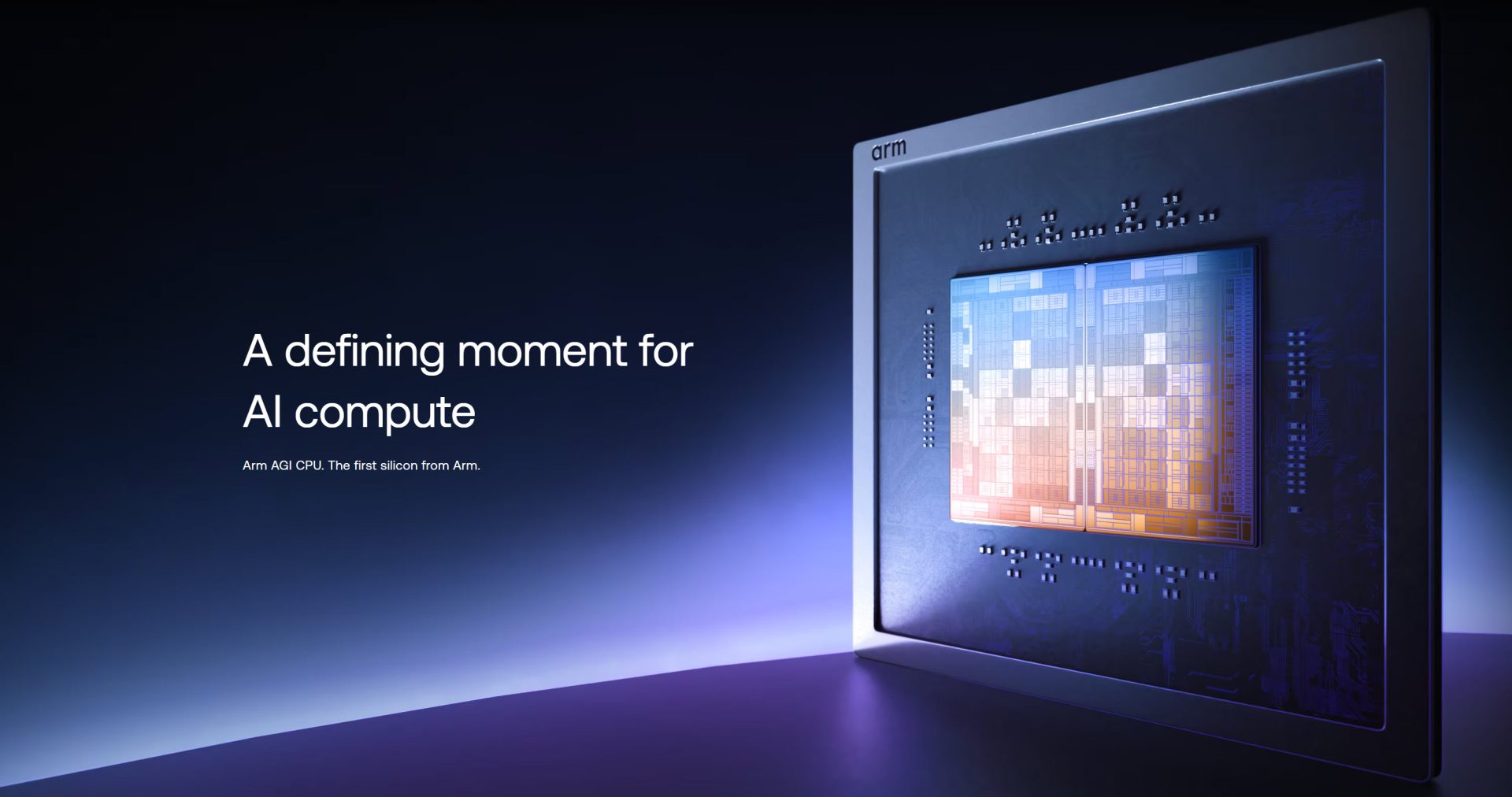
Arm’s latest financial outlook paints a bold future for its agentic AI processors, with revenue potentially hitting $2 billion by 2028—a significant leap from previous estimates.
The company’s strategy hinges on capturing a slice of the booming market for AI-driven systems, where hyperscalers and specialized startups are placing large-scale orders. But whether this translates into lasting platform dominance remains an open question.
Previously, Arm had positioned its Neoverse cores as foundational for data center workloads, but the new focus on agentic AI—where software agents operate autonomously—represents a strategic pivot. The shift is designed to align with the growing demand for specialized hardware capable of handling complex, real-time decision-making tasks.
- Key Specifications:
- Revenue Projection: $2 billion by 2028 (up from earlier estimates).
- Target Market: Hyperscalers, AI startups (e.g., OpenAI, Cerebras), and enterprise deployments.
- Platform Focus: Neoverse-based CPUs for agentic AI workloads, emphasizing efficiency and scalability.
The projected revenue growth reflects Arm’s aggressive push into high-performance computing, particularly in areas where traditional x86 architectures have struggled to compete. However, the road to $2 billion is far from guaranteed. Challenges include proving the performance and power efficiency of Neoverse cores against established competitors like Intel and AMD, as well as navigating the complexities of software stack integration—a critical factor for agentic AI systems.
For PC builders and system integrators, this shift could mean new opportunities but also increased fragmentation in the market. While Arm’s roadmap has historically emphasized mobile and embedded applications, its move into high-stakes AI workloads suggests a broader play for ecosystem dominance. The question is whether it can secure enough high-profile wins to solidify that position before 2028.
What’s confirmed: Arm’s revenue forecast, the focus on agentic AI, and the involvement of major players like OpenAI and Cerebras. What remains unknown: exact product timelines, pricing structures for these new CPUs, and how aggressively hyperscalers will adopt Neoverse over existing architectures.