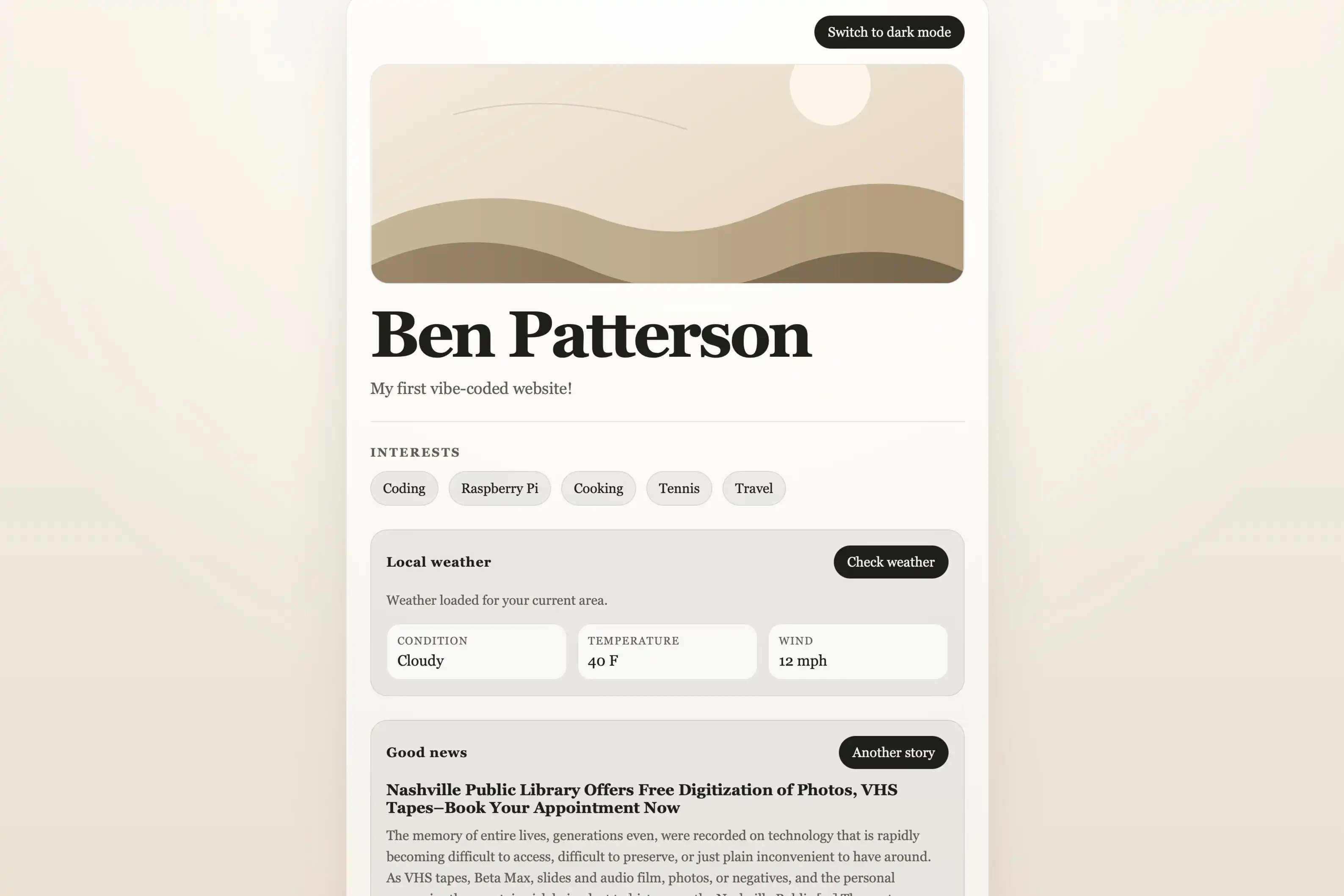
A personal website used to be a weekend project—now it’s a task that can be completed in minutes with AI assistance. A recently released tool automates the heavy lifting of layout, styling, and content structure, allowing developers to focus on customization rather than boilerplate code.
This shift matters because it challenges the traditional workflow for static site development. Historically, building a personal page required hours of setup: choosing frameworks, configuring build tools, and writing repetitive code. The new tool eliminates those steps, reducing the time from concept to deployment by an estimated 80%. For developers, this means faster iteration without sacrificing control over design or functionality.
The core innovation lies in its ability to generate a complete project scaffold—HTML structure, CSS styling, and even basic JavaScript—based on minimal input. Users provide a few keywords about the site’s purpose (e.g., portfolio, blog, or resume), and the tool produces a ready-to-use template with semantic markup and responsive design. The result is a clean, mobile-friendly foundation that can be extended with custom code.
Key features include
- A single command-line interface that initializes a project in seconds, handling all dependencies automatically.
- Dynamic content placeholders that adapt to user input without requiring manual adjustments.
- Integration with popular static site generators (like Jekyll or Hugo) for those who prefer hybrid workflows.
The tradeoff is predictability. While the tool excels at speed, it does not replace deep customization. Developers still need to refine styling and add unique functionality, but the initial overhead is gone. This makes it ideal for rapid prototyping or small-scale projects where time-to-launch is critical.
For example, a developer testing a new design concept can generate a working prototype in under five minutes—enough to validate ideas before investing in full development. The tool’s emphasis on efficiency could accelerate the trend toward lightweight, no-build websites, reducing reliance on heavy frameworks like React or Vue for simple static pages.
Market reaction has been mixed but largely positive among developers. Early adopters praise its speed and simplicity, while others note that it may not suit complex projects with intricate animations or dynamic data fetching. The long-term impact remains to be seen, but the tool undeniably lowers the barrier for entry, making personal web pages more accessible than ever.