The high-refresh rate display market has traditionally been the domain of gaming enthusiasts and professionals willing to invest heavily in cutting-edge performance. Acer’s latest $100 monitor disrupts this dynamic by delivering 300Hz capabilities without the premium price tag, effectively lowering the barrier for businesses seeking responsive visual output. This shift raises questions about what constitutes 'necessary' performance in a working environment and whether cost savings can be achieved without sacrificing core functionality.
Today’s update focuses on Acer’s Predator X34 21:9 Ultra-Wide monitor, now priced at $100 while retaining its high refresh specifications. The display supports a peak refresh rate of 300Hz and drops to 240Hz with a 1ms response time (GtG). It operates at 1080p resolution (3440x1440) and includes G-Sync compatibility, features that have historically been reserved for high-end setups. The new price point makes this level of performance accessible to small businesses that prioritize speed over advanced visual features.
- Peak refresh rate: 300Hz
- 240Hz at 1ms response time (GtG)
- Resolution: 1080p (3440x1440)
- Connectivity: DisplayPort 1.2 only (no HDMI or USB-C)
- HDR support: Not supported
- Color accuracy: Optimized for gaming, not professional design work
The monitor’s impact on small businesses is significant but nuanced. On one hand, the $100 price tag makes it an attractive option for environments where rapid visual feedback is critical, such as CAD workstations or simulation tasks. The adaptive sync technology ensures smooth rendering under sustained workloads, which could be transformative for businesses reliant on real-time data processing. However, the tradeoffs are substantial: limited connectivity (DisplayPort 1.2 only), no HDR support, and color accuracy that leans toward competitive gaming rather than professional design.
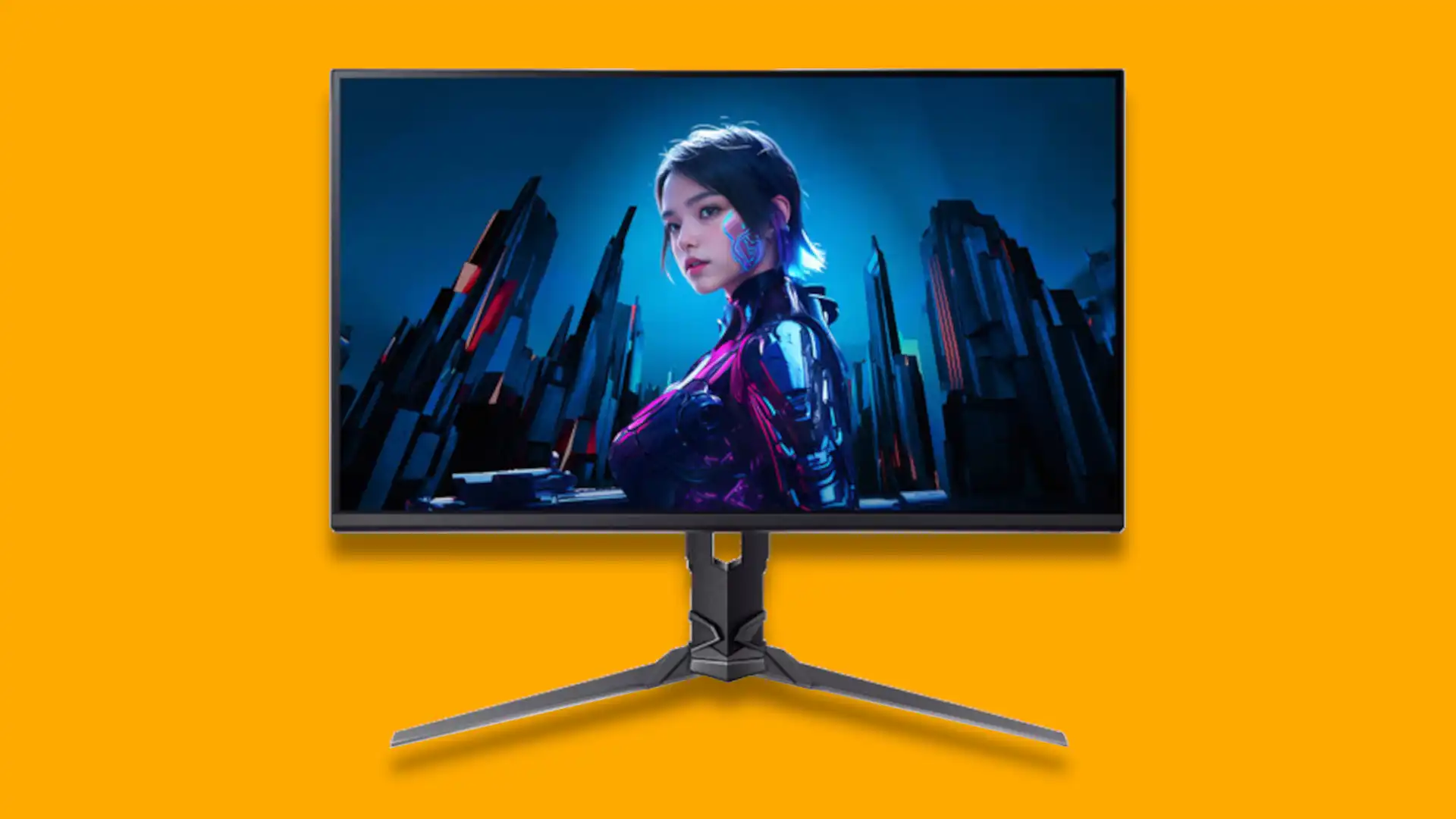
Platform compatibility introduces another layer of complexity. G-Sync compatibility ties this monitor to NVIDIA GPUs, which could be advantageous for businesses already invested in the NVIDIA ecosystem. For those without existing hardware, the $100 savings may diminish quickly when factoring in the cost of complementary GPUs. This raises questions about whether Acer’s aggressive pricing is sustainable or if competitors will soon introduce their own sub-$100 high-refresh options.
Thermal performance and power consumption remain untested in practical scenarios, which could become critical factors for businesses operating on tight margins. If the monitor struggles with heat dissipation or exceeds expected power draw, its long-term viability may be compromised. Additionally, the lack of HDR support and limited color accuracy means it is not a universal solution—small businesses will need to carefully evaluate whether the speed justifies these compromises in visual fidelity.
Acer has undeniably pushed the boundaries of what a sub-$100 monitor can deliver, but whether this becomes a lasting trend or a temporary anomaly remains uncertain. For now, small businesses should view this as a limited opportunity—one that could redefine performance expectations while also highlighting the inherent compromises in aggressive pricing strategies.